The short version
- A major fire in the Cairngorms prompted RSPB Scotland to overhaul its land management strategies, focusing on wider fire breaks and increased water retention features.
- Experts argue that restoring degraded peatlands can serve as a natural defense against deep-seated fires, while officials call for stricter safety regulations comparable to urban business standards.
- Debate continues over the role of controlled burning in fuel reduction, with conservationists favoring grazing and mechanical clearing as alternatives to traditional muirburn practices.
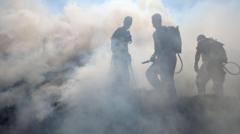
A prolonged wildfire that consumed more than 2,500 hectares of moorland and forest in Scotland’s Cairngorms has triggered a significant reassessment of how nature reserves manage fire risk. The blaze, which lasted for over a month and forced the evacuation of an entire village, produced smoke visible nearly 100 kilometers away in Aberdeen. Even weeks after firefighters departed, residual hotspots continued to emerge across the charred landscape, requiring ongoing monitoring by reserve staff and local estate workers who assisted in containment efforts.
The incident has intensified scrutiny of land management practices associated with ecological restoration, often referred to as rewilding. While the Royal Society for the Protection of Birds (RSPB) avoids using that specific term, its Abernethy nature reserve is part of a growing network of Scottish estates prioritizing habitat recovery. Critics have long argued that such approaches leave landscapes more vulnerable to uncontrolled fires by allowing vegetation to grow unchecked. The charity disputes this characterization but acknowledges the need for substantial changes to its operational protocols in light of recent events.
RSPB Scotland has identified four primary areas for improvement: expanding fire breaks, enhancing wetland infrastructure, managing heather growth, and adjusting tree planting strategies. Previous fire breaks, often formed by existing forest tracks, proved insufficient when strong winds propelled flames high enough to jump across gaps. Experts note that burning heather can generate flames up to six meters tall, necessitating fire breaks three times that width to be effective. Consequently, machinery is now being deployed to clear vegetation on both sides of trails, creating wider barriers intended to prevent future flame spread.
Water management has also become a central component of the revised strategy. The reserve plans to create additional ponds and wet areas that can serve as immediate water sources for firefighting operations. This approach builds on earlier successes, such as using a government-funded pond designed for rare dragonflies to extinguish a smaller fire in June. By raising water tables in drained bogs and establishing new standing water features, managers aim to increase the landscape’s natural moisture levels, thereby reducing flammability.
The condition of peatlands plays a critical role in fire dynamics. Degraded peat, which constitutes approximately 80% of Scotland’s total peatland area, poses significant risks because fires can spread deep underground as well as on the surface. However, restored peatlands with high water tables act as effective defenses. Research from the University of the Highlands and Islands highlights a 2019 fire near Melvich that reached an area re-wetted two decades prior; damage there was limited to superficial surface layers. This evidence supports accelerating restoration efforts currently targeting 400,000 hectares by 2040.
Beyond specific reserve management, the incident has sparked broader calls for regulatory reform. Scotland’s chief fire officer recently published an open letter urging a more formal and proportionate fire safety regime for wildlife areas, comparable to standards applied to urban businesses. This push coincides with the Scottish government’s final stages of introducing licenses for muirburn, the controlled burning of heather traditionally used in grouse shooting management. Ministers argue that licensing will make moorland management more environmentally sustainable.
The debate over fuel load management remains complex. While RSPB Scotland does not practice muirburn, it recognizes the necessity of reducing vegetation density to prevent intense fires. Instead of burning, the charity employs cattle grazing to consume and trample down plant matter, effectively lowering fuel loads. Other land managers utilize mechanical methods to cut and mulch grass, gorse, bracken, and heather. These alternatives aim to achieve similar safety outcomes without the ecological impacts associated with open burning.
As the landscape begins to recover, the focus shifts from immediate suppression to long-term resilience. The integration of wider fire breaks, enhanced water retention, and strategic vegetation management represents a pragmatic adaptation to a changing climate. By balancing ecological restoration with rigorous safety measures, land managers hope to mitigate future risks while preserving the biodiversity goals that define these protected areas.
Sources behind this briefing
Go to the original reporting
- BBC Science & Environment↗Does 'rewilded' land need better wildfire prevention measures?

