The short version
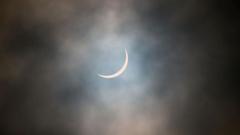
- The partial solar eclipse represents the most significant visibility of such an event in the UK since August 1999, with up to 95% of the Sun obscured.
- Meteorological forecasts suggest that clearer skies in southern and eastern Scotland may offer better viewing conditions than western regions despite lower obscuration percentages.
- Safety experts emphasize the necessity of ISO-certified eclipse glasses, warning that regular sunglasses provide insufficient protection against retinal damage.
A significant partial solar eclipse is set to traverse Scotland on Wednesday, offering residents their clearest view of such a celestial event in nearly three decades. The phenomenon will see the Moon gradually covering up to 95% of the Sun’s disk, marking the most dramatic eclipse visible from the United Kingdom since August 1999. The entire sequence is projected to last approximately two hours, providing ample time for observation provided that weather conditions cooperate and viewers adhere to strict safety protocols.
Timing plays a crucial role in visibility across different regions of the country. Astronomers indicate that the Moon will begin its transit in front of the Sun between 18:01 and 18:10 British Summer Time. The peak obscuration is expected to occur roughly an hour later, with the event concluding just before 20:00. Because the Sun sets later in Scotland compared to England, observers here benefit from a higher solar position during the eclipse. This geometric advantage reduces the difficulty of finding a clear line of sight to the western horizon, which often complicates viewing for those further south.
Despite the favorable timing, atmospheric conditions remain a variable factor. Meteorological officials have noted that weather fronts grazing the western coast of Scotland could obstruct ideal views. Consequently, viewers located in the southern and eastern parts of the country may experience superior visibility due to clearer skies, even though the percentage of solar obscuration will be lower in those areas. The slow progression of the eclipse allows for some flexibility; if initial viewing spots are clouded over, observers have time to relocate to parks or elevated positions before the peak occurs.
Safety remains the paramount concern for anyone planning to observe the event. Experts stress that looking directly at the Sun without proper filtration can cause severe and permanent damage to the retina, even if the discomfort is not immediately apparent. Regular sunglasses are explicitly inadequate for this purpose. Only eyewear bearing the ISO 12312-2 or ISO 12312-2:2015 safety certification provides sufficient protection against harmful solar radiation. These certified glasses will be distributed at various community events and are also available for purchase online from reputable vendors.
To facilitate safe public viewing, numerous organizations across Scotland have organized dedicated events. In the Scottish Borders, Beirhope Farm is hosting a talk featuring an astronomy expert and introducing new telescope equipment. East Lothian’s Dirleton Solar Walk will provide certified glasses during a relaxed evening gathering, while Edinburgh’s Playfair Observatory on Calton Hill will offer explanations from members of the Astronomical Society of Edinburgh. These initiatives aim to educate the public on both the science behind eclipses and the necessary precautions for eye safety.
Further south, Red Burn Farm in Blantyre is hosting a family-friendly event starting at 18:00 with available eclipse glasses. The Whitelee Windfarm Visitor Centre in Eaglesham is offering space-themed arts and crafts alongside adult workshops exploring solar phenomena. In Dumfries and Galloway, the Dark Space Planetarium team plans to deploy a solar telescope at the harbour if skies permit. These community-led efforts underscore the widespread interest in the event and provide structured opportunities for safe observation.
Northern regions are also participating actively. The Kintyre and Gigha Night Sky Group will be present at Westport Beach Car Park in Campbeltown, offering glasses and answering questions. Nearby, residents of Gigha can gather at the Village Hall before moving to a viewing location. In Dundee, Mills Observatory at Broughty Castle will open for special public viewing with glasses available for purchase. Meanwhile, Glen Tanar Visitor Centre in Aberdeenshire requires advance booking for its team-led observation session, ensuring managed access to safe viewing conditions.
Additional opportunities exist in the Highlands and Islands. The Tomintoul Skyhide Stargazing Pavilion in Ballindalloch will provide both solar telescopes and glasses, with an invitation to stay afterward for the Perseids meteor shower. Jim Savage-Lowden Observatory on Culloden Moor is also participating. In Orkney, astronomers will assist visitors at Midhowe Broch Car Park, while the Isle of Rum’s Bunkhouse campsite will set up solar telescopes from 18:00. Masstowie Primary School in Elgin will host families with guidance from SIGMA Moray’s Astronomy Club.
The slow movement of the Moon across the Sun allows for a prolonged viewing window, reducing the pressure to find perfect conditions at a single moment. However, the unpredictability of cloud cover means that flexibility is key. Observers are encouraged to monitor local weather forecasts closely and have backup locations in mind. The combination of high solar obscuration, extended duration, and widespread community support makes this eclipse a notable event for Scottish astronomy enthusiasts.
As the date approaches, the emphasis remains on preparation and safety. The availability of certified viewing equipment at multiple venues helps mitigate the risk of improper observation methods. While the western horizon may offer higher obscuration percentages, the potential for cloud interference shifts the practical advantage to clearer areas in the south and east. This dynamic interplay between astronomical precision and meteorological reality defines the experience for viewers across the nation.
Sources behind this briefing
Go to the original reporting
- BBC Science & Environment↗What time and where to see the solar eclipse in Scotland

