The short version
- Above-average rainfall in June and August 2026 activated dormant seeds across arid shrublands north of Perth.
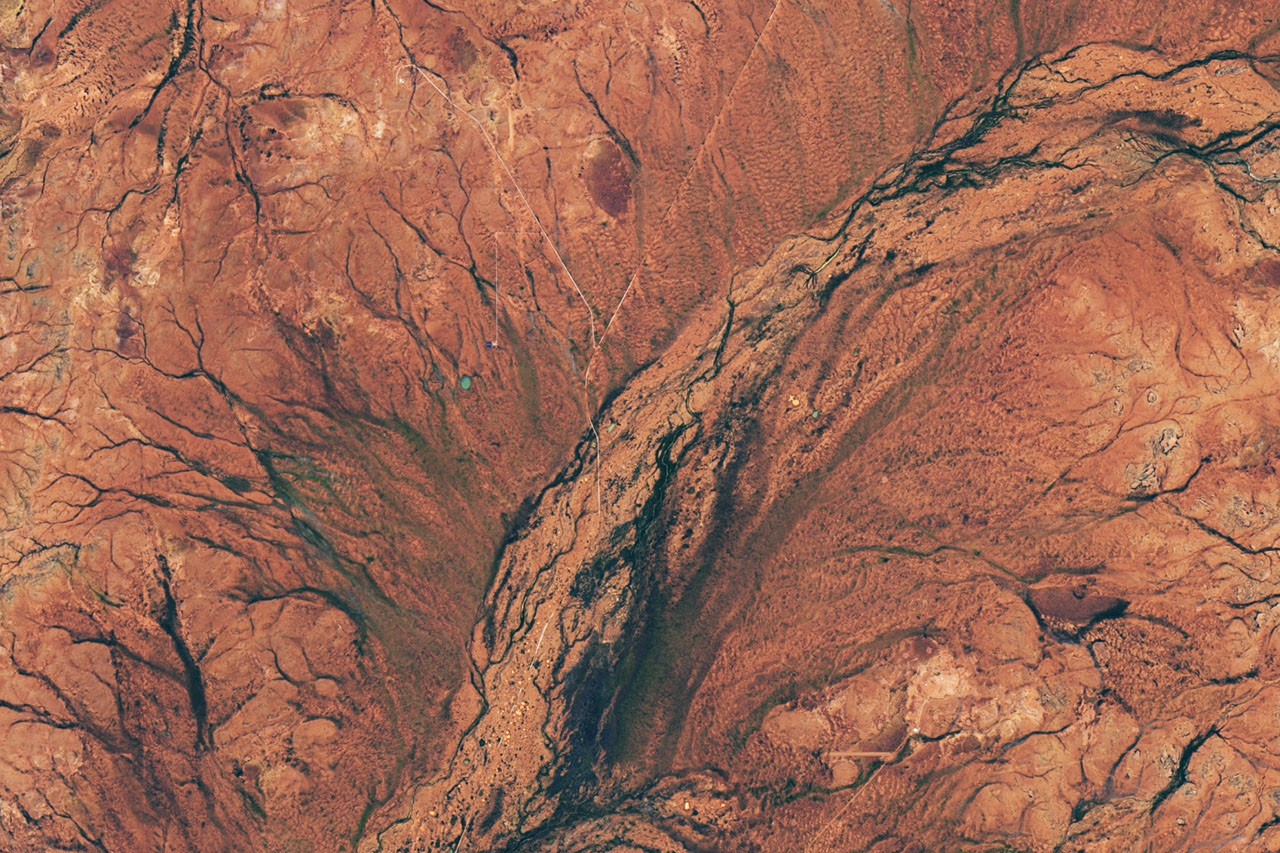
- Satellite data from Landsat 8 highlights a stark contrast between the verdant landscape of late 2026 and the drier conditions of the previous year.
- The bloom includes threatened species and occurs within a radio-quiet zone managed by CSIRO for deep space observation.
Arid landscapes in Western Australia experienced an extraordinary surge of biological activity during the late austral winter of 2026. Following a period of wetter-than-normal conditions, dormant seeds germinated rapidly, transforming rusty ochre terrain into vibrant carpets of wildflowers. This phenomenon represents one of the most significant floral displays recorded in the region for almost two decades, according to local ecological experts.
The transformation was captured by the Operational Land Imager aboard the NASA-USGS Landsat 8 satellite. Imagery from late August 2026 reveals a noticeably greener landscape compared to similar observations from 2025, when the area remained dry. The affected zone spans approximately 370 miles north of Perth in the Murchison region, an area traditionally utilized for grazing sheep and cattle.
Meteorological data from Australia’s Bureau of Meteorology indicates that rainfall totals exceeded averages in June and surged well above normal levels in August. These conditions were driven by several cold fronts moving through the territory. The precipitation provided the necessary moisture to rouse a diverse array of flora, including grasses, saltbush, and the slow-growing evergreen mulga tree, which typically dominate the local vegetation.
The ecological significance of this event extends beyond aesthetic appeal. The bloom includes several threatened species that have been monitored by the Commonwealth Scientific and Industrial Research Organisation (CSIRO). This national science agency manages a radio astronomy site within the blooming area, where formerly pastoral land is now dedicated to scientific observation and conservation efforts.
The location of these blooms presents a unique intersection of terrestrial ecology and space exploration. The Inyarrimanha Ilgari Bundara, also known as the CSIRO Murchison Radio-astronomy Observatory, operates within a designated radio-quiet zone. Strict controls on terrestrial communications and electronic devices are enforced to minimize electromagnetic interference with sensitive instruments designed to catalog objects in the southern sky.
While the observatory focuses primarily on deep space exploration, the facility’s broader network plays a critical role in global space missions. CSIRO manages other key telescopes in Australia that have supported NASA operations for decades. The Murriyang radio telescope in Parkes, New South Wales, historically tracked Mariner 2 in 1962 and served as a receiving station for Apollo 11 in 1969.
More recently, the Canberra Deep Space Communication Complex, another facility under CSIRO management, contributed to NASA’s global Deep Space Network. This complex supports interplanetary spacecraft missions and collects radar and radio astronomy observations. Both the Parkes telescope and the Canberra complex provided support for the Artemis II mission in April 2026.
The juxtaposition of fleeting desert blooms with permanent space infrastructure highlights the diverse scientific priorities operating within Western Australia’s remote regions. While the wildflowers offer a temporary but spectacular visual change to the landscape, the radio telescopes continue their long-term work in observing the universe. The event underscores how climatic variability can dramatically alter local ecosystems, even in areas dedicated to high-precision astronomical research.
Future monitoring will likely focus on the longevity of these blooms and their impact on local grazing patterns. As the region transitions out of winter, the verdant cover observed by satellite may recede, returning the landscape to its typical arid state. However, the data collected provides valuable insights into how climate patterns influence biodiversity in semi-arid environments.
This event serves as a reminder of the dynamic nature of Earth’s surface, visible from space and felt on the ground. The combination of meteorological anomalies and ecological response offers a clear example of environmental change, documented through advanced satellite technology and local scientific management.
Sources behind this briefing
Go to the original reporting
- NASA↗Boom Year for Desert Blooms

