The short version
- Western Europe experienced its hottest June-to-July period on record, driven by persistent high-pressure systems and long-term climate trends.
- Severe drought conditions have lowered river levels to thirty-year lows, forcing nuclear plant shutdowns and stranding cargo vessels on major waterways.
- Satellite imagery confirms significant glacier retreat in the Alps and widespread vegetation stress, threatening agricultural yields across France, Germany, and the UK.
Western Europe is grappling with the visible aftermath of a series of extreme heatwaves that have persisted since May. Satellite imagery analyzed by verification teams reveals a continent marked by scorched landscapes, receding ice, and critically low water levels. The European Union’s climate monitoring service, Copernicus, has confirmed that the period from June to July was the hottest on record for the region. This meteorological anomaly is not an isolated event but part of a broader pattern where persistent high-pressure systems create clear skies that allow temperatures to accumulate unchecked.
The immediate weather mechanics are well understood, with the Met Office attributing the intensity to stable atmospheric conditions that trap heat. However, these short-term drivers operate within a long-term context of rising global average temperatures caused by fossil fuel combustion. This background warming makes such intense hot spells significantly more probable and severe than they would be in a pre-industrial climate. The result is a landscape that has changed visibly over just a few months, with green fields turning arid and natural landmarks appearing altered from orbit.
Water resources have been particularly hard hit, with the Danube River dropping to its lowest levels in three decades across several nations. This dramatic reduction in water volume has had immediate economic and operational consequences. Nuclear power stations in Hungary and Romania have been forced to reduce output or shut down entirely because they cannot draw sufficient river water for cooling systems. Similarly, the Rhine has seen cargo vessels stranded and cruise operations cancelled due to insufficient depth, disrupting supply chains that rely on inland water transport.
The receding waters have also uncovered historical remnants long hidden beneath the riverbeds. In Bulgaria, the bones of a mammoth were discovered exposed by the low levels, while in Serbia, a sunken World War II warship emerged from the depths. These discoveries highlight the extent to which current water levels deviate from historical norms. The visual contrast between normal flow conditions and the current drought state is stark, serving as a tangible indicator of the hydrological stress affecting the continent.
Glacial retreat in the Alps presents another critical dimension of this crisis. Measurements indicate that this summer could rank among the worst ever recorded for ice loss, with more than a month of the melting season still remaining. A mild winter left glaciers with less snow cover than usual by late April, and an early heatwave in May accelerated the melting process. This exposed the underlying ice to further rapid degradation during subsequent warm spells. Satellite comparisons show that the front of the Rhône Glacier in Switzerland has retreated by at least fifty meters compared to the same period last year.
Glaciologists warn that the Alps are facing a dramatic future if current trends continue. In a stable climate, glaciers would maintain relatively consistent sizes over long periods. However, recent years have seen significantly less winter snow accumulation and much higher summer melt rates. Experts from the Swiss Federal Institute of Technology note that this imbalance is unsustainable for long-term ice preservation. The rapid loss of ice cover not only affects local ecosystems but also threatens water supplies for downstream communities and industries that depend on glacial runoff.
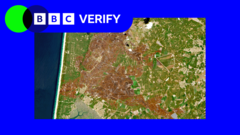
Wildfires have further transformed the landscape, particularly in France, where more than ninety thousand hectares have burned. This figure already exceeds previous records, according to the European Forest Fire Information System. The largest blaze occurred in the Gironde region near Bordeaux, consuming an area roughly the size of the Isle of Wight. The severity of these fires is linked to tinder-dry conditions created by prolonged heat and lack of rainfall. Vegetation and soils have dried out faster than usual, creating ideal fuel for rapid fire spread.
Vegetation health metrics derived from satellite data confirm widespread stress across western Europe. The Normalised Difference Vegetation Index shows that approximately seventy percent of France is experiencing lower greenness levels compared to a five-year benchmark. Similar patterns are evident in nearly half of the UK and forty percent of western Germany. Soil moisture in the worst-affected areas is lower than on ninety-eight percent of comparable historical dates. Experts warn that even if rainfall returns, significant agricultural damage may already be irreversible, posing risks to food production and crop yields.
The convergence of these factors—extreme heat, drought, glacial melt, and wildfire—illustrates the compounding impacts of climate change on European infrastructure and ecology. While immediate weather patterns explain the current intensity, the underlying trend points to a new normal for the region. The visible scars on the landscape, from browned fields to retreated glaciers, serve as clear evidence of systemic environmental stress. Future resilience will depend on adapting to these changing conditions while addressing the root causes of global warming.
As the summer season continues, monitoring agencies remain focused on tracking further developments in river levels, ice loss, and fire risks. The data collected so far provides a sobering snapshot of how quickly extreme weather can alter familiar landscapes. For policymakers and industry leaders, the challenge lies in mitigating immediate disruptions while preparing for long-term shifts in climate patterns. The images from space offer an unambiguous view of a continent under pressure, highlighting the urgent need for coordinated response strategies.
Sources behind this briefing
Go to the original reporting
- BBC Science & Environment↗Europe's scorched landscapes seen from space after summer heatwaves

