The short version
- Recent incidents involving content creators being bitten by sharks have drawn attention from marine biologists concerned about unsafe behaviors.
- Research indicates that close human contact elevates stress hormones in sharks, potentially harming their immune systems and reproductive success.
- While overall unprovoked attack rates remain stable, experts note a surge in bites occurring specifically during attempts to capture footage.
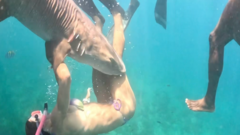
A growing number of high-profile shark bite incidents involving social media content creators has prompted marine scientists to raise alarms about the safety and ecological impact of these interactions. In April, Tayane Dalazen, a Brazilian lawyer and online personality, was bitten by a nurse shark while diving off the coast of Brazil. She reported feeling strong pressure on her leg before the animal clamped its jaws around her thigh, leaving lacerations. Although she remained calm and did not provoke the animal, she later discovered that tour organizers had been feeding the sharks to encourage interaction with tourists.
Dalazen’s experience is part of a broader pattern observed by researchers over the past year. At least three influencers have been bitten in separate incidents recently, including a fishing content creator who nearly lost his leg to a reef shark while spearfishing and a Chinese creator bitten in the Maldives. These events were all recorded on camera, contributing to a trend that scientists say is becoming increasingly frequent. Kristian Parton, a shark scientist and host of the Shark Bytes YouTube channel, noted that he sees videos of people swimming dangerously close to sharks every week, a volume far exceeding previous years.
Data from the International Shark Attack File supports these observations, showing a marked increase in bites occurring while individuals attempt to take footage with sharks over the last three years. A recent study on wildlife swim expeditions found that influencers and photographers were the most likely participants to disregard safety instructions. Historical data highlights the severity of such risks; in February of the previous year, a tourist in the Caribbean had both hands bitten off while photographing a bull shark from shallow waters, and two months later, a snorkeler in Israel was killed by sharks while using a selfie stick.
Despite these alarming specific cases, the overall risk of shark bites remains statistically low. The number of unprovoked attacks worldwide has stayed relatively stable for three decades, averaging approximately seventy bites per year. However, the nature of recent incidents differs from historical norms because they often involve deliberate attempts to engage with the animals for content. Parton emphasized that sharks are apex predators and wild animals, comparing the danger of touching them to attempting to pet a lion in the Serengeti. He explained that sharks may use defensive or exploratory bites when humans invade their personal space.
Beyond immediate physical danger to humans, these interactions pose significant threats to shark health. Scientific studies have demonstrated that approaching or touching sharks causes elevated levels of glucocorticoids, stress hormones that can weaken the animals' immune systems. High stress levels are linked to increased mortality rates and aborted offspring. Parton argued that stressing sharks in critical habitats such as nurseries, breeding grounds, or feeding areas deprives them of essential resources needed for survival, creating a conservation problem that extends beyond individual incidents.
The debate over responsible engagement with marine life is complicated by prominent figures in the industry who defend their practices. Ocean Ramsey, a former model and content creator known for swimming with large great white sharks, runs shark tours in Hawaii. She has posted footage of herself touching sharks and holding their dorsal fins, actions that contradict standard safety guidelines. Ramsey stated that her intent is to gain protection for sharks through education rather than to accumulate views. She claims her work contributes to research articles and data collection.
Ramsey denies that her close interactions cause harm, asserting that she respects the animals by observing from a distance and allowing them to initiate contact. She argued that the public should be held accountable for their own actions, suggesting that most viewers understand the educational message behind her content and do not attempt to replicate dangerous behaviors. This perspective stands in contrast to the warnings from scientists who believe that such videos normalize risky behavior and encourage others to ignore safety protocols.
The tension between content creation and conservation highlights a complex challenge for marine management. While shark attacks remain rare, the specific subset of incidents involving influencers suggests a correlation between social media incentives and unsafe proximity to wildlife. Researchers continue to monitor these trends, emphasizing that the stress inflicted on sharks and the potential for serious injury to humans are real consequences of ignoring established safety boundaries. The stability of long-term attack statistics does not negate the emerging risks associated with this new style of tourism.
As the popularity of shark-diving experiences grows, tour operators and content creators face increasing scrutiny regarding their practices. Feeding sharks to ensure interactions, as reported in Dalazen’s case, alters natural behaviors and may increase aggression or dependency. Scientists urge a shift toward observation-based tourism that prioritizes animal welfare and human safety. Without clearer guidelines and enforcement, the cycle of risky behavior for viral content is likely to continue, posing ongoing threats to both the sharks and those seeking to capture their image.
Sources behind this briefing
Go to the original reporting
- BBC Science & Environment↗The influencers getting bitten while chasing the perfect shark shot

