The short version
- Two residents removed a large Greenpeace mural from a wildfire-damaged hillside in North Wales, arguing the act constituted an intrusion into local grief and caused further environmental harm.
- Greenpeace defended the temporary water-based paint installation as a necessary visual protest against oil drilling and climate change, stating it was applied only to areas where vegetation had already been destroyed by fire.
- The incident highlights tensions between activist tactics aimed at raising political awareness and community desires for respect and minimal impact in the wake of devastating natural disasters.
A dispute over environmental protest methods has emerged in North Wales following the removal of a large mural from a mountainside recently devastated by wildfires. The artwork, created by the campaign group Greenpeace, depicted Prime Minister Andy Burnham holding an oil drum with the caption 'Our house is on fire Andy.' It was painted on the blackened slopes above homes in Capelulo, Conwy, an area where approximately 200 acres were scorched during a major incident declared by local fire services in July.
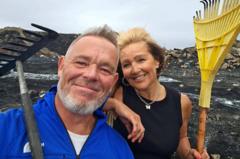
The blaze had come dangerously close to residential properties, forcing the evacuation of thirty-six households. Among those displaced was Allie Evans, a hairdresser who returned to find her landscape fundamentally altered. Upon seeing images of the mural online, she joined Dean Ward, another local resident, in ascending the hillside to remove the paint. They described their actions as a response to what they perceived as a disrespectful intrusion into the community’s collective mourning and recovery process.
Evans expressed deep frustration with the campaign group’s choice of medium and location. She argued that staining ancient rocks and soil with paint contradicted the environmental protection goals typically associated with such organizations. In her view, the act added insult to injury for residents already grappling with the trauma of near-loss. She suggested that alternative methods, such as displaying a banner, could have conveyed the same message without physically altering the damaged terrain.
The two individuals used rakes to scrape away the paint, breaking it into flakes and mixing it into the soil. Evans noted that some sections of the paint had baked onto the surface, making complete removal difficult. While the overall image was largely erased, faint stripes remained visible on the site. Ward stated he took satisfaction in dismantling the work, criticizing Greenpeace for failing to adhere to a 'leave no trace' ethic despite their environmental mission.
Greenpeace UK co-executive director Areeba Hamid defended the action, clarifying that the artwork was not intended to disturb grieving residents but to highlight the escalating climate crisis. She emphasized that the installation was temporary by design, utilizing water-based paint commonly used on sports turf and considered safe for grass, plants, and soil. The group asserted that they took care to minimize impact by applying the paint only to areas where the fire had already eliminated all living vegetation.
Hamid argued that the primary threat to the landscape was not the paint but extreme weather events driven by fossil fuel consumption. She stated that the mural aimed to challenge the systems responsible for such damage and send a direct message to the Prime Minister about the dangers of continued oil and gas drilling. According to Hamid, scientific evidence links increased drilling to more frequent heatwaves, droughts, and wildfires, which leave communities vulnerable to devastation.
Local political figures have weighed in on the controversy, with Bangor Conwy Môn Senedd member Janet Finch-Saunders condemning the mural as environmental vandalism. She argued that burnt hillsides should not serve as canvases for political protest, implying that such actions trivialize the suffering of those affected by the disaster. The incident underscores the complex relationship between activist visibility and community sensitivity in the aftermath of ecological trauma.
The removal of the mural reflects broader tensions regarding how environmental messages are delivered in sensitive contexts. While activists seek to draw urgent attention to policy failures and climate risks, residents often prioritize respect for their immediate surroundings and emotional well-being. The physical alteration of a disaster site, even with biodegradable materials, can be perceived as an additional burden on communities already struggling to rebuild.
As the area continues to recover from the July wildfires, the incident serves as a case study in the challenges of balancing advocacy with empathy. Greenpeace maintains that its actions were justified by the severity of the climate threat, while locals insist that the method undermined the very values the group claims to uphold. The remaining traces of paint on the hillside stand as a physical reminder of this clash between political urgency and local grief.
Future protests in similar contexts may need to navigate these competing priorities more carefully. The incident has sparked debate about whether visual interventions on damaged landscapes are appropriate or counterproductive. For now, the focus remains on the ongoing recovery efforts in Conwy, where residents seek stability and respect as they deal with the long-term impacts of the wildfire.
Sources behind this briefing
Go to the original reporting
- BBC Science & Environment↗Wildfire-hit residents remove Greenpeace mural of Burnham from scorched mountain

