The short version
- The Mislington leg is now interpreted as part of an imperial monument erected in southern Scotland rather than loot taken from the south.
- New findings indicate Roman presence significantly influenced local artistic traditions and political structures among Celtic tribes.
- The exhibition highlights a complex relationship where Roman occupation eventually spurred indigenous coalition-building against imperial forces.
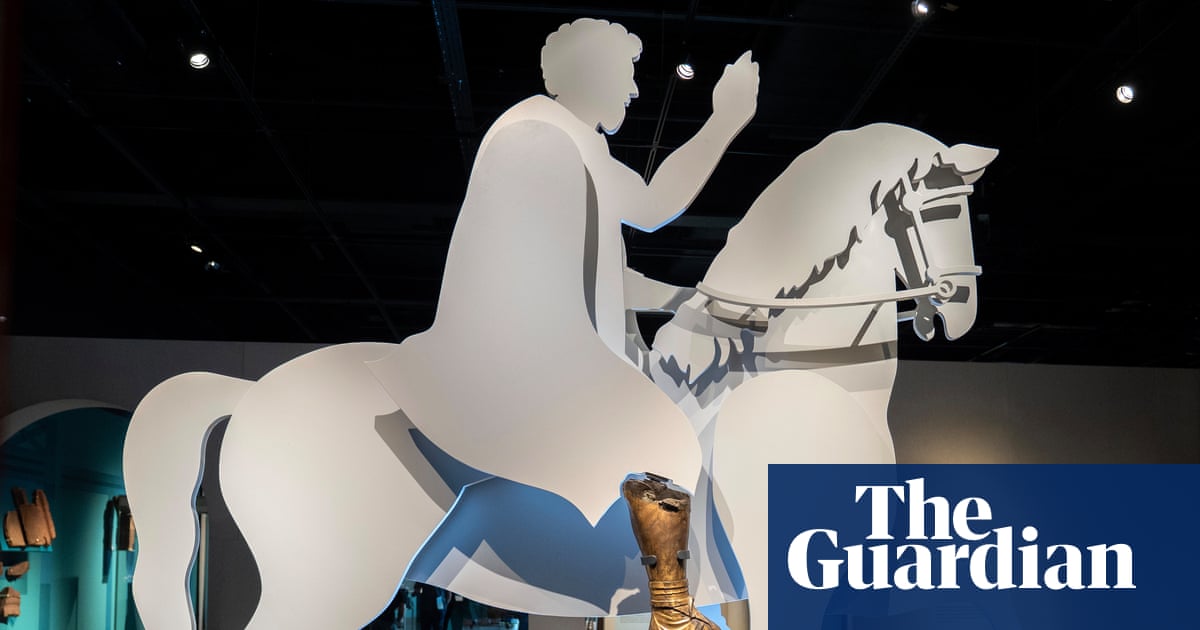
A major new exhibition at the National Museum of Scotland in Edinburgh is reshaping the historical narrative regarding the Roman Empire’s footprint in northern Britain. Central to this reinterpretation is the Mislington leg, a large gilded bronze limb discovered in a bog more than two centuries ago. For decades, scholars assumed the artifact had been looted from York or another southern location, severed by marauding tribes, and carried north across Hadrian’s Wall. Early twentieth-century antiquarians struggled to imagine conditions that would lead to such a statue being erected anywhere beyond the Great Wall.
Current archaeological analysis overturns this long-held assumption. Experts now believe the limb originated in the Scottish Borders as part of a massive equestrian statue depicting Emperor Antoninus Pius. This monument was likely established near Hawick around AD 140, following Roman military campaigns that secured control over southern Scotland. The piece had remained largely unseen by the public for a century, stored in the charter room at Dalkeith House, before becoming the focal point of this comprehensive review of Roman activity in the region.
The exhibition argues that the Romans were a far more substantial force north of Hadrian’s Wall than earlier histories suggested. Curators present evidence that imperial troops occupied significant territories, produced distinct artworks, and influenced Scottish politics long after their formal retreat. Dr. Fraser Hunter, the principal curator, notes that such monumental statues would have appeared profoundly alien to Iron Age communities, who lacked a tradition of naturalistic human depiction. The visual dominance of these structures likely left a lasting impression on local populations.
Contrary to the theory that the leg was hacked off in violence, researchers propose it was carefully removed and deposited in the bog where it was eventually found. This suggests a deliberate act rather than chaotic looting. The artifact shares significant similarities with imperial statues found in other frontier regions, reinforcing the idea that Roman administrative and symbolic practices extended deep into what is now Scotland. The display aims to illustrate how these interventions shaped indigenous responses over centuries.
Other artifacts in the collection underscore the extent of Roman settlement and cultural exchange. A reconstructed earthenware bowl from Inveresk, a site identified as a major center of imperial power during the Antonine period, features unique animal reliefs including dolphins, stags, and hunting dogs. This specific combination of motifs has not been found elsewhere in the United Kingdom, indicating localized artistic production influenced by Roman tastes but distinct in its execution.
The museum also presents two stone altars from a mithraeum excavated at Inveresk, preserved with enough detail to reveal their original vibrant colors through dramatic lighting techniques. One altar features slits and holes carved around the head of Mithras, designed to allow lamplight to shine through in the dark temple environment. Additionally, the complete skeleton of a cavalry horse, carefully buried at the site, highlights the value placed on military assets. Such burials are rare in Britain, where horses were typically disposed of after service.
The broader historical implications extend beyond military presence to cultural transformation. Recent scholarship indicates that pre-Roman Scotland lacked a tradition of stone carving, yet the occupation spurred the development of rich native styles, eventually leading to the ornate Pictish standing stones. Celtic rulers became interested in Roman silver, previously unknown locally, which the empire used to purchase loyalty. However, this engagement also provoked resistance.
By the third and fourth centuries, the persistent Roman threat encouraged Pictish tribes to merge into a unified anti-Roman coalition. Curators suggest that imperial interventions often created stronger adversaries by forcing smaller groups to consolidate. These emerging polities adopted Roman models for sculpture and writing while developing their own creative identities. The exhibition thus portrays a dynamic frontier where occupation and resistance were intertwined, leaving a complex legacy that continues to inform our understanding of ancient Scotland.
Sources behind this briefing
Go to the original reporting
- The Guardian World↗Bronze leg found in Scottish bog sheds new light on Roman occupation