The short version
- The Office of Rail and Road has denied applications for new direct train services connecting London with Wrexham, Rochdale, and Blackpool due to severe congestion on the West Coast Main Line.
- Regulators argue that adding more trains would eliminate necessary buffer times in the schedule, reducing the network's ability to recover from disruptions and increasing delay risks for all passengers.
- While most new service proposals were rejected, one additional evening service between London and Chester was approved to utilize otherwise idle rolling stock and crew resources.
The United Kingdom’s rail regulator has formally rejected multiple proposals to introduce direct train services between London and several northern destinations, citing insufficient capacity on the heavily congested West Coast Main Line. The Office of Rail and Road (ORR) determined that adding new routes would compromise the reliability of the broader network, effectively vetoing plans for connections to Wrexham, Rochdale, and additional services to Blackpool. This decision underscores the persistent infrastructure challenges facing Britain’s rail system as operators seek to expand access while the existing timetable struggles to maintain stability.
The regulator’s assessment indicates that the southern section of the West Coast Main Line remains under significant pressure, with performance metrics showing limited resilience. According to the ORR, the capacity and operational conditions have not materially improved since similar applications were turned down in 2025. The authority emphasized that current gaps in the schedule are essential for allowing trains to recover from minor disruptions. Without these buffers, any delay could cascade through the network, causing widespread chaos rather than isolated incidents.
Among the rejected proposals was a plan by the Wrexham, Shropshire & Midlands Railway Company (WSMR) to launch an independent open-access service linking Wrexham with the capital. This is not the first time such an attempt has been made; direct trains previously operated between London Marylebone and Wrexham from 2008 to 2011 but were discontinued due to financial losses. The recent proposal, submitted after a previous rejection last year, offered a slightly less frequent service. However, the ORR maintained that even this reduced frequency would pose unacceptable risks to network reliability.
The potential Wrexham service had garnered attention due to the town’s recent surge in global visibility, driven by the ownership of Wrexham AFC by Hollywood actors Ryan Reynolds and Rob McElhenney. This cultural phenomenon has sparked a mini-boom in local tourism and interest, creating demand for improved transport links. Despite this economic opportunity, the regulator prioritized systemic stability over localized growth, arguing that the benefits of new destinations do not outweigh the risk of degrading service for all passengers on the main line.
Similarly, proposals from Lumo, a private operator owned by First Group, to run services between London and Rochdale were also rebuffed. These plans had been scaled down following an initial rejection in 2025, but the ORR found them still incompatible with current capacity constraints. The trend reflects a broader shift in the rail industry, where private operators are increasingly looking to expand open-access routes as major contracts are renationalized under the transition to Great British Railways. This dynamic creates tension between market-driven expansion efforts and regulatory caution regarding infrastructure limits.
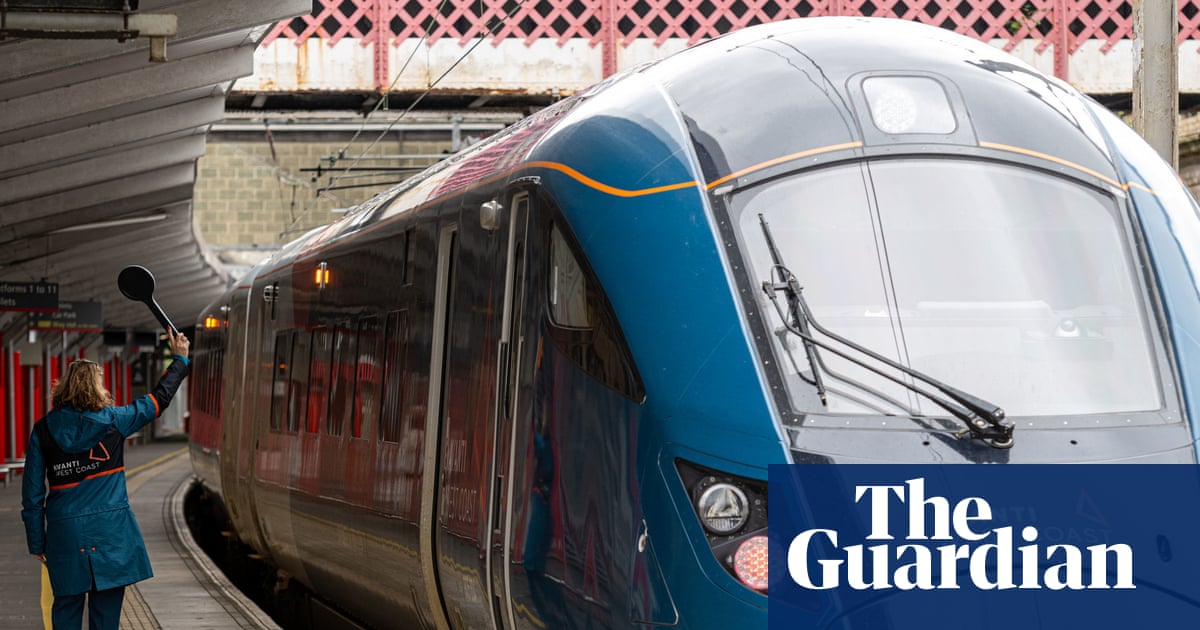
Avanti West Coast also faced restrictions, with its request for additional London-Blackpool services denied. The regulator cited the same concerns about overcrowding and lack of space on the line. However, in a partial concession, the ORR approved one extra evening service between London and Chester. This specific allowance was granted to prevent the train from running as a “ghost train,” where crew and rolling stock would otherwise return north to depots overnight without carrying passengers. This decision follows public outcry over a similar ruling last year that barred a Manchester-London service from taking passengers, highlighting the regulator’s attempt to balance efficiency with operational necessity.
Stephanie Tobyn, the ORR’s director of strategy, policy and reform, noted that while new services can bring real benefits to communities, the current state of the West Coast Main Line does not support further expansion. She emphasized that detailed analysis showed adding more trains would reduce the network’s ability to handle disruptions, thereby increasing the likelihood of delays spreading across the system. The regulator’s stance is backed by external reviews, reinforcing the conclusion that the infrastructure cannot currently absorb additional load without significant performance degradation.
The rejection of these services highlights the complex trade-offs facing UK rail policy. As the government moves toward greater public ownership through Great British Railways, private operators are seeking opportunities in open-access markets. However, physical constraints on key routes like the West Coast Main Line limit this flexibility. The regulator’s decisions suggest that until substantial infrastructure improvements are made, the focus will remain on maintaining existing reliability rather than expanding service offerings, leaving communities like Wrexham and Rochdale without direct rail links to London for the foreseeable future.
Sources behind this briefing
Go to the original reporting
- The Guardian World↗Wrexham and Rochdale train services rejected over west coast line pressure