The short version
- July 2026 saw 624 wildfires, the highest monthly total recorded, contributing to a year already ranking as the second worst on record.
- The season included the first wildfire-related death in the dataset and significant damage near critical infrastructure like the Sizewell B nuclear station.
- Critics highlight a contradiction between rising fire risks and the government's decision to drop countryside preparation plans despite equipment shortages.
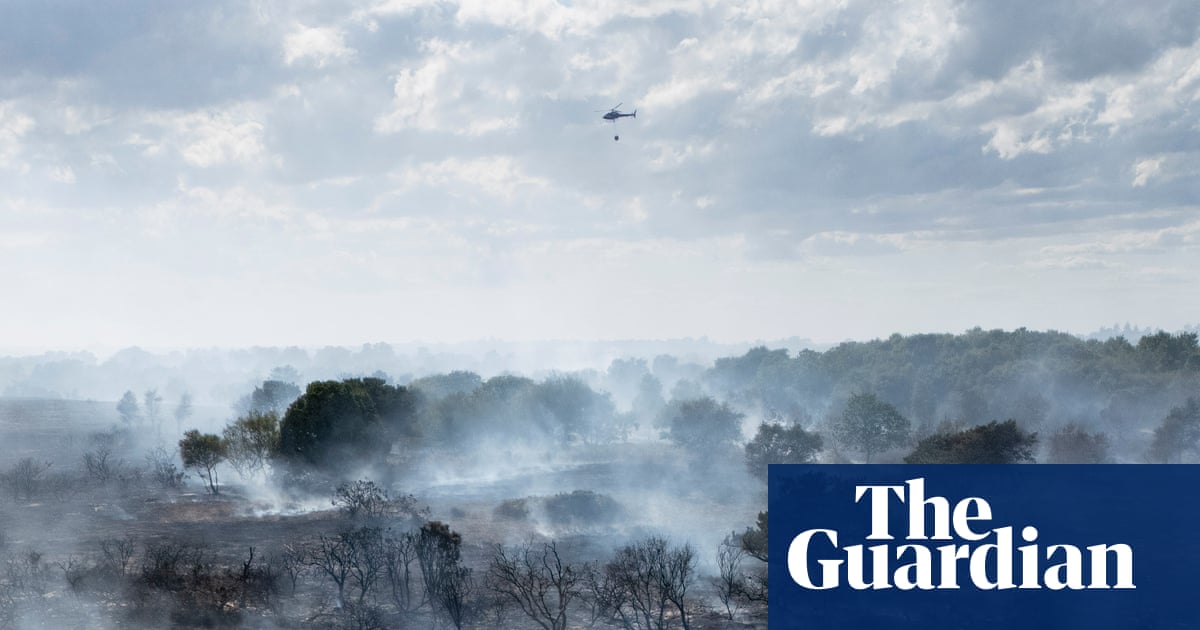
Provisional government statistics indicate that July 2026 was the most severe month for wildfires in England’s recorded history. The data shows 624 incidents occurred during that single month, driving the annual total to 1,354 fires through August. This figure places 2026 as the second-worst year on record, trailing only 2022, which saw 1,592 fires over a full twelve-month period. The concentration of blazes in the summer months underscores a sharp deviation from historical norms, with four of the last nine years exceeding 950 incidents compared to consistent totals under 750 between 2010 and 2017.
The intensity of this year’s fires is linked directly to unprecedented weather conditions. The Met Office has identified 2026 as the hottest summer on record for the UK, with 40 days surpassing 30C (86F). This shattered the previous record of 34 such days. Scientists attribute this extreme heat to the climate crisis driven by fossil fuel consumption, noting that such temperatures have turned large swathes of the countryside into highly flammable terrain. The dry conditions created a tinderbox effect that exacerbated the spread and severity of the blazes.
The human and environmental toll of these fires has been significant. For the first time in the data series spanning 2010 to 2026, a death was recorded as a direct result of a wildfire. A 70-year-old man died after a fire ignited in fields behind residential areas in Chipping Campden, Gloucestershire. Beyond the loss of life, critical infrastructure faced threats, including a devastating blaze near the Sizewell B nuclear power station in Suffolk. That incident also destroyed vast sections of a protected nature reserve, highlighting the vulnerability of both energy assets and ecological sanctuaries.
Despite the escalating danger, reports indicate that the government quietly abandoned plans to prepare the English countryside for wildfires. This decision came even as new data revealed that fire crews lack adequate protective gear to handle such emergencies effectively. Alistair Carmichael, chair of the Commons environment food and rural affairs committee, stated that this raises serious questions about whether the summer’s outcomes could have been mitigated with better resources on the ground. The absence of preparedness measures contrasts sharply with the visible increase in fire frequency and intensity.
In response to specific incidents, such as a wildfire spreading across homes in Stourbridge, West Midlands, Prime Minister Andy Burnham convened an emergency Cobra meeting. This led to a temporary ban on the sale of disposable barbecues, a measure aimed at reducing ignition sources during peak risk periods. However, critics argue that reactive measures are insufficient without long-term strategic planning. Guy Shrubsole, an environmental campaigner, accused successive governments of failing to act while the country burns, calling for radical changes to landscape management.
Shrubsole and other advocates emphasize the need to fire-proof landscapes by restoring peat bogs, ponds, and wetlands. They argue that cutting fossil fuels is essential to reducing the frequency and severity of wildfires. The upcoming Wildfire Summit, convened by the prime minister with fire and rescue service partners, aims to address these issues. The government has stated it is investing nearly £100 million to upgrade national resilience assets, asserting that this funding will ensure proper equipment and resources are available.
The data also highlights a specific surge in woodland and forest fires, with 88 recorded incidents in 2026 alone, marking a record for that category. This trend suggests that the type of vegetation burning is shifting or becoming more prevalent in fire zones. The upward trajectory in total wildfire numbers indicates a structural change in environmental risk rather than an isolated seasonal anomaly. As the data series continues through 2026, officials are under pressure to demonstrate that current investments will translate into tangible improvements in safety and response capabilities.
Looking ahead, the focus remains on whether the promised resilience upgrades can keep pace with the accelerating climate impacts. The government describes this summer as one of the most challenging wildfire seasons on record, acknowledging the need for better preparation. However, the gap between policy announcements and on-the-ground realities, such as equipment shortages and scrapped prevention plans, remains a point of contention. The coming months will test whether the summit’s decisions lead to meaningful changes in how England manages its increasingly volatile fire landscape.
Sources behind this briefing
Go to the original reporting
- The Guardian World↗July 2026 was worst on record for wildfires in England, data shows