The short version
- Defense Secretary Pete Hegseth intends to livestream the execution of Nidal Hasan using firearms at the site of the 2009 Fort Hood attack.
- Human rights organizations note that only Iran and Afghanistan currently conduct systematic public executions, a practice often linked to authoritarian consolidation.
- Legal challenges within the federal court system could significantly delay or prevent the scheduled December execution date.
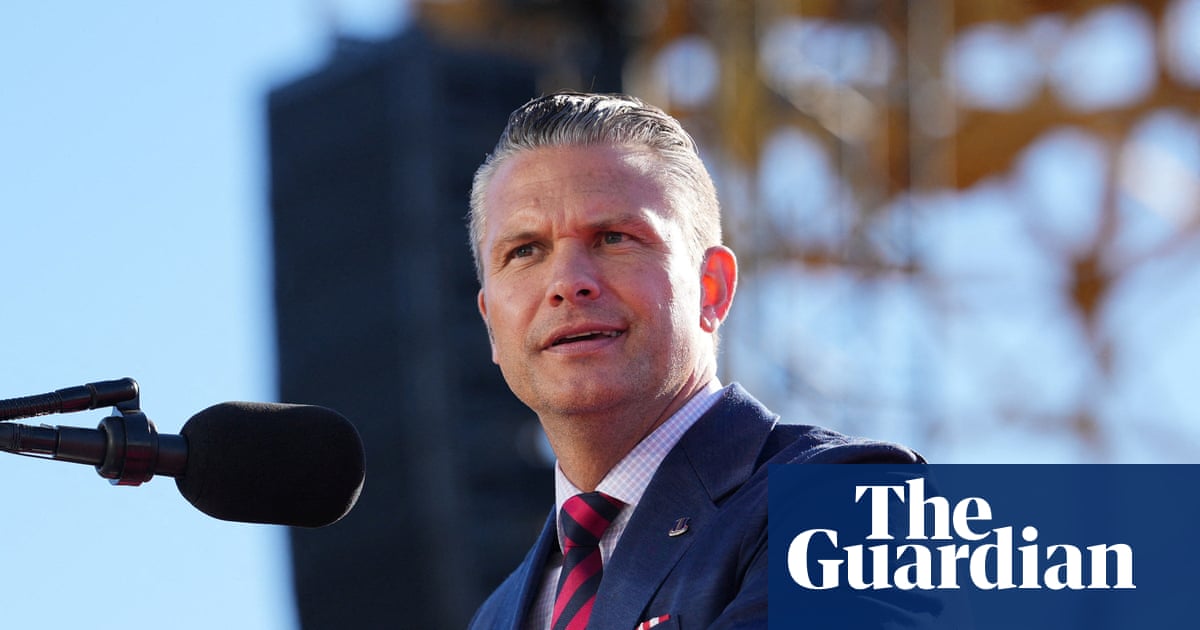
The United States is facing intense scrutiny after Defense Secretary Pete Hegseth announced plans to livestream the execution of Maj. Nidal Hasan, the former army psychiatrist convicted for the 2009 shooting at Fort Hood in Texas. The proposal represents a significant shift in American penal policy, as public executions have been largely abandoned in the country since the 1930s. If implemented, this move would place the United States alongside a small group of nations that still utilize public capital punishment, raising questions about the symbolic and practical implications of such a decision.
Hegseth has stated that the execution is scheduled for December 3 and will occur at the same location as the original attack. He indicated that firearms would be used to carry out the sentence, mirroring the method Hasan employed during the massacre that killed thirteen people. This approach contrasts sharply with standard lethal injection protocols typically used in US prisons. The decision rests with Hegseth, who holds the authority to determine the conduct of military executions, though the plan has drawn immediate criticism from human rights advocates and legal experts.
International observers point out that systematic public executions are now rare globally. According to Amnesty International, only Iran and Afghanistan currently engage in this practice on a regular basis. In 2025, authorities in Tehran carried out eleven public killings, while the Taliban regime in Afghanistan executed six individuals in similar fashion. These events often take place in crowded public spaces, such as sports stadiums or central squares, serving as visible demonstrations of state power.
Historical context suggests that public executions are frequently employed by governments with weak rule of law or those seeking to intimidate populations. Legal scholars argue that such spectacles can serve to convince communities that criminals will be punished when confidence in the judicial system is low. In some cases, these acts are designed to cow citizens through terror rather than uphold justice. Armed militant groups have also used public executions to assert authority and radicalize supporters, as seen with the Islamic State between 2014 and 2019.
The global landscape of capital punishment has shifted in recent years. Amnesty International reported that 2,707 executions occurred worldwide in 2025, the highest number since 1981. This sharp increase was driven largely by Iran, which recorded over 2,100 executions, its highest total in decades. The organization noted that authorities in several countries have placed the death penalty at the center of tough-on-crime narratives to project state power and score political points, often while restricting civic space and silencing dissent.
Saudi Arabia, once known for public beheadings in Riyadh and other cities, appears to have ended this practice. This change highlights a divergence in how different nations approach capital punishment. While some regimes use public executions to reinforce control, others have moved toward more private methods or abolished the death penalty entirely. The United States’ potential return to public executions would thus stand out as an anomaly among Western democracies.
In the US, the last widely recognized instance of a public execution involved Timothy McVeigh in 2001, where survivors and victims’ relatives were allowed to watch his lethal injection via video link. However, this was not a broadcast to the general public. The proposed livestreaming of Hasan’s execution would break with this precedent, potentially setting a new standard for transparency—or spectacle—in American justice. Critics argue that such visibility could undermine the dignity of the process and turn punishment into entertainment.
Despite Hegseth’s announcement, the execution is not guaranteed to proceed as planned. Hasan retains the right to launch appeals within the civilian federal court system, which could delay the sentence for many years. Legal challenges often focus on procedural errors, mental health considerations, or constitutional violations. These avenues provide a check on executive authority and ensure that each case receives thorough judicial review before final implementation.
The debate over Hasan’s execution underscores broader tensions regarding the role of capital punishment in modern society. Proponents may view public visibility as a form of accountability for victims and their families, while opponents see it as a regression to barbaric practices. As the US navigates this unprecedented scenario, the outcome will likely influence future policies on military justice and the ethical boundaries of state-sanctioned violence.
What comes next depends largely on the legal system’s response to Hasan’s appeals. If courts uphold the sentence and allow the livestream, the event could become a focal point for international human rights discourse. Conversely, if delays or cancellations occur, it may signal a rejection of Hegseth’s approach. Regardless of the outcome, the controversy highlights the enduring complexity of balancing justice, deterrence, and moral standards in penal policy.
Sources behind this briefing
Go to the original reporting
- The Guardian World↗Pete Hegseth’s plan to livestream execution of Nidal Hasan puts US in poor company