The short version
- Treasury spokesperson Charlie Maynard has resigned to trigger a leadership contest against Sir Ed Davey, citing frustration with the party's declining poll numbers.
- Deputy leader Daisy Cooper and former leader Tim Farron have rallied behind Davey, dismissing the resignation as a distraction from the broader political fight.
- Internal tensions are fueled by disagreements over pension policy and concerns that the party is losing relevance in a fragmented electoral landscape.
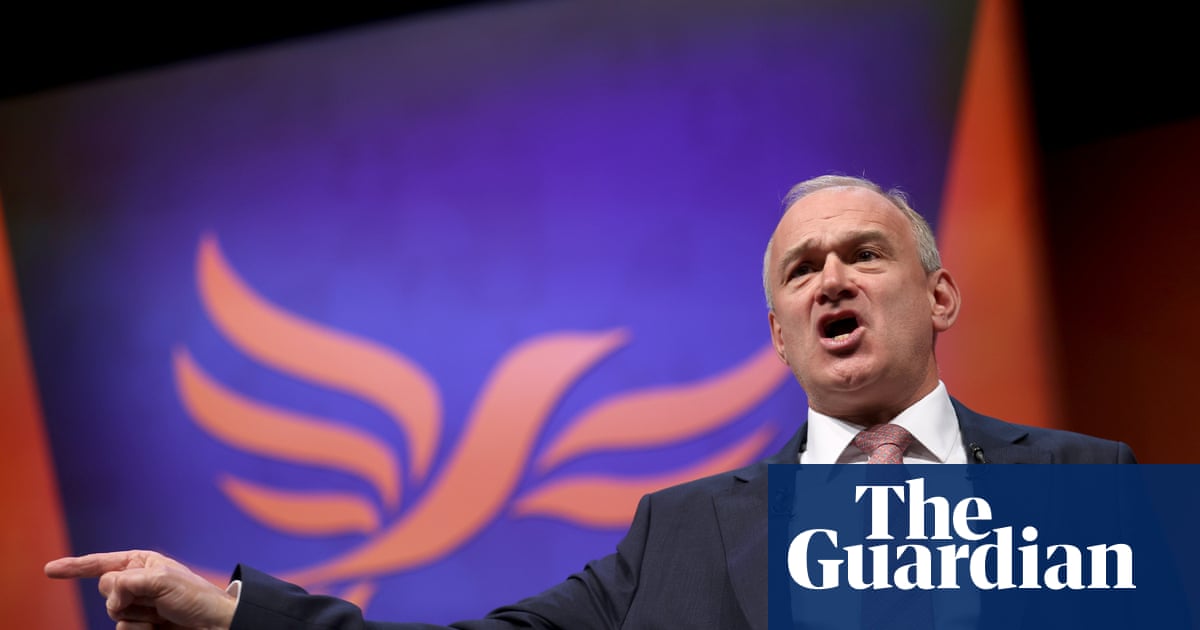
Sir Ed Davey faces an intensifying internal challenge to his authority within the Liberal Democrats after Charlie Maynard, the party’s Treasury spokesperson, resigned from his frontbench role. The Witney MP submitted his resignation on Friday with the explicit aim of unseating Davey as leader, marking a significant escalation in months of mounting frustration regarding the party’s electoral performance. This move follows closely on the heels of Alison Bennett stepping down as care and carers spokesperson earlier in the week, signaling a broader discontent among senior figures who feel the party is failing to connect with voters.
Maynard’s departure represents a direct test of Davey’s hold on the parliamentary party. While those close to the leader privately acknowledge the existence of a small but vocal group of dissatisfied MPs, the leadership team maintains that support remains robust. Daisy Cooper, the deputy leader, stated immediately after the news broke that the vast majority of Liberal Democrat MPs continue to back Davey and are angry at what they perceive as a distracting internal conflict. She emphasized that the party views itself as the primary barrier against a potential Reform UK government and requires unity to navigate the upcoming general election.
The context for this revolt is a stark contrast between recent electoral success and current polling trends. Under Davey’s leadership, which began in 2019 and was formalized in August 2020, the Liberal Democrats achieved their most significant result in over a century during the 2024 general election. The party secured 71 or 72 seats, depending on the final count, establishing itself as the third-largest force in the House of Commons. Maynard himself was elected in that cycle, taking the traditionally Conservative seat of Witney with a majority exceeding 4,000 votes.
Despite this historic gain, the party has struggled to maintain momentum in national opinion polls. Recent data places the Liberal Democrats in fourth or fifth position, trailing behind both the Green Party and Reform UK. This decline has sparked anxiety among members who fear the party is drifting toward political irrelevance. Julian Brazil, the leader of Devon County Council, had previously criticized Davey for lacking ambition and allowing the party to sleepwalk into obscurity. While Brazil praised Davey’s past leadership, he suggested that a fresh start might be necessary to articulate a clearer vision for the country.
Strategic disagreements over economic policy have further fractured the parliamentary party. At the recent conference in Brighton, Davey proposed a £17 billion income tax cut aimed at winning back former Conservative voters. He argued this measure would be funded entirely by economic growth generated through rejoining the European Union’s single market and customs union. However, this approach has not resolved internal tensions, particularly regarding social welfare policies that resonate with younger demographics.
A significant point of contention involves the party’s stance on the pension triple lock. Davey has strongly opposed Labour’s proposal to adjust the mechanism that guarantees state pensions rise in line with inflation, wages, or 2.5 percent. He argued that altering the triple lock would push more pensioners into poverty and harm millennials who are currently working hard but face uncertain retirement prospects. This position has drawn sharp criticism from within his own ranks.
Several Liberal Democrat MPs have dismissed Davey’s defense of the current pension policy as out of touch. One backbencher described his arguments as nonsense, while another noted that many millennials do not expect to receive a state pension at all, making the debate irrelevant to their immediate concerns. Critics within the party have accused Davey of gaslighting an entire generation by insisting that protecting the triple lock serves their long-term benefit.
For Maynard’s challenge to succeed, he must navigate strict procedural hurdles. Liberal Democrat rules require a vote of no confidence passed by a majority of all MPs to trigger a leadership contest. Additionally, any candidate seeking the leadership must secure nominations from at least 10 percent of the parliamentary party and obtain backing from 200 members across at least 20 local parties. The coming days will likely reveal whether Maynard’s resignation sparks a wider groundswell or remains an isolated protest.
Former leader Tim Farron has publicly defended Davey, suggesting that the party is well-positioned to match or exceed its recent electoral gains under current leadership. He characterized the internal dissent as unhelpful and counterproductive. As the Liberal Democrats grapple with these internal divisions, the broader political landscape remains volatile. The party’s ability to present a united front will be crucial in determining whether it can capitalize on its recent success or succumb to fragmentation.
The resignation of Maynard and Bennett highlights the difficulties of maintaining cohesion in a multi-party system where voter allegiances are shifting rapidly. While Davey retains the support of his deputy and many senior colleagues, the pressure to demonstrate tangible progress in polling numbers is mounting. The outcome of this leadership challenge will have significant implications for the party’s strategy and its role as a potential kingmaker or independent force in future elections.
Sources behind this briefing
Go to the original reporting
- The Guardian World↗Ed Davey faces growing revolt against leadership as senior Lib Dem MP quits
- BBC News↗Lib Dem MP quits frontbench job over Ed Davey's leadership