The short version
- Pope Leo XIV returned to his hospital room after a successful surgery to remove a lung nodule at Gemelli Hospital in Rome.
- Medical specialists indicate that early-stage removal of such nodules typically carries an excellent prognosis and low surgical risk.
- The Vatican has canceled public audiences through October 20, while the pontiff’s recovery will determine if he can proceed with a major South American trip in November.
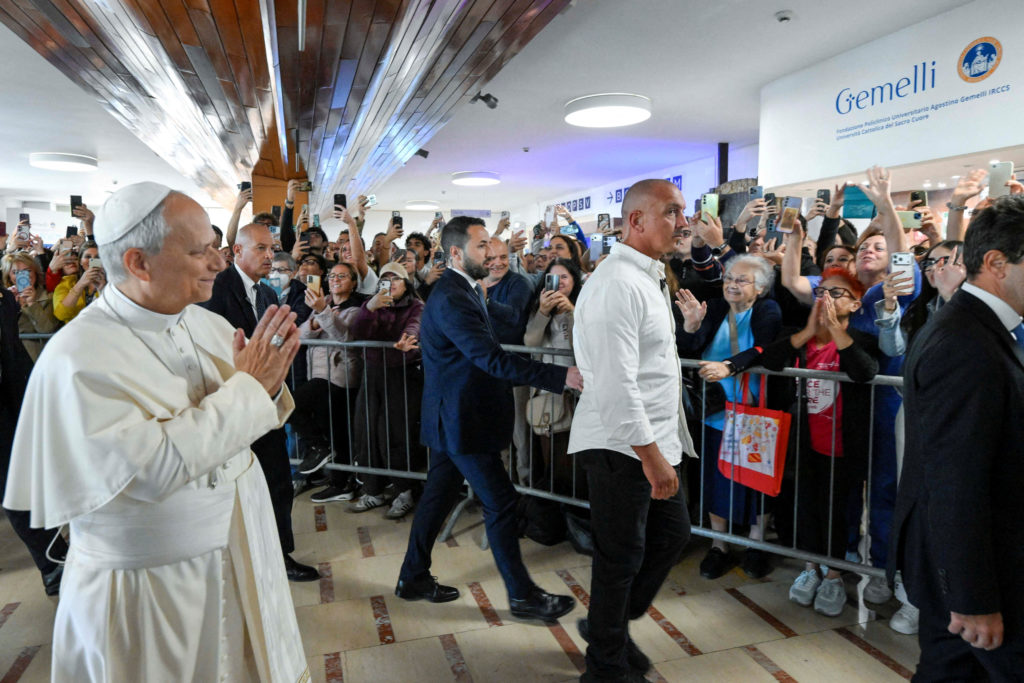
Pope Leo XIV underwent a scheduled surgical procedure on Tuesday to remove a lung nodule, an operation the Vatican described as successful and completed according to plan. The 71-year-old pontiff returned to his room at Rome’s Gemelli hospital following the intervention, which was led by Dr. Stefano Margaritora, the facility’s chief thoracic surgeon. A Vatican spokesman indicated that further medical details would be released at a later date, maintaining a cautious approach to the release of specific clinical data while confirming the immediate stability of the pope’s condition.
The decision to proceed with surgery followed the pontiff’s own disclosure during his Sunday noon prayer, where he announced the discovery of the small, localized nodule. This revelation marked the first publicly acknowledged major health issue during Leo’s 17-month tenure as head of the Catholic Church. By addressing the matter directly and arranging for prompt medical attention, the American-born pope has demonstrated a level of transparency regarding his physical well-being that distinguishes his papacy from recent predecessors who often kept health matters private until crises emerged.
Medical experts not involved in the pope’s care have characterized the situation as manageable due to the early stage of detection. Dr. Lorenzo Spaggiari, director of thoracic surgery at the European Institute of Oncology in Milan, noted that even if the nodule proves to be cancerous, the prognosis remains excellent because it was identified before spreading. The procedure likely involved a biopsy to determine the nature of the growth followed by the removal of the affected lung segment or lobe. Such interventions are standard for asymptomatic nodules found during routine checkups, offering a high probability of complete resolution without further treatment if lymph nodes test negative.
The surgery at Gemelli Hospital utilized advanced robotic technology, which allows for minimally invasive techniques with smaller incisions and faster recovery times compared to traditional open surgery. While the specific method used on Pope Leo was not explicitly detailed in Vatican statements, experts suggest that robotic bronchoscopy or similar systems could have been employed to target nodules as small as three millimeters. This technology provides surgeons with high-definition, three-dimensional views of the surgical site, reducing physical trauma to the patient. The risk associated with such procedures is considered very low for patients in good general health, with mortality rates estimated between 0.6% and 0.8%.
In a departure from tradition, Pope Leo will not be staying in the dedicated papal apartment at Gemelli Hospital, which has been used by previous popes for medical care. The Vatican press office explained that the private suite, located on the 10th floor and complete with its own chapel, is currently undergoing renovations. Instead, the pontiff is recovering in a nearby room. During the operation, medical staff gathered in the hospital chapel to recite the Rosary, led by Cardinal Baldassare Reina, Vicar of Rome, who asked for divine support for the pope and comfort for other patients in the facility.
The Vatican has canceled all public audiences scheduled through October 20 to allow the pope time to rest and recover. This pause in his public duties reflects the typical one-week hospital stay required for such thoracic surgeries. Cardinal Kikuchi Tsutomu of Tokyo emphasized that the surgery was not an emergency but a proactive measure designed to prevent future complications. By addressing the nodule now, the pontiff aims to avoid more invasive treatments later and ensure he remains fit for his demanding schedule.
A critical factor in the coming weeks will be the pope’s ability to resume travel, particularly regarding an ambitious trip planned for November 6 to 17 across Uruguay, Argentina, and Peru. This journey represents the longest itinerary of Leo’s papacy so far, involving over 31,000 kilometers of travel, a dozen flights, two helicopter rides, and significant altitude changes in the Andes. Medical guidelines generally advise patients to avoid flying for three weeks after lung surgery. If recovery proceeds without complication, the timeline would align with the start of the South American visit, though any delays could force adjustments to the extensive program.
The discovery of the nodule during routine examinations highlights the importance of regular health monitoring, even for high-profile individuals who may not exhibit symptoms. Experts describe the timing as fortunate, noting that asymptomatic nodules are often detected before they become clinically significant. As the Vatican awaits final pathology results, the focus remains on the pope’s immediate recovery and the preservation of his capacity to lead both domestically and internationally. The coming days will provide clearer indications of whether the planned overseas engagements can proceed as scheduled or require modification.
Sources behind this briefing
Go to the original reporting
- PBS NewsHour↗Pope Leo undergoes successful surgery to remove lung nodule, Vatican says