The short version
- NASA’s Perseverance rover identified mineral signatures consistent with ruby using time-resolved luminescence techniques.
- The discovery of corundum suggests past localized metamorphism, likely caused by meteor impacts rather than tectonic activity.
- Researchers are expanding the use of this detection method to better understand the geological history of ancient Martian regions.
NASA’s Perseverance rover has identified mineral signatures on Mars that correspond to ruby, marking a significant step in understanding the Red Planet’s complex geological history. The discovery was made possible by the SuperCam instrument, which detected specific light emissions from rocks near the rim of Jezero crater. While these findings do not indicate the presence of gem-quality stones suitable for collection, they reveal the existence of corundum crystals containing chromium. This identification provides scientists with a new window into the thermal and chemical processes that have shaped the Martian surface over billions of years.
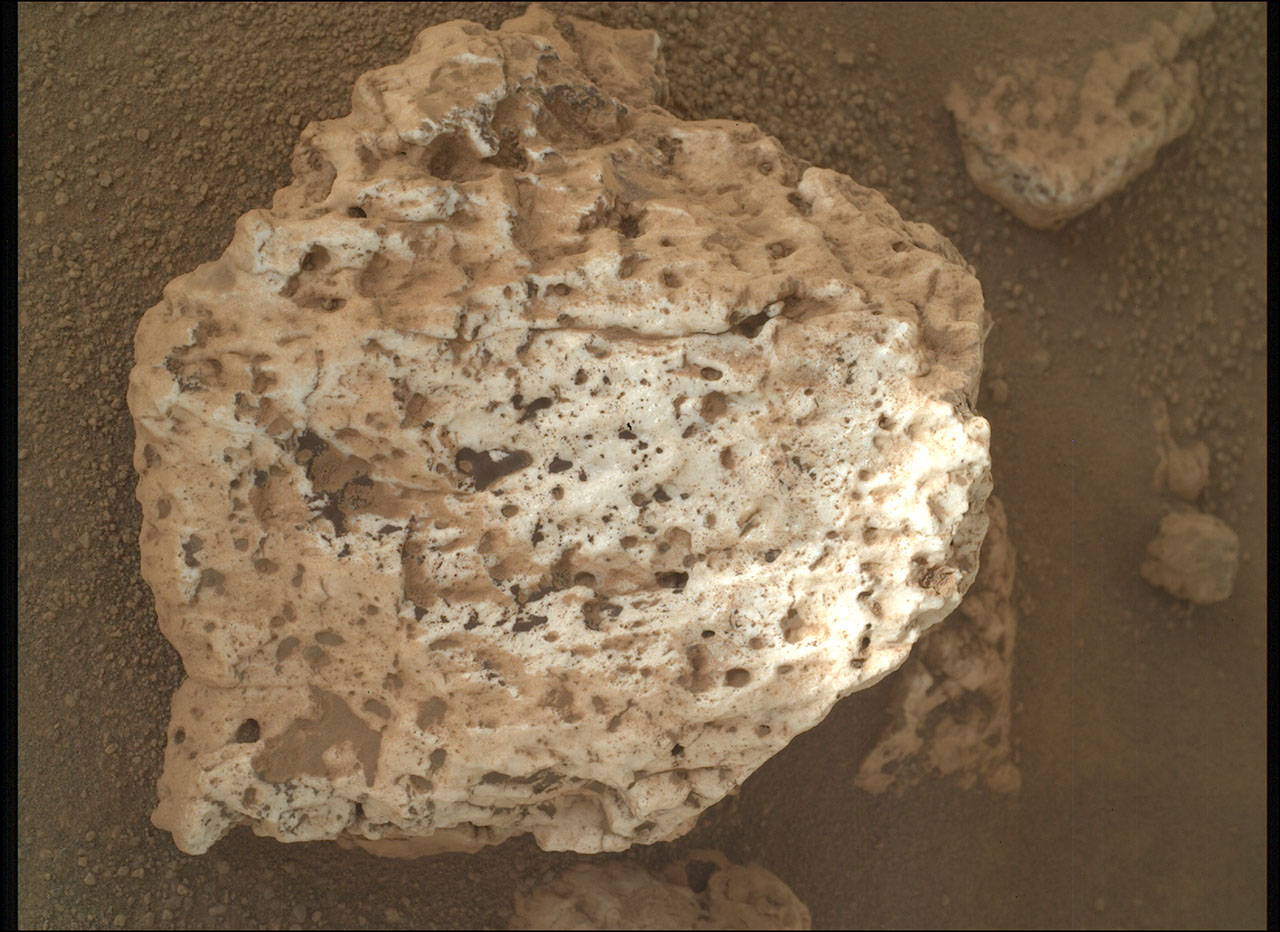
The detection relied on a specialized technique known as time-resolved luminescence, which is a secondary capability of SuperCam’s Raman spectroscopy system. When the instrument’s laser strikes certain rocks, it can trigger delayed atomic transitions that emit photons at specific wavelengths. Two years ago, the research team observed strong, narrow peaks at 692.7 and 694.1 nanometers when analyzing a light-colored rock. These precise measurements allowed scientists to verify that the emissions originated from chromium atoms embedded within a corundum mineral structure. The ability to time the delay of these atomic transitions was crucial for confirming the mineral’s identity with high confidence.
Corundum is a mineral typically associated with metamorphic and pegmatitic environments on Earth, conditions that are not expected to occur naturally on Mars. The Red Planet lacks active plate tectonics, the primary driver of such geological formations in our solar system. Consequently, the presence of these crystals presents a puzzle for planetary geologists. Their existence suggests that alternative mechanisms must have provided the necessary heat and pressure to form corundum in this ancient terrain. This finding challenges previous assumptions about the limited scope of metamorphic activity on Mars.
Scientists propose that large meteor or asteroid impacts could be responsible for creating the localized conditions required for corundum formation. Such collisions generate intense, short-term heating that can induce metamorphism in the surrounding rock. Jezero crater is an ancient landscape, and its rim area has likely experienced significant bombardment over eons. The discovery of these minerals supports the hypothesis that impact events played a more substantial role in altering the local geology than previously accounted for. This insight helps refine models of Mars’ thermal history and the distribution of heat sources across its surface.
The initial detection was somewhat serendipitous, arising from the broad capabilities of the rover’s instrument suite. Prior to installing SuperCam on Perseverance, engineers tested the system using a ruby sample, noting the brilliant red pulse produced when the laser hit the gemstone. This prior knowledge helped the team recognize the significance of the narrow luminescence peaks observed during routine operations. The results were formally published earlier this year by a research team led by Ann Ollila in Geophysical Research Letters, detailing the spectroscopic evidence and its implications for Martian mineralogy.
Following the initial discovery, the mission team has adjusted its operational strategy to leverage this unexpected analytical tool. Earlier in the mission, time-resolved luminescence observations were conducted only rarely. However, recent operations have seen a marked increase in the frequency of these measurements, particularly on light-toned rocks. This shift aims to gather more comprehensive data on impact effects and other localized metamorphic features. By systematically applying this technique, researchers hope to map the extent of such geological anomalies and better understand their distribution within Jezero crater.
The broader context of this discovery lies in the ongoing effort to reconstruct Mars’ deep past. Each robotic explorer sent to the planet brings unique capabilities designed to address specific scientific questions. Perseverance’s instrument suite, including PIXL, SHERLOC, and SuperCam, offers multiple methods for detecting elements and minerals through x-ray fluorescence, Raman spectroscopy, and infrared analysis. The ability to cross-reference data from these different tools enhances the reliability of findings. The identification of corundum demonstrates how unexpected capabilities can yield valuable insights beyond original mission parameters.
As Perseverance continues its exploration, it serves as the first leg of the Mars Sample Return Campaign. The rover’s primary objective is to collect and cache rock samples for future retrieval by subsequent missions. Understanding the mineralogical context of these samples is essential for interpreting their scientific value once they reach Earth. The presence of corundum and other metamorphic minerals adds another layer of complexity to the geological record being preserved. These findings underscore the importance of in-situ analysis in guiding sample selection and maximizing the return on investment for interplanetary exploration efforts.
The implications of this discovery extend beyond mineralogy, touching on the potential for past habitability. While corundum itself is not a direct indicator of life, the processes that form it involve significant heat and fluid interaction. Understanding these environments helps scientists assess where conditions might have been favorable for microbial life in the distant past. The ancient terrain near Jezero crater remains a key target for astrobiological research. By unraveling the geological history through tools like SuperCam, NASA aims to piece together a more complete narrative of Mars’ evolution and its potential to support life.
Future missions will likely build on these findings by targeting similar mineralogical signatures with even greater precision. The success of time-resolved luminescence in identifying chromium-bearing corundum highlights the value of versatile instrumentation in planetary exploration. As technology advances, the ability to detect subtle chemical and physical changes in rocks will become increasingly important. This discovery serves as a reminder that Mars still holds many secrets, and that unexpected results can lead to profound shifts in our understanding of the planet’s history.
Sources behind this briefing
Go to the original reporting
- NASA↗Rubies on Mars?