The short version
- The Perseid meteor shower peaked on the night of August 12-13, 2026, with optimal viewing conditions due to a new moon.
- Astronomers noted that debris from the Swift-Tuttle comet created the display, with some particles potentially over a century old.
- Viewers in England and Wales enjoyed clear skies, while northern regions faced some cloud cover.
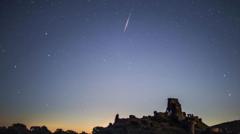
The Perseid meteor shower, one of the most anticipated astronomical events of the year, reached its peak on the night of August 12-13, 2026. Skywatchers around the world were treated to a dazzling display of shooting stars, with conditions particularly favorable due to the absence of moonlight. The new moon phase ensured that the sky remained dark, allowing even fainter meteors to be visible, enhancing the overall experience for observers.
Meteor showers occur when Earth passes through trails of debris left by comets or asteroids. In the case of the Perseids, the debris originates from the Swift-Tuttle comet, a large celestial body with a solid core measuring approximately 16 miles across. This comet takes 133 years to complete an orbit around the sun, meaning that some of the particles burning up in Earth's atmosphere could have been ejected more than a century ago. Astronomer Dr. Becky Smethurst described this phenomenon as the universe's own cosmic clock, highlighting the long-term nature of these celestial cycles.
The best time to observe the Perseids is typically during the early morning hours between midnight and dawn. During this period, the rate of meteors increases significantly, with lucky viewers potentially seeing more than 100 shooting stars per hour. The meteors appear to radiate from the constellation Perseus, giving the shower its name. However, they can be seen anywhere in the sky, making it important for observers to look toward wide, unobstructed areas rather than focusing solely on one spot.
Viewing conditions varied by location. In England and Wales, forecasts predicted largely clear skies throughout the night, with only a small chance of mist patches. This made these regions ideal for stargazing. In contrast, viewers in the far north of England, Northern Ireland, and much of Scotland faced more challenging conditions. While some cloud breaks were expected, large areas of cloud cover and the risk of showers could obscure the view, requiring patience from those hoping to catch a glimpse of the meteors.
To maximize their chances of seeing the Perseids, experts advised viewers to choose locations away from cities and artificial light. Light pollution can hide fainter meteors, leaving only the brightest ones visible. Additionally, it is recommended that observers allow their eyes 20 to 30 minutes to adjust to the darkness before beginning to watch. This adjustment period helps improve visibility and enhances the overall experience.
The Perseid meteor shower is active from mid-July to late August each year, but the peak nights offer the highest density of meteors. This year's peak coincided with a deep partial solar eclipse visible in the UK earlier in the evening, creating an exceptional night for astronomy enthusiasts. Dr. Smethurst noted that this timing was a perfect cosmic coincidence, providing two impressive astronomical events within a short timeframe.
NASA and other scientific organizations provided resources and guidance for viewers, including tips on how to spot the meteors and understand their origins. These efforts helped educate the public about the science behind meteor showers and encouraged safe and effective viewing practices. The widespread interest in the Perseids also reflected a growing appreciation for astronomy and the natural world.
Despite the favorable conditions, some challenges remained. Weather unpredictability posed a risk for viewers in certain regions, particularly in northern parts of the UK and Iceland, where cloud cover could obscure the view. Additionally, the concentration of people in popular viewing spots raised concerns about crowd management and safety, though no major incidents were reported in the available sources.
The Perseid meteor shower also served as a reminder of the transient nature of such astronomical events. For many viewers, the experience was a once-in-a-lifetime opportunity, emphasizing the importance of seizing the moment when celestial alignments allow for direct observation. The event concluded with widespread satisfaction among attendees, who reported memorable experiences despite minor logistical hurdles.
In summary, the Perseid meteor shower of August 2026 was a spectacular astronomical event that captivated millions around the world. From clear skies in England and Wales to challenging conditions in northern regions, the shower demonstrated the enduring fascination with celestial mechanics and the importance of preparation and safety in observing such rare occurrences.
Sources behind this briefing
Go to the original reporting
- BBC News↗After the eclipse, a meteor shower - how to catch a glimpse
- nasa.gov↗Summer Star Shower: Watch the Perseids with NASA!
- PBS↗How to spot the Perseid meteor shower, a summer light show that promises to dazzle
- KUT↗The Perseid meteor shower peaks this week. Here’s how to get the best view in Austin

