The short version
- A partial lunar eclipse will occur in the early hours of Friday, with maximum coverage reaching approximately 93 percent of the moon's surface.
- Visibility depends heavily on local weather conditions, with eastern and southern England offering the best prospects for clear skies.
- The event follows a significant solar eclipse earlier this year, marking another notable celestial occurrence for British observers in 2026.
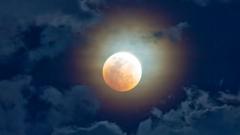
Residents across the United Kingdom have an opportunity to observe a partial lunar eclipse in the early hours of Friday, provided atmospheric conditions cooperate. The celestial event will see the full moon, currently designated as the Sturgeon Moon, pass partially into Earth's shadow. This alignment of the sun, Earth, and moon creates a phenomenon where sunlight is filtered through our planet's atmosphere, scattering shorter blue wavelengths while allowing longer red wavelengths to reach the lunar surface. Consequently, the visible portion of the moon may take on an eerie reddish hue, often referred to as a blood moon effect.
The timing of the eclipse presents specific challenges for observers. The event begins at approximately 02:23 BST as the moon enters the penumbra, the faint outer edge of Earth's shadow. During this initial phase, the dimming of the moon is subtle and likely to go unnoticed by most casual viewers. The more dramatic partial phase commences at 03:33, when the moon starts to intersect the umbra, the darkest central part of the shadow. Maximum obscuration occurs at 05:12, with roughly 93 percent of the moon's disk covered by the umbra.
However, the spectacle will be short-lived for many viewers due to the moon's position in the sky. The eclipse takes place shortly before moonset, meaning the celestial body will appear low on the southwestern horizon. In London, for example, the moon is expected to set around 06:15, while in Lerwick it may disappear by 06:00. Enniskillen offers a slightly later window, with moonset occurring at 06:42. Because the partial eclipse officially ends at 06:51, observers in most of the UK will miss the final stages as the moon dips below the horizon.
The low position of the moon may enhance the visual experience through an optical phenomenon known as the moon illusion. When celestial bodies are near the horizon, they often appear larger than when they are high in the sky. This effect is not due to actual changes in size but rather how the human brain processes visual information relative to familiar ground objects. For those who can see it, the combination of the reddish tint and the apparent enlargement may create a striking image against the dawn sky.
Weather conditions remain the primary variable for successful observation. A low-pressure system is positioned over the region, bringing potential cloud cover and showers that could obscure the view. Forecast models indicate that the clearest skies are likely to be found in East Anglia and south-eastern England. Parts of western Scotland and Northern Ireland may also experience breaks in the clouds, offering intermittent viewing opportunities. Elsewhere, persistent cloud cover and rain are more probable, though localized gaps cannot be entirely ruled out.
Astronomers advise seeking out elevated locations with an unobstructed view toward the southwestern horizon to maximize chances of sighting the eclipse. Given the uncertainty in weather predictions, particularly regarding the movement of cloud banks under slack winds, conditions may change rapidly from hour to hour. Observers are encouraged to monitor local hourly forecasts via digital weather services or applications for the most current information.
This lunar event arrives just weeks after the UK experienced its most dramatic partial solar eclipse in nearly three decades. That earlier occurrence drew significant public attention and highlighted the astronomical activity of 2026. The upcoming partial lunar eclipse serves as another reminder of the dynamic celestial mechanics that govern our night sky, offering a relatively rare chance to witness Earth's shadow cast upon its natural satellite.
While the scientific explanation for the reddish color is well understood, the visual impact remains subjective and dependent on individual viewing conditions. The scattering of light through Earth's atmosphere acts as a filter, removing blue light and allowing red light to pass through and illuminate the moon. This process is similar to what causes sunrises and sunsets to appear red, but projected onto a much larger scale across the lunar surface.
For those unable to view the event due to weather or geographic constraints, the eclipse will still be recorded by astronomical institutions and shared through digital platforms. The Royal Observatory, Greenwich, has provided detailed timelines for the phases of the eclipse, aiding both amateur enthusiasts and professional astronomers in tracking the event. As with all celestial phenomena, patience and preparation are key to making the most of such fleeting moments.
The broader context of this year's astronomical events includes a summer that is on track to be the hottest on record in the UK, according to the Met Office. While weather patterns and celestial mechanics operate independently, both contribute to the unique environmental conditions experienced by residents. The upcoming eclipse offers a momentary pause in daily routines, inviting public engagement with science and nature during the early morning hours.
Sources behind this briefing
Go to the original reporting
- BBC Science & Environment↗Moon set to turn red as rare partial lunar eclipse graces UK skies on Friday

