The short version
- Approximately 93 percent of the moon will be obscured by Earth's shadow during the peak of the event on Friday morning.
- Viewers in Northern Ireland face difficulties due to the moon's low position in the western sky and potential cloud cover in central regions.
- The phenomenon is safe to view with the naked eye, though optical aids may enhance the visibility of color changes.
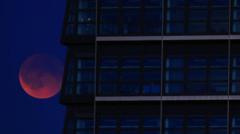
A significant celestial event is set to unfold early Friday morning as a partial lunar eclipse brings the moon into Earth's shadow. Stargazers across Northern Ireland and parts of Europe have the opportunity to witness this alignment, which will see roughly 93 percent of the lunar diameter covered at its peak. This high degree of obscuration means the visual experience will closely resemble a total eclipse, offering a dramatic display for those with clear views.
The timing of the event presents immediate logistical challenges for observers. The eclipse begins in the early hours of Friday, requiring viewers to be awake and positioned correctly before dawn breaks. In Belfast, the initial phase starts at 02:23 BST when the moon enters the penumbra, the lighter outer section of Earth's shadow. However, the more visually distinct stage commences at 03:33, as the darker central shadow, known as the umbra, begins to cross the lunar surface.
Maximum eclipse occurs at 05:12 BST, a critical window for observation. By this time, the moon will be positioned low in the western sky, approximately nine degrees above the horizon in Belfast. This low angle means that visibility is heavily dependent on having an unobstructed view toward the west. Buildings, hills, and trees may block the line of sight as the moon descends further toward dawn, complicating efforts to capture the full duration of the event.
Geographic variations across the region will affect how long the eclipse remains visible. While the event concludes at 06:34 in Belfast, viewers in Dublin can expect it to last until 06:38, with the moon appearing slightly higher in the sky. Those located further west, such as in Enniskillen, may have a marginally longer viewing window, with moonset occurring at 06:41. These differences highlight the importance of local topography and precise location in determining the quality of the observation.
Weather conditions add another layer of uncertainty to the viewing experience. Current forecasts suggest that western areas are more likely to have clear skies, making them favorable for observation. In contrast, central and eastern parts of Northern Ireland may face cloudier conditions, potentially obscuring the event entirely. Clear skies are crucial for witnessing the subtle color changes that characterize lunar eclipses, and even partial cloud cover can significantly diminish the visual impact.
The scientific mechanism behind the eclipse involves the alignment of the sun, Earth, and moon. As the moon passes through Earth's shadow, direct sunlight is blocked from reaching most of its surface. However, some sunlight still filters through Earth's atmosphere, with shorter blue wavelengths scattering more easily while longer red wavelengths reach the moon. This atmospheric filtering can cause the moon to take on a reddish hue, a phenomenon often referred to as a blood moon.
Experts note that the coloration is not uniform or guaranteed to be deep red. Terry Moseley of the Irish Astronomical Association explains that the moon can appear anywhere from orange to a deep red, with the most spectacular colors typically appearing near the center of the eclipse. The term blood moon is described as dramatic but not always accurate in terms of color representation. The actual appearance will depend on atmospheric conditions and the specific path of the moon through Earth's shadow.
Viewing the eclipse does not require specialized equipment or protective gear. Unlike solar eclipses, which can cause eye damage if viewed directly, lunar eclipses are safe to observe with the naked eye. While binoculars or telescopes are not necessary, they may enhance the experience by allowing viewers to see finer details of the changing colors on the moon's surface. The accessibility of the event makes it an engaging opportunity for both amateur astronomers and casual observers.
This eclipse follows other significant celestial events, including a once-in-a-generation solar eclipse that captivated millions across the UK and Europe in 2025. The recurrence of such visible astronomical phenomena underscores the public's enduring interest in space-related events. As Friday morning approaches, residents are encouraged to check local weather forecasts and position themselves with clear western views to maximize their chances of witnessing this near-total lunar eclipse.
The event serves as a reminder of the predictable yet awe-inspiring nature of celestial mechanics. While the alignment of the sun, Earth, and moon is a regular occurrence, the specific conditions that allow for such a high degree of obscuration are less common. For those who manage to overcome the challenges of early morning viewing and potential weather interference, the eclipse offers a unique opportunity to observe the dynamic interaction between Earth's shadow and the lunar surface.
Sources behind this briefing
Go to the original reporting
- BBC Science & Environment↗How to watch the partial lunar eclipse from Northern Ireland

