The short version
- President Asif Ali Zardari declared a state of emergency in Khyber Pakhtunkhwa, suspending the local government led by Imran Khan’s party and appointing a new governor.
- Federal officials cite failures to curb Islamist militancy as justification, while opposition leaders condemn the move as an unconstitutional power grab that threatens democratic stability.
- Security forces have been deployed to block protests in Islamabad, where supporters of the former prime minister had planned marches demanding his release from detention.
Pakistan’s federal government has suspended the provincial administration in Khyber Pakhtunkhwa, declaring a state of emergency and installing a new governor to take control of the north-western region. The decision, announced by President Asif Ali Zardari on Sunday, marks a significant escalation in the ongoing political confrontation between Islamabad and the Pakistan Tehreek-e-Insaf (PTI) party, led by former prime minister Imran Khan. Under the country’s constitution, the central government can assume authority from provincial bodies during crises, a provision Prime Minister Shehbaz Sharif invoked after cabinet deliberations.
Federal authorities justified the intervention by pointing to an inability of local officials to manage rising Islamist militancy in the province, which shares a porous border with Afghanistan. Law Minister Azam Nazeer Tarar stated that a provincial governor would initially oversee the region for six months, though this period could be extended if security conditions warrant it. The interior ministry confirmed that troops would be deployed to assist in maintaining order. Prime Minister Sharif argued that citizens and security personnel had endured attacks for two years without adequate protection, asserting that the government could no longer remain passive in the face of escalating violence.
The PTI party has strongly rejected the federal narrative, characterizing the suspension as a political maneuver rather than a genuine security response. Zulfikar Bukhari, an aide and spokesperson for Khan, described the action as a coup disguised as an emergency measure, warning that it risks inciting further bloodshed and instability. The party contends that Islamabad has failed to provide necessary funding and equipment to combat militants, shifting blame away from local governance failures. This accusation forms part of a broader dispute in which the federal government and military accuse PTI of sympathizing with the Taliban in Kabul and its domestic affiliates, charges both sides deny.
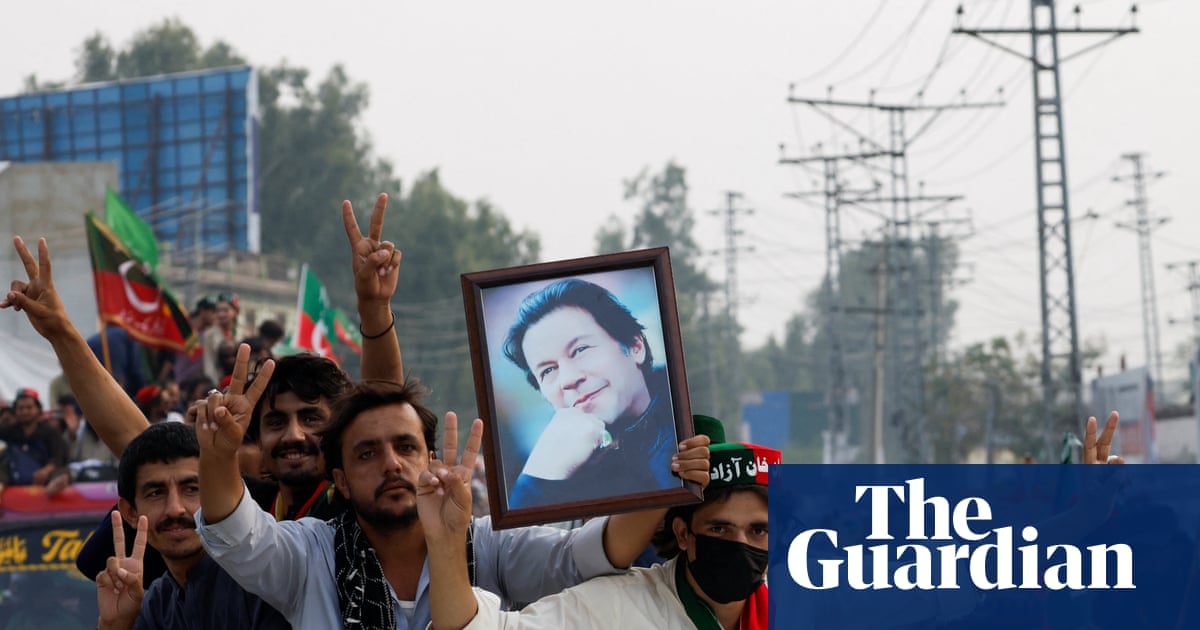
The move comes amid heightened tensions following planned protests by Khan’s supporters, who had gathered in Khyber Pakhtunkhwa intending to march on Islamabad to demand the release of their leader. Hundreds of activists, including three of Khan’s sisters, were detained prior to the demonstrations in what the PTI labeled one of the most severe crackdowns in recent years. In the capital, security forces have positioned tens of thousands of personnel and lined roads with containers to prevent protesters from reaching parliament. These measures underscore the government’s determination to maintain control over public spaces during this period of political unrest.
Political opposition extends beyond Khan’s party, with other leaders expressing concern over the precedent set by the emergency declaration. Maulana Fazlur Rehman, head of the JUI-F party and engaged in mediation efforts between the government and PTI, condemned the imposition of emergency rule as an ambush on democracy. His criticism highlights broader anxieties within Pakistan’s political landscape regarding the erosion of democratic norms and the concentration of power in federal hands. The suspension of Sohail Afridi, who previously led the province, further illustrates the extent of the federal takeover, with restrictions placed on his movements according to close aides.
The roots of this conflict trace back to the 2024 elections, where candidates backed by Khan’s party won the most seats but formed a government only in Khyber Pakhtunkhwa. Supporters of the 74-year-old former cricket star allege that the military rigged the vote against him, a claim firmly denied by military officials. Legal battles continue to surround Khan, with cases ranging from concerns over state gifts to accusations of instigating violence and unlawful marriage. While most convictions have been suspended or overturned, appeals remain pending, and Khan maintains his innocence throughout these proceedings.
As the situation unfolds, the practical implications for Khyber Pakhtunkhwa residents remain uncertain. The deployment of troops and the installation of a governor signal a shift toward direct federal oversight, potentially altering local governance structures and security protocols. Meanwhile, the standoff between Islamabad and PTI supporters shows no signs of immediate resolution, with both sides entrenched in their respective positions. The coming weeks will likely reveal whether this emergency measure stabilizes the region or exacerbates existing divisions within Pakistan’s fragile political ecosystem.
Sources behind this briefing
Go to the original reporting
- The Guardian World↗Imran Khan’s party decries ‘coup’ after Pakistan suspends provincial government