The short version
- A suspected Houthi missile strike on King Khalid International Airport killed twelve people and injured over three hundred, marking the deadliest attack on a Gulf nation since the US-Iran conflict began.
- The Saudi-led coalition has vowed retaliation while the United States evaluates whether to join direct military operations against the rebels in Yemen.
- Houthi forces have declared all Saudi airspace a theater of war and warned airlines to avoid the region, escalating tensions as regional powers mobilize defensive support.
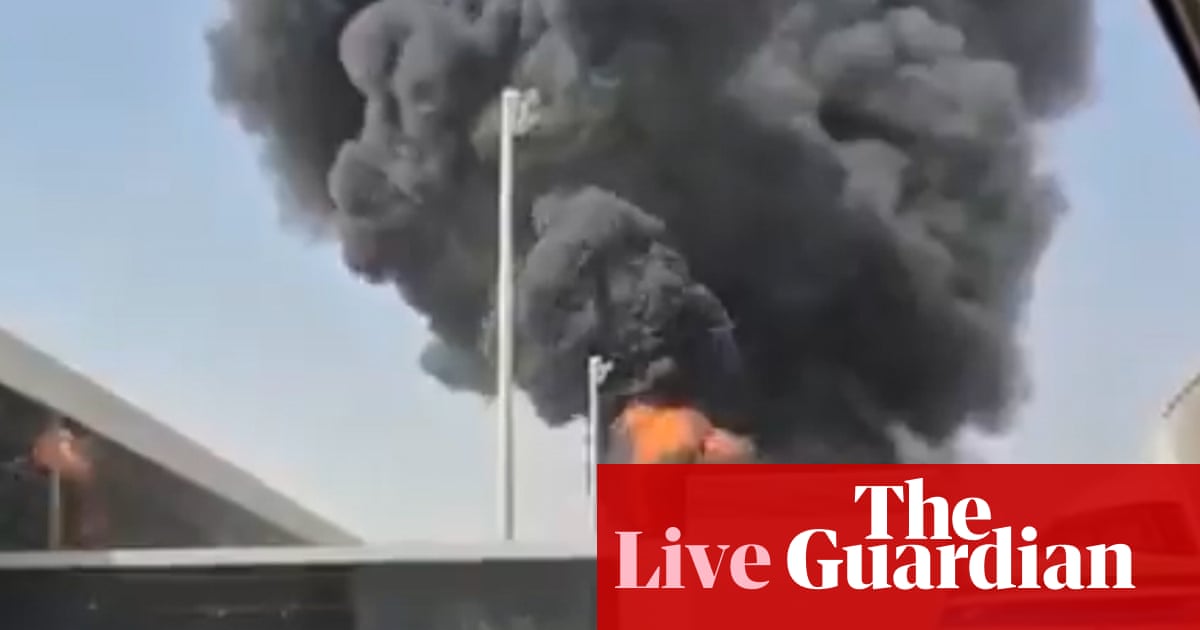
A suspected missile strike on King Khalid International Airport in Riyadh has killed at least twelve people and wounded more than three hundred, marking a significant escalation in the conflict between Saudi Arabia and Houthi rebels. The attack, which damaged passenger terminals and left debris scattered across the tarmac, is the deadliest assault on a Gulf country since hostilities between the United States and Iran intensified in March. Videos circulating online showed travelers navigating through wreckage as emergency sirens wailed, underscoring the severity of the breach in Saudi airspace.
Saudi authorities have blamed the Iran-aligned Houthi movement for the strike, though the group has not explicitly claimed responsibility for this specific incident. Instead, Houthi media reported a separate strike on an airport in Sana’a earlier in the day, suggesting a pattern of reciprocal violence. The Houthis have declared all Saudi airspace a legitimate theater of military operations, excluding only the holy cities of Mecca and Medina. They issued stark warnings to airlines, passengers, and trade operators to avoid Saudi airports, stating that the worst is yet to come if Saudi military actions in Yemen continue.
The victims of the Riyadh attack included citizens from multiple nations, highlighting the international scope of the crisis. Among the dead were four Saudis, two Bangladeshis, a Palestinian, an Egyptian, a Jordanian, a Syrian, and a Sudanese national. Egyptian state television identified one victim as Azza Ramzy, a twenty-eight-year-old flight attendant for Flynas airline. A relative told the Associated Press that Buthaina Ahmad Oweida, a fifty-six-year-old Syrian widow who had lived in Saudi Arabia for five years, was also killed while returning from a family visit.
In response to the attack, the Saudi-led coalition in Yemen has vowed to respond firmly. Maj Gen Turki al-Maliki, the coalition spokesperson, offered few details beyond the commitment to retaliation. This comes as Saudi-backed government forces in Yemen launch a counter-offensive to repel Houthis from areas near the critical Bab al-Mandab strait. Despite claiming initial successes, these forces have struggled to dislodge the rebels from key positions such as Perim Island. The Houthis report that coalition airstrikes over the past six weeks have killed ninety-one people in Yemen, with sixty percent of the casualties being women and children.
The United States is now evaluating whether to join the military campaign directly. President Donald Trump stated he was looking into the matter and planned to speak with Saudi Crown Prince Mohammed bin Salman. While the US has previously provided intelligence cooperation and stationed approximately two hundred military advisers in Saudi Arabia, it has not engaged in direct combat against the Houthis. A shift toward active participation would represent a further widening of the regional war, which already includes fighting in Lebanon and Iraq.
Direct American involvement carries significant risks, particularly regarding global trade routes. The Bab al-Mandab strait handles about ten percent of global maritime goods transit. Analysts warn that US entry into the conflict could prompt the Houthis to resume targeting commercial ships passing through this chokepoint. Such a move would exacerbate existing pressures on oil prices and supply chains, which have already been strained by the broader US-Iran conflict.
International condemnation has followed the attack, with UN Secretary-General António Guterres and European Commission President Ursula von der Leyen criticizing the violence. Von der Leyen described the actions as destabilizing crucial global transport and energy nodes. In response to the heightened threat level, Saudi Arabia, Pakistan, and Turkey issued a joint statement on Monday announcing they would accelerate the implementation of their mutual defense pact. This includes speeding up the deployment of military forces to the kingdom.
The United Kingdom has also pledged support, offering refueling assistance for aircraft tasked with intercepting Houthi missiles heading toward Riyadh. Saudi Arabia has requested further aid from France, Egypt, the UK, and Pakistan as its stock of interceptors faces depletion. Schools in Riyadh were moved online until Thursday following the attack, reflecting the immediate disruption to daily life. As the coalition prepares its response and the US weighs its options, the region remains on edge, with the potential for a broader spiral of violence looming over global markets and security.
Sources behind this briefing
Go to the original reporting
- The Guardian World↗Middle East crisis live: Houthi media reports strike on airport in Sana’a after deadly Riyadh attack
- The Guardian US↗Saudi coalition vows retaliation after deadly Houthi attack on Riyadh airport


