The short version
- Olivia Chow won re-election with 54 percent of the vote, defeating Brad Bradford who received 41 percent in a race that polls had predicted would be much closer.
- The victory coincides with a significant increase in progressive representation on city council, including the election of Diana McNally Chan, a prominent advocate for unhoused residents.
- Chow’s platform focused on addressing affordability through increased rental housing supply, free school meals, and reduced transit fares for frequent users.
Olivia Chow has been elected to a second term as mayor of Toronto, securing a decisive victory that defied pre-election polling which suggested a tightly contested race. The incumbent received 54 percent of the vote, accumulating more than 532,000 ballots, while her main challenger, Brad Bradford, garnered 41 percent. This result represents a thirteen-point margin, significantly wider than the dead heat many analysts had anticipated in the weeks leading up to the election.
The election drew record turnout, reflecting high voter engagement with issues surrounding urban affordability and public safety. Chow’s campaign centered on confronting the cost-of-living crisis that has impacted major cities globally. Her platform included promises to expand rental housing stock, implement free school lunches, and lower transit fares for frequent riders. The outcome suggests that voters in Canada’s largest city are willing to support progressive urban policies despite broader economic pressures that have toppled other governments.
Bradford, a former city councillor and urban planner, built his campaign on criticisms of Chow’s record regarding rising living costs and crime rates. He argued that the current administration had failed to adequately address safety concerns, citing personal anecdotes about feeling unsafe in his own home. Bradford advocated for increased police funding, tax reductions, and cuts to municipal spending. His strategy also involved aligning with Toronto’s Jewish community, particularly in response to recent incidents of antisemitic vandalism and violence at schools.
Despite Bradford’s focus on crime statistics, data indicates a complex picture of public safety in the city. While auto theft and high-value property crimes have increased, other serious offenses such as homicides, firearms-related violence, and assaults have dropped significantly in recent years. Chow responded to safety concerns by expanding the police department’s hate crimes unit and introducing a bylaw that prohibits protests within fifty meters of places of worship, schools, and childcare centers.
The election results extend beyond the mayoral race, signaling a broader shift in the city’s political landscape. A wave of progressive candidates won seats on city council, including both returning members and newcomers. Notably, Diana McNally Chan, a well-known advocate for unhoused individuals, was elected as the first renter to serve on the council. This composition may influence future policy decisions regarding housing, social services, and urban development.
Chow’s political resilience is evident in her ability to navigate relationships with provincial leaders. During her initial election in 2023, Ontario Premier Doug Ford criticized her candidacy, predicting negative outcomes for the city. Although Ford did not explicitly endorse Chow in this cycle, he described their working relationship as phenomenal and suggested voters consider his comments carefully. The two leaders are expected to continue their disagreements, particularly regarding the future of bike lanes in Toronto.
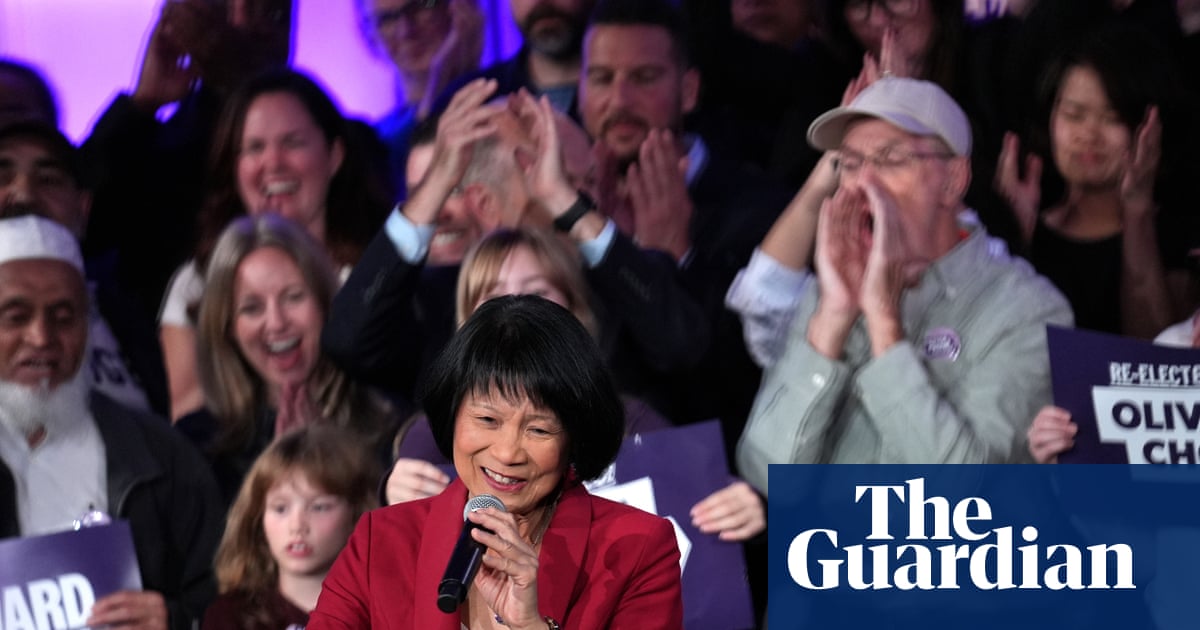
In her victory speech, Chow acknowledged the shared commitment of both candidates to the city’s future, despite their differing approaches. She thanked Bradford and her supporters, emphasizing a belief in Toronto’s potential. Bradford conceded gracefully, expressing hope for Chow’s success and acknowledging the difficulty of unseating an incumbent mayor in such a large municipality. He noted that no sitting mayor seeking re-election in Canada’s largest city had previously lost.
The incoming council faces immediate challenges related to affordability, which remains a pressing issue for residents. The new progressive majority may prioritize policies aimed at reducing housing costs and improving social safety nets. However, the effectiveness of these measures will depend on cooperation with provincial authorities and the ability to implement changes within existing fiscal constraints. The election outcome underscores a voter preference for incremental progress over drastic cuts or conservative retrenchment.
As Chow begins her second term, the focus will shift from campaign promises to policy implementation. The city must balance competing demands for safety, affordability, and infrastructure development. The presence of new council members with diverse backgrounds may introduce fresh perspectives on long-standing issues. The coming months will reveal whether the progressive wave can translate into tangible improvements for Toronto’s residents.
The election also highlights the evolving nature of urban politics in North America. Voters are increasingly demanding solutions to systemic issues such as housing insecurity and transit accessibility. Chow’s victory demonstrates that progressive platforms can gain traction even in economically challenging times. The results may serve as a model for other cities facing similar pressures, offering insights into how local governments can respond to constituent needs.
Sources behind this briefing
Go to the original reporting
- The Guardian US↗Olivia Chow elected as Toronto mayor for second term in victory for progressives