The short version
- Barack Obama invoked the story of Manchester cotton workers supporting the Union blockade during the American Civil War as a model for contemporary civic duty.
- He described democracy as a fragile system requiring constant renewal, noting that hierarchical and violent social structures have dominated most of human history.
- The former president discussed his role as a symbol of America’s ongoing struggle with racial inequality while outlining the global focus of his foundation’s work.
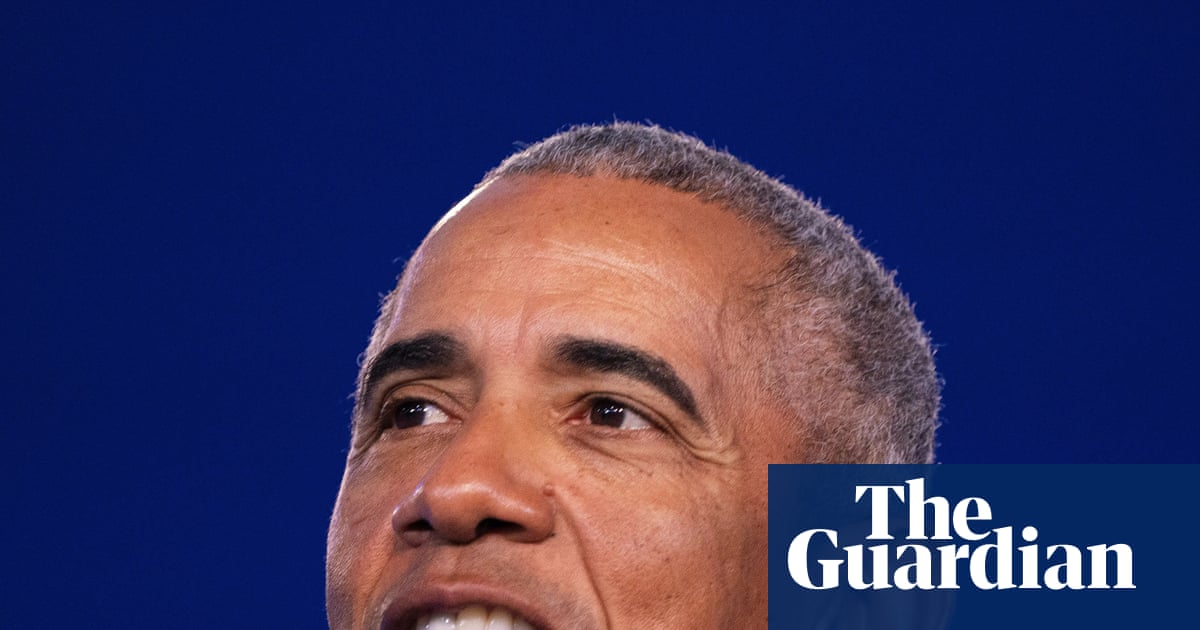
Former US President Barack Obama used a recent appearance in Manchester to connect historical acts of solidarity with current challenges facing democratic governance. Speaking at a large public event, he highlighted the story of Lancashire cotton workers who chose to support the Union blockade during the American Civil War, despite suffering severe economic hardship themselves. This historical episode served as a central metaphor for his remarks on civic responsibility and the resilience required to maintain open societies in an era of significant disruption.
The gathering took place at Co-op Live, where tens of thousands of attendees listened to Obama’s reflections during a ninety-minute session moderated by writer and broadcaster Afua Hirsch. The atmosphere was marked by frequent applause and engagement from the crowd as the former president discussed both his personal journey and broader political themes. He framed the event not merely as a retrospective look at his presidency, but as an opportunity to examine what remains possible for citizens seeking to influence their communities and nations.
Obama recounted how Manchester’s industrial workforce faced starvation and unemployment when the Union prevented cotton exports from Confederate states in 1862. Although local business leaders and some media outlets urged against disrupting this vital trade, workers gathered at the Free Trade Hall to declare their support for those fighting for freedom. They sent a letter to President Abraham Lincoln, who responded by praising their actions as a historic demonstration of humility, charity, and grace. Obama emphasized that these individuals acted without any guarantee of personal benefit, suggesting that such selflessness improved their lives even amidst difficulty.
This narrative was intended to inspire modern audiences facing their own uncertainties. Obama suggested that sharing stories of past collective courage could help current generations navigate difficult periods. He questioned why contemporary society might struggle to replicate the solidarity shown by nineteenth-century workers, implying that remembering these examples is crucial for overcoming present-day obstacles. The former president linked this historical perspective to his work with the Obama Presidential Center in Chicago, which aims to remind visitors of what is achievable through sustained effort and community engagement.
The discussion also touched on the intersection of identity and politics. When asked how his background influenced his leadership, Obama acknowledged that race remains a significant faultline in American history. He noted that the US founding involved compromises that tacitly accepted slavery, leading to a civil war and prolonged struggles to define who constitutes 'the people.' While he rejected the notion of a post-racial America as impossible, he viewed his presidency as a momentary validation that inclusive ideals could be realized through the sacrifices of countless individuals, many of whom remain unnamed.
Obama characterized democracy not as a static achievement but as a journey requiring continual replenishment. He warned that societies tend to forget how recently democratic norms have taken hold and how easily they can erode. For most of human history, he observed, social organization relied on caste, hierarchy, violence, and force rather than consent and equality. This fragility demands active participation from citizens to prevent a regression into older, more oppressive systems. The former president stressed that maintaining democratic institutions requires vigilance against economic, social, and technological disruptions that can undermine trust and cohesion.
In addition to historical reflections, Obama outlined the ongoing mission of his foundation, which addresses issues such as economic inequality, climate change, education, and health. Programs focus on supporting women and girls, developing global emerging leaders, and assisting journalists operating under oppressive regimes. These initiatives reflect a commitment to challenging systemic barriers and fostering resilience in vulnerable communities. The former president expressed hope derived from working with younger generations who are engaged in these efforts, viewing their energy and dedication as essential for future progress.
The event concluded with remarks on the importance of recognizing current geopolitical stakes. Obama noted that it was beneficial for UK Prime Minister Keir Starmer and former Greater Manchester Mayor Andy Burnham to host Ukrainian President Volodymyr Zelenskyy, emphasizing the need to remind the public about what is at risk in international conflicts. By connecting local historical solidarity with global democratic challenges, Obama sought to reinforce the idea that individual actions, when aggregated, can shape broader outcomes. His message underscored the enduring relevance of past sacrifices in informing present-day civic engagement.
Sources behind this briefing
Go to the original reporting
- The Guardian World↗Barack Obama pays tribute to Manchester cotton workers and cites them as an inspiration