The short version
- Up to 96% of the sun will be obscured by the moon in parts of north west England this evening.
- The event marks the highest level of solar coverage visible from the UK since August 1999.
- Experts warn against using standard sunglasses or naked-eye viewing due to risk of permanent retinal damage.
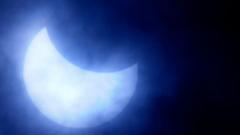
A significant astronomical event is set to unfold across the United Kingdom this evening, with north west England positioned to experience the most dramatic partial solar eclipse in over half a century. The moon will pass between the Earth and the sun, obscuring up to 96% of the solar disk in certain locations. This degree of coverage represents the highest level visible from British soil since August 11, 1999, making it a rare opportunity for observers who have not witnessed such an event in their lifetimes.
The timing of the eclipse varies slightly across the country due to geographic positioning. Initial signs of the moon beginning to cover the sun are expected to appear in Scotland around 18:08 BST. Observers in Manchester and Liverpool will see first contact approximately five minutes later, at 18:13. The peak of the event, known as eclipse maximum, is scheduled for roughly 19:10 in the north-west region. By 20:04, the celestial alignment will conclude, and the sun will fully re-emerge.
While total darkness will not descend upon the UK, experts indicate that the substantial reduction in sunlight will create noticeable changes in ambient light and temperature. The sky will dim significantly, though it will not reach the pitch-black conditions associated with a total eclipse. Greenland, Iceland, and parts of northern Spain are situated along the path of totality, where the sun will be completely blocked. For UK residents, however, this partial coverage is considered exceptionally high for the region.
Astronomers have characterized the event as particularly exciting due to its rarity. Imo Bell, a planetarium astronomer at the Royal Greenwich Observatory, noted that an eclipse of this magnitude will not recur for a considerable period. The next comparable event is not expected for 54 years. This long interval underscores the significance of the current alignment for both professional astronomers and amateur stargazers who wish to document or simply witness the phenomenon.
Several organizations across the region have organized public events to facilitate safe viewing. In Manchester, the Heaton Park Astronomy Group is hosting a free watch-along session with access to specialized eclipse glasses. Jodrell Bank Observatory in Cheshire will remain open until 20:00 BST, offering guided solar observing sessions, provided weather conditions permit. The observatory also plans to screen an immersive film about the sun and host cyanotype crafting activities.
Other locations are also preparing for increased visitor numbers. The Sefton coastline, particularly Crosby Beach, is anticipated to be a popular viewing spot. Local establishments, such as the Bus Yard bar in Crosby, have announced they will remain open during the eclipse and feature live music. In Cleveleys, the Blackpool & District Astronomical Society is holding a free public observing session starting at 17:00, with limited supplies of protective eyewear available for attendees.
Safety remains a critical concern as public interest surges. Medical experts emphasize that looking directly at the sun during any phase of the eclipse, except for the brief moment of totality which is not visible in the UK, can cause severe and permanent eye damage. Mohamed Elalfy, president of the Royal College of Ophthalmologists, warned that the retina lacks pain receptors, meaning individuals may not feel injury occurring in real time. Symptoms such as blurred vision, central blind spots, or distorted sight may only manifest hours after exposure.
Standard sunglasses are insufficient for protecting eyes during the eclipse, as they do not block harmful solar radiation effectively. Observers must use certified solar eclipse glasses or indirect viewing methods like pinhole projectors. The Royal Greenwich Observatory advises that higher ground or locations with a clear view of the western horizon offer the best vantage points. Those further east will experience less dramatic coverage, while those in the south-west may see slightly more obscuration than those in the north-west.
Sources behind this briefing
Go to the original reporting
- BBC Science & Environment↗Solar eclipse: Where and when you can see it across North West England

