The short version
- North Korean leadership has announced that propaganda loudspeakers targeting South Korea will resume operations within days, ending a sixteen-month pause in cross-border broadcasts.
- The escalation follows a September landmine incident that injured three South Korean soldiers and ongoing disputes over border fortifications and military demarcation line violations.
- South Korean officials have indicated they may respond with proportional measures but have not yet finalized a decision, while noting routine maintenance of northern equipment was observed prior to the announcement.
North Korea has announced that it is preparing to restart propaganda broadcasts aimed at South Korea along the entire shared border within days. The statement, issued by Kim Yo-jong, sister of leader Kim Jong-un and a key figure in Pyongyang’s political hierarchy, marks a significant escalation in rhetoric and potential action between the two nations. This development ends a sixteen-month period during which such exchanges were suspended, signaling a hardening of positions as diplomatic ties continue to deteriorate.
The announcement comes against a backdrop of rising military tensions that have intensified since September. During that month, a landmine explosion south of the military demarcation line injured three South Korean soldiers, two of them seriously. Seoul and United Nations Command forces concluded the blast resulted from a North Korean anti-personnel mine, constituting a violation of the 1953 armistice agreement. Pyongyang has denied responsibility for the incident, dismissing it as a fabricated event staged by its southern counterpart.
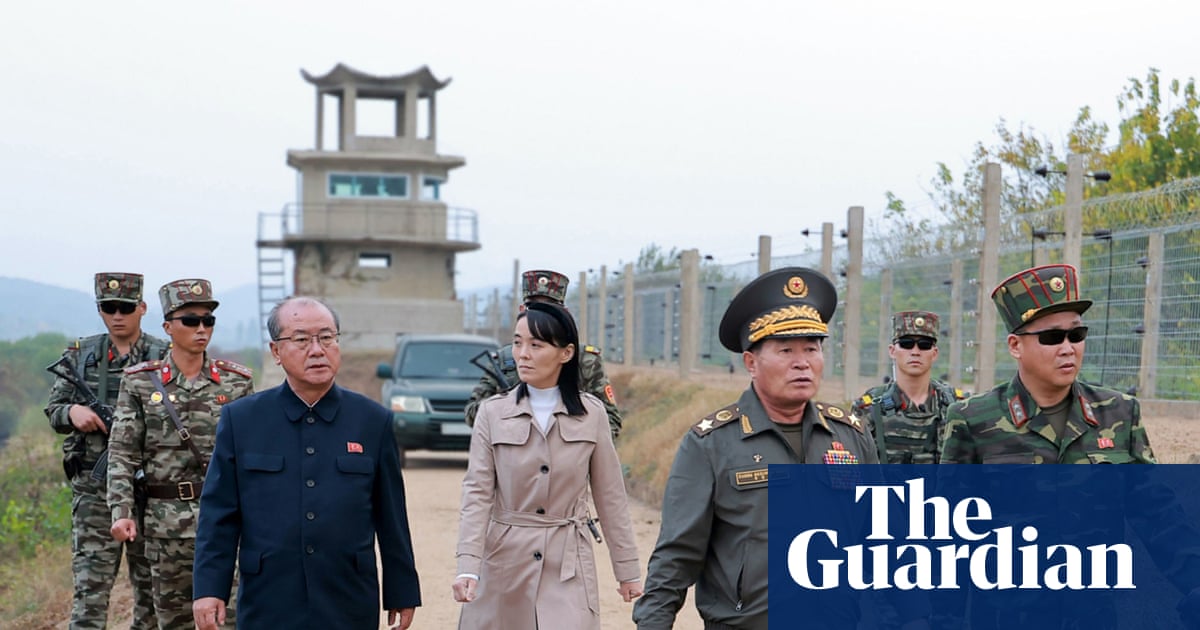
Kim Yo-jong made the latest declaration after inspecting border fortifications alongside Pak Jong-chon, a marshal and adviser to the defense ministry. She described the northern side of the border as having been transformed into a thoroughly blocked fortress, noting that Kim Jong-un has designated it as a permanent line that should never be crossed. This inspection underscores Pyongyang’s commitment to physical separation and defensive hardening, reflecting a broader strategic shift declared in December 2023 when Kim Jong-un stated that the two Koreas were hostile states rather than one nation divided.
Since that declaration, North Korea has engaged in extensive construction activities along the border, including laying mines, stringing barbed wire, and erecting anti-tank barriers. These efforts have led to repeated incidents where North Korean troops crossed the military demarcation line during construction work. South Korean soldiers have responded by issuing warnings over loudspeakers and firing warning shots, actions that Pyongyang has condemned as provocations by armed rogues.
The resumption of broadcasts would mark the first exchange of such propaganda in over a year. Both nations historically used giant loudspeakers to transmit messages across the border, with North Korea often playing haunting sounds or anti-South Korean rhetoric, while South Korea broadcast K-pop music and news criticizing Pyongyang’s policies. The current pause began in June 2025 when South Korean President Lee Jae Myung suspended broadcasts from the southern side shortly after taking office, aiming to ease tensions. The military subsequently dismantled the speakers in August of that year.
In response to the latest threat, a spokesperson for Seoul’s defense ministry stated that if North Korea proceeds with the broadcasts, there would naturally need to be a proportional measure. However, the official clarified that no final decision had been made regarding specific retaliatory actions. Meanwhile, South Korean military officials noted that routine maintenance of North Korean loudspeaker equipment had been observed prior to Kim Yo-jong’s statements, suggesting preparations for this escalation may have been underway for some time.
The situation remains volatile as both sides navigate a fragile armistice that halted but did not end the Korean War. The United Nations Command continues to oversee the ceasefire agreement, which has been strained by recent incidents and mutual accusations of bad faith. As North Korea solidifies its border defenses and threatens renewed psychological warfare through broadcasts, the risk of further miscalculation or escalation increases.
Observers note that the restart of propaganda broadcasts could serve as a precursor to more aggressive actions or simply as a symbolic gesture to demonstrate resolve. Regardless of intent, the move reinforces the deepening divide between the two Koreas and complicates any potential future diplomatic engagement. The international community watches closely as these developments unfold, concerned about the stability of the region and the potential for broader conflict.
As the deadline for the restart approaches, South Korea remains on high alert, balancing the need to respond firmly with the desire to avoid unnecessary escalation. The coming days will be critical in determining whether this marks a new phase of hostility or a temporary flare-up in an already tense relationship. The outcome could have significant implications for regional security and diplomatic efforts aimed at denuclearization and peace on the peninsula.
Sources behind this briefing
Go to the original reporting
- The Guardian World↗North Korea prepares to restart propaganda loudspeakers as ties sour with South