The short version
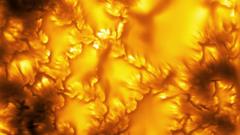
- The Inouye Solar Telescope has produced the highest-resolution images ever taken of the Sun's photosphere, revealing previously invisible magnetic structures.
- Scientists identified Kelvin-Helmholtz instability as a key mechanism generating magnetic energy that fuels solar explosions and space weather events.
- These findings aim to improve predictive models for solar activity, which can disrupt power grids, satellites, and astronaut safety.
Researchers utilizing the most powerful solar telescope currently in operation have captured unprecedented views of the Sun’s surface, revealing dynamic structures that were previously beyond the reach of observational technology. The images, obtained by the Inouye Solar Telescope located on a high-altitude peak in Hawaii, display swirling vortices of hot gas that twist and move the star's magnetic field. This facility benefits from clear atmospheric conditions free of dust, allowing for exceptional clarity in its observations.
The primary discovery involves the visualization of Kelvin-Helmholtz instability, a phenomenon occurring when fluids or gases slide past one another at different speeds. In this context, the sliding motion of hot solar gases creates small disturbances that grow into spiraling vortices. Similar dynamics are observed in Earth's oceans, where such interactions help explain how minor ripples develop into powerful waves. On the Sun, these twisting motions generate magnetic energy that accumulates over time.
According to astronomers from the US National Solar Observatory, this buildup of magnetic energy is a critical precursor to large-scale solar explosions. Dr. David Kuridze noted that these specific twisting motions are responsible for creating the magnetic tension that eventually releases in the form of flares or coronal mass ejections. These events eject plasma and magnetic fields into space, constituting what is commonly referred to as space weather.
Space weather poses significant risks to modern infrastructure and human activity in space. Bursts of energy from the Sun can interfere with Earth's power grids, disrupt satellite operations, and potentially endanger astronauts exposed to high radiation levels. Dr. David Boboltz emphasized that understanding the physics of the Sun at its smallest scales is essential for predicting these events. By identifying the root causes of solar activity, scientists hope to develop more accurate forecasting tools to mitigate potential damage.
The findings also contribute to broader scientific questions regarding stellar dynamics and fundamental physics. Dr. Friedrich Woeger pointed out that observing these instabilities helps explain why the Sun's surface remains so hot. The energy wound up in higher layers of the solar atmosphere is released during explosive events, providing a mechanism for heating the corona. This process offers valuable data for understanding plasma behavior under extreme conditions.
Beyond practical applications, the Sun serves as a unique laboratory for testing physical theories. Dr. Boboltz highlighted that historical experiments, such as those confirming Einstein's general relativity during solar eclipses, underscore the importance of solar observation. The new images provide a contemporary opportunity to explore basic laws of physics in a setting that is both accessible and extreme. This research reinforces the value of investing in advanced astronomical instruments.
The study was published in the journal Nature, marking a significant milestone in solar astronomy. The Inouye Solar Telescope represents a major advancement in observational capability, enabling scientists to zoom in on the photosphere with greater detail than ever before. As analysis continues, researchers expect to refine their understanding of how small-scale magnetic interactions influence global solar behavior.
Future work will likely focus on correlating these observed vortices with specific types of solar eruptions. By tracking how these structures evolve over time, scientists aim to identify early warning signs of impending space weather events. This knowledge could lead to more robust protection strategies for technological systems vulnerable to solar interference. The ongoing data collection promises to deepen our comprehension of the star that sustains life on Earth while also posing potential hazards.
Sources behind this briefing
Go to the original reporting
- BBC Science & Environment↗See the Sun like never before with most detailed images yet

