The short version
- SPHEREx has analyzed thirty-seven nearby brown dwarfs, detecting signatures of water, methane, and carbon compounds across a wide temperature range.
- The data reveals significant atmospheric diversity among objects of similar temperatures, indicating that current models struggle to predict their cloudy transitions.
- While primarily designed to map the early universe, the telescope’s infrared capabilities are providing unprecedented detail on these isolated, star-like objects.
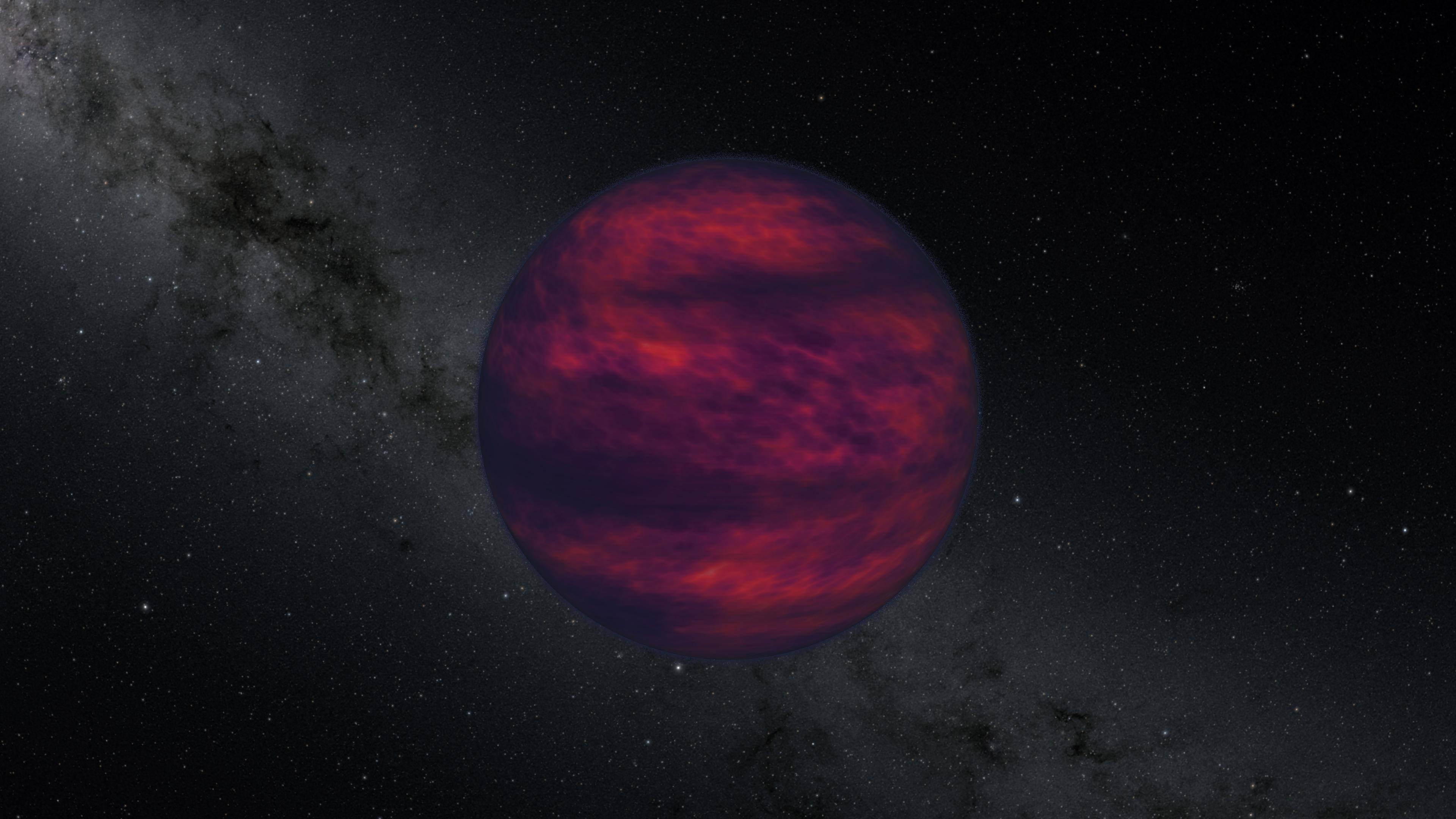
A new analysis of data from NASA’s SPHEREx space telescope is refining the scientific understanding of brown dwarfs, celestial bodies that occupy a distinct category between stars and planets. Published in The Astrophysical Journal, the findings highlight the chemical complexity of these isolated objects, which form like stars but lack sufficient mass to sustain hydrogen fusion. Unlike planets that orbit stars, these free-floating entities drift independently through space, generating their own heat internally while gradually cooling over time.
The study examined thirty-seven nearby brown dwarfs located within our galactic neighborhood. These subjects represented the full spectrum of temperatures associated with this class of object, ranging from approximately 4,000 degrees Fahrenheit down to minus 10 degrees Fahrenheit. By measuring brightness across 102 distinct colors, spanning visible red light into infrared wavelengths, researchers were able to construct detailed spectral profiles for each body. This approach allowed scientists to identify specific molecular signatures that would otherwise remain obscured.
The spectral data revealed atmospheres rich in water vapor, carbon dioxide, carbon monoxide, and methane. These chemical markers vary significantly from one object to another, even among those sharing similar thermal properties. The presence of these molecules suggests that brown dwarfs share atmospheric characteristics with giant planets like Jupiter and Saturn, despite their different formation histories. This similarity complicates the traditional distinction between stellar remnants and planetary bodies.
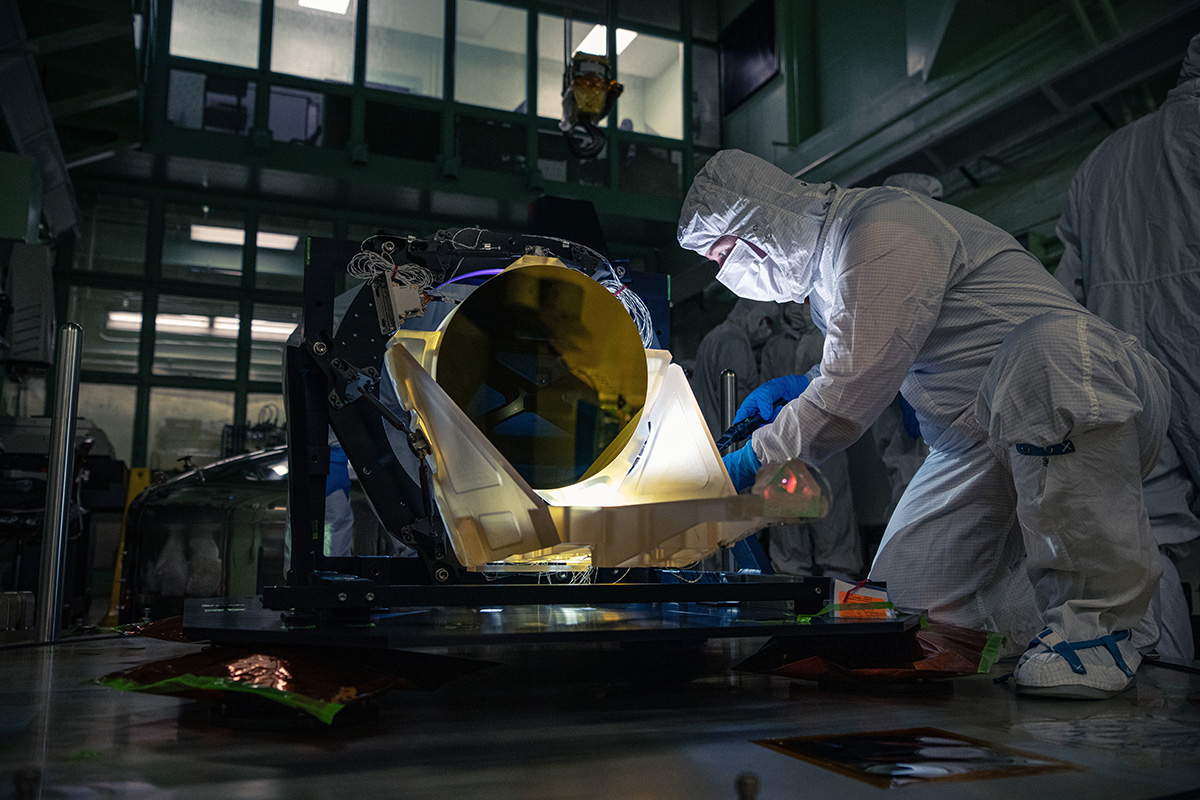
SPHEREx, launched in March 2025, was primarily designed to map the distribution of hundreds of millions of galaxies to help reconstruct events from the earliest moments after the big bang. Its primary mission involves capturing thousands of images daily to create comprehensive sky maps. However, its ability to detect infrared light that is absorbed by Earth’s atmosphere has made it an effective tool for studying nearby celestial objects as well. This secondary capability allows astronomers to observe wavelengths that ground-based telescopes cannot access.
The observations indicate that brown dwarfs undergo dynamic atmospheric changes as they age and cool. Some of the studied objects appear to be in a transitional phase where exotic cloud layers thin out, allowing methane-rich atmospheres to become more prominent. These shifts are critical for understanding how these objects evolve over billions of years. The ability to track these changes provides new insights into the lifecycle of objects that do not fit neatly into standard stellar or planetary classifications.
Current theoretical models struggle to fully account for the diversity observed in the SPHEREx data. While existing simulations capture general chemical trends, they fail to accurately predict the specific cloudy transitions seen in the new observations. Researchers noted that no two brown dwarfs appear identical, even when their temperatures are comparable. This variability suggests that factors beyond simple thermal evolution influence their atmospheric composition and structure.
The lead author of the study described these objects as independent entities that will eventually fade into darkness without a host star to illuminate them. Their isolation makes them difficult to study, with only a few dozen having been examined in detail by space-based instruments prior to this work. The new findings emphasize the need for more extensive observations to understand the bounds of variety within this population. Thousands of additional candidates are currently being analyzed to expand the dataset.
Scientists involved in the analysis have noted that studying these objects requires techniques similar to meteorology. Predicting weather patterns on Earth is already complex, and explaining the atmospheric phenomena observed in brown dwarfs presents comparable challenges. The mission team, led by researchers from Caltech and JPL, continues to process data from multiple institutions across the United States, South Korea, and Taiwan. Future work will focus on reconciling the observational data with theoretical frameworks.
The telescope was built by BAE Systems and is managed by NASA’s Jet Propulsion Laboratory. Its success in capturing detailed spectra of brown dwarfs demonstrates the value of broad-sky surveys for unexpected scientific discoveries. As more data becomes available, astronomers hope to resolve discrepancies between models and observations. This effort may ultimately clarify how these dark wanderers fit into the broader context of cosmic evolution and planetary science.
Sources behind this briefing
Go to the original reporting
- NASA↗NASA’s SPHEREx Telescope Sees Menagerie of Brown Dwarfs