The short version
- The documentary, co-directed by Nathan Fielder and Lance Oppenheim, has become a sold-out hit with a $15 million opening weekend debut.
- Critics describe the film as a 'wild, mind-melting' experience that challenges viewers to question Holmes's sincerity during 2023 interviews conducted before her prison sentence.
- The film’s structure and Fielder’s interrogation style have sparked debate over whether Holmes is manipulating the filmmakers or genuinely deluded.
Nathan Fielder’s long-awaited documentary, 'You Can See Everything,' has emerged as a dominant cultural force upon its release, securing both critical praise and significant commercial success. The film, which focuses on Elizabeth Holmes, the former CEO of Theranos, has been described by critics as a potential contender for major awards and possibly the movie of the year. Its debut was marked by strong box office performance, earning $15 million in its opening weekend, a figure that Variety noted as a stunning result for a documentary feature.
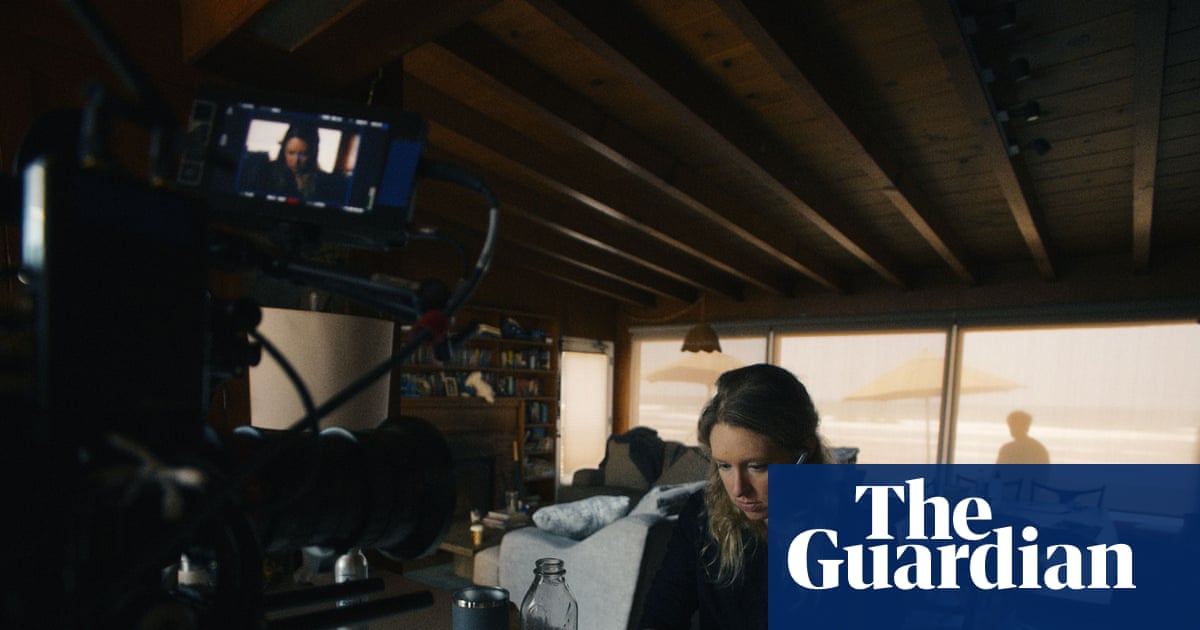
The film’s narrative structure is divided into two distinct halves, with the first half generating considerable buzz due to strict spoiler guidelines maintained by the filmmakers. This initial section takes place entirely in 2023, depicting Fielder and co-director Lance Oppenheim embedding with Holmes, her husband Billy Evans, and their two young children in a beachfront rental home. This period occurred shortly before Holmes was sentenced to prison for fraud. The footage captures a surreal dynamic between the comedian, known for his deadpan approach to social experiments, and Holmes, who maintains an unblinking facade of faultlessness.
Central to the film’s tension is Fielder’s attempt to puncture Holmes’s carefully constructed persona. In one pivotal scene highlighted by critics, Fielder asks Holmes directly if she is being real at that moment. The question underscores the broader theme of the documentary: the difficulty of discerning truth from fabrication when dealing with a subject who has built a career on deception. Holmes insists, with apparent sincerity, that she has never told a lie in her life and continues to defend the capabilities of Theranos devices, claiming they could perform 1,000 diagnostic tests despite evidence to the contrary.
The interaction between Fielder and Holmes is described as a chess game between two individuals who ignore social norms. Fielder, often referred to as an absurdist auteur, finds himself stymied by Holmes’s world-class ability to fabricate reality. Her husband, Billy Evans, appears in the film as poorly dissembling, adding another layer of complexity to the household dynamics. Critics note that while the situation is not traditionally comedic, it contains moments of dark humor derived from the absurdity of the interactions.
The documentary raises profound questions about the nature of manipulation and delusion. Viewers are left to wonder whether Holmes’s behavior stems from genuine belief in her own myths or calculated manipulation. The film does not provide a definitive answer, instead presenting the 'fundamental unknowability' of another person as both fascinating and frustrating. Evans expresses irritation at Fielder’s probing, particularly regarding the distinction between what Theranos devices could theoretically do versus what they actually performed.
The reception of the film has been overwhelmingly positive, with outlets like Vulture declaring it a masterpiece and WBUR describing it as a 'wild, mind-melting movie.' The Guardian noted that the film’s success might make Oscars history, given its unique blend of documentary realism and psychological thriller elements. The secrecy surrounding the film’s content prior to release added to its allure, with fans and critics alike eager to uncover the second half of the narrative.
Despite the critical acclaim, some analysis suggests that the film may be deceiving viewers in its own right. Polina Pompliano of The Profile argued that the documentary employs techniques that mirror Holmes’s own deceptive practices, leaving audiences to question what they are truly seeing. This meta-commentary adds another layer to the viewing experience, challenging audiences to reflect on their own susceptibility to narrative construction.
The commercial success of 'You Can See Everything' indicates a strong public appetite for deep dives into high-profile fraud cases and the psychology behind them. The film’s ability to sell out screenings and generate significant online discussion suggests that it has tapped into a broader cultural interest in truth, deception, and the media’s role in shaping public perception. As the film continues to play in theaters, its impact on the discourse surrounding Holmes and Theranos is likely to grow.
What remains unresolved is the full extent of the film’s second half, which has been kept under wraps to preserve the theatrical experience. Critics who have seen the entire runtime suggest that it provides further insight into Holmes’s mindset and the aftermath of her legal troubles. The film’s legacy will likely be defined by its ability to provoke thought and discussion long after the credits roll, cementing Fielder’s reputation as a formidable filmmaker.
As 'You Can See Everything' continues to draw audiences, it stands as a testament to the power of documentary filmmaking to explore complex human behaviors. The film’s success is not just measured in box office numbers but in its ability to engage viewers in a nuanced exploration of truth and deception. Whether Holmes is seen as a victim of her own delusions or a master manipulator, the film ensures that her story remains a subject of intense scrutiny and debate.
Sources behind this briefing
Go to the original reporting
- The Guardian US↗Secrets, lies and a shock A-list cameo: how You Can See Everything became the film of the year
- Variety↗Box Office: ‘You Can See Everything’ Stuns With $15 Million Debut, ‘Street Fighter’ Leads With $31 Million
- The Profile | Polina Pompliano↗How the Elizabeth Holmes Doc 'You Can See Everything' Is Deceiving You
- WBUR↗Elizabeth Holmes documentary 'You Can See Everything' is a wild, mind-melting movie