The short version
- NASA delivered the NavCube3-mini payload to Intuitive Machines on July 13 for integration into the Altus-1 satellite.
- The compact receiver uses Earth-based GPS and Galileo signals to determine spacecraft position in lunar orbit with low power consumption.
- This technology aims to support communications and navigation for astronauts and rovers, particularly in the challenging south pole region.
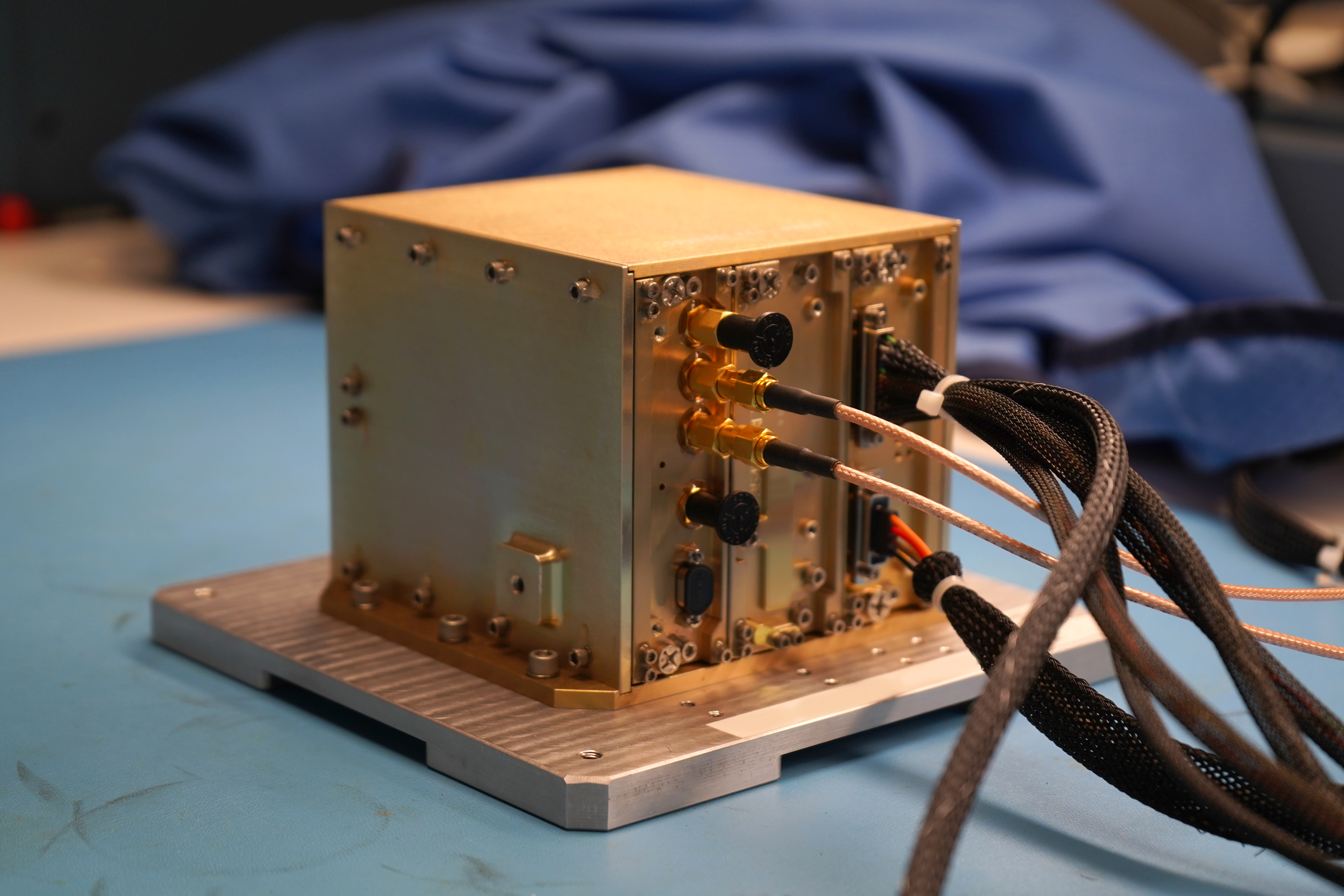
NASA has delivered a critical component for upcoming lunar infrastructure, handing over the NavCube3-mini payload to Intuitive Machines on July 13. This compact device is scheduled for integration into Altus-1, which serves as the first satellite in a planned network of lunar relays. The milestone represents a significant advancement in efforts to establish reliable communications and navigation services for future missions operating around the Moon.
The NavCube3-mini is designed to be both lightweight and efficient, weighing only 3.5 pounds and occupying roughly half the volume of a standard shoebox. Despite its small size, the receiver operates on less than 20 watts of power, comparable to a laptop computer. It is engineered to utilize signals from Earth-based Global Navigation Satellite Systems, specifically GPS and Galileo, to calculate precise positions for spacecraft far beyond Earth orbit.
Before shipment, the payload underwent rigorous testing at NASA’s Goddard Space Flight Center in Greenbelt, Maryland. Engineers subjected the device to vibration simulations mimicking launch conditions, thermal vacuum tests replicating the extreme temperatures of space, and electromagnetic compatibility checks. These procedures ensured the unit could function reliably alongside other spacecraft systems without causing interference. Performance simulations verified its ability to process navigation signals throughout the testing campaign.
The Altus-1 satellite is part of a broader commercial partnership aimed at supporting NASA’s Artemis program. The relay network will provide essential coverage for missions targeting the lunar south pole, an area where direct communication with Earth is often obstructed. By extending these services, NASA intends to facilitate safer and more autonomous operations for orbiters, landers, rovers, and eventually astronauts who are scheduled to land in 2028.
This technology demonstration validates the feasibility of using GNSS-based navigation in the lunar environment. The data gathered from NavCube3-mini will inform the development of future infrastructure, contributing to a sustained human presence on the Moon. Through collaborations with commercial providers, NASA is working to create a more connected lunar ecosystem that supports long-term exploration goals.
Sources behind this briefing
Go to the original reporting
- NASA↗NASA Delivers Navigation System for Commercial Lunar Relay

