The short version
- The Nancy Grace Roman Space Telescope is scheduled for launch on August 30, 2026, aboard a SpaceX Falcon Heavy rocket from Florida.
- Positioned at the second Sun-Earth Lagrange point, the observatory will use infrared instruments to study dark energy, dark matter, and distant planets.
- The mission honors Nancy Grace Roman, NASA’s first chief astronomer, by advancing capabilities beyond those of previous space-based telescopes.
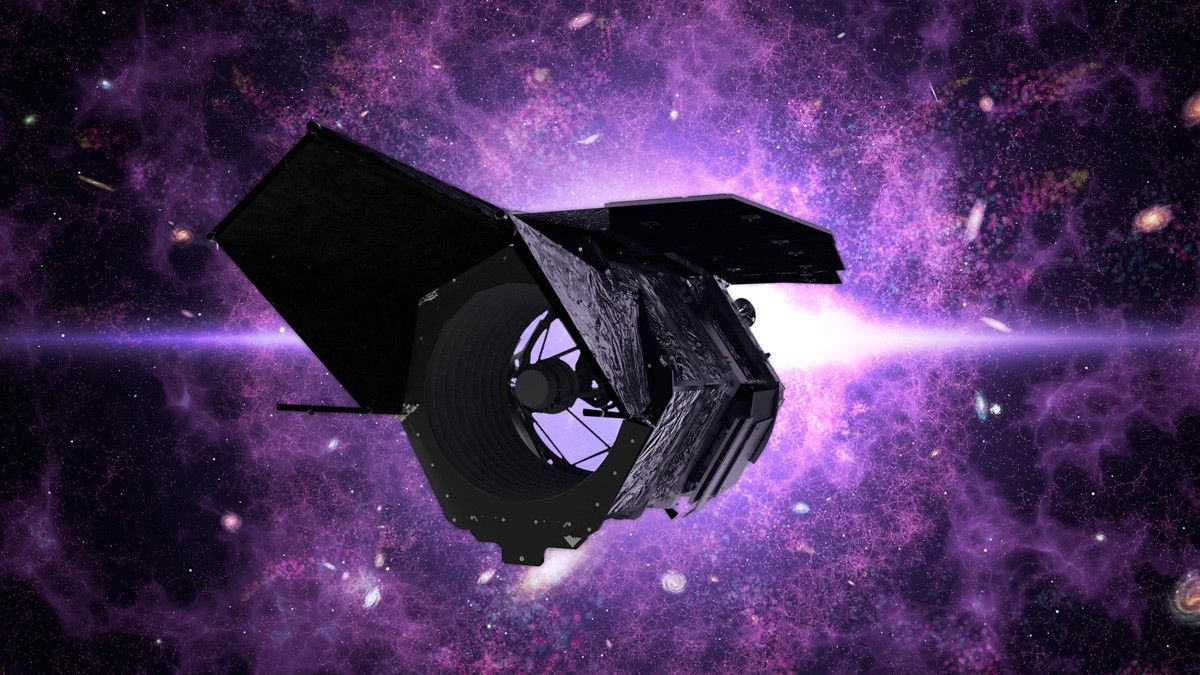
NASA is preparing to deploy its newest astrophysics observatory, the Nancy Grace Roman Space Telescope, with a scheduled liftoff on August 30, 2026. The mission represents a significant step in the agency’s efforts to understand the fundamental composition and evolution of the universe. Launch operations will commence from Launch Complex 39A at the Kennedy Space Center in Florida, utilizing a SpaceX Falcon Heavy rocket to deliver the payload into its designated trajectory.
Once in space, the telescope will travel approximately 930,000 miles away from Earth to reach the second Sun-Earth Lagrange point, known as L2. This specific location serves as a gravitational equilibrium zone where the forces of the Sun and Earth balance out. Occupying this orbital parking spot allows the spacecraft to maintain its position with minimal fuel consumption while enjoying an unobstructed view of the cosmos, free from the interference of Earth’s atmosphere or thermal emissions.
The observatory is equipped with a primary mirror measuring 7.9 feet across, designed to gather substantial amounts of light for high-resolution imaging. This large aperture enables the telescope to peer through cosmic dust and detect faint signals from distant objects. The collected light is directed toward two specialized science instruments: the Wide Field Instrument and the Coronagraph Instrument, each tailored to address different scientific questions regarding the structure and contents of the universe.
The Wide Field Instrument functions as a 300-megapixel infrared camera capable of capturing light that has traveled for billions of years. By observing the universe in its early stages, researchers aim to trace how cosmic expansion has occurred over time. These observations are critical for understanding dark energy, a mysterious force constituting roughly 68% of the universe’s total content. Current data suggests that the pressure exerted by dark energy may be shifting, and the Roman telescope will help clarify whether this acceleration is constant or variable.
In addition to studying cosmic expansion, the mission will investigate dark matter, the invisible substance believed to hold galaxy clusters together. The nature of dark matter particles remains unknown, but their mass and speed would influence how quickly structures formed in the early universe. If dark matter consists of heavy, slow-moving particles, galaxies should have clumped together rapidly. Conversely, lighter, faster particles would result in a slower development of large-scale structures. The telescope’s ability to trace galaxy formation history will help narrow down these theoretical candidates.
The Coronagraph Instrument represents another technological advancement, designed to block the intense glare of stars to reveal orbiting planets. This device is the most powerful coronagraph ever deployed in space, allowing astronomers to detect exoplanets that are nearly a billion times fainter than their host stars. While over 6,000 exoplanets have been identified to date, many differ significantly from those in our solar system. The Roman telescope will search for worlds within the habitable zones of their stars, potentially identifying planets with characteristics similar to Earth.
The naming of the observatory honors Nancy Grace Roman, who served as NASA’s first chief astronomer and its first female executive. Born in Nashville, Tennessee, in 1925, Roman played a pivotal role in the development of the Hubble Space Telescope, influencing decisions from funding to instrument design. Her contributions earned her the title of the mother of the Hubble Space Telescope, and this new mission continues her legacy by expanding humanity’s ability to observe the infrared spectrum and explore deep space.
The success of the Roman Space Telescope depends on precise engineering and stable orbital mechanics at L2. As the spacecraft begins its survey, it will provide data that could redefine current models of cosmology. The combination of wide-field imaging and high-contrast coronagraphy offers a unique toolkit for addressing long-standing questions about dark energy, dark matter, and the prevalence of Earth-like planets. Results from this mission are expected to guide future astronomical research and potentially inform the design of subsequent observatories.
Sources behind this briefing
Go to the original reporting
- NASA↗What Is the Nancy Grace Roman Space Telescope? (Grades 5-8)

