The short version
- Macaques exposed to a deadly virus outbreak avoided contaminated food more often than those who were not exposed.
- The study suggests that witnessing illness triggers heightened pathogen avoidance, even when the specific transmission route is unrelated to the observed threat.
- Early life socialization appears critical for developing these avoidance behaviors, as former pets showed less caution than sanctuary-raised monkeys.
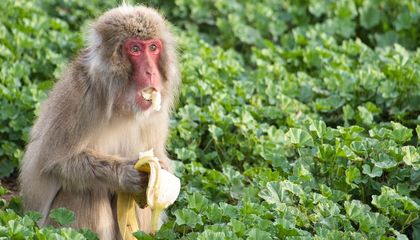
New research indicates that Japanese macaques can develop heightened sensitivity to potential pathogens after witnessing a disease outbreak, mirroring human behavioral responses to health crises. The study, published in Royal Society Open Science, suggests that the instinct to avoid contamination is not unique to humans but is part of a broader behavioral immune system shared by primates. This finding offers insight into the evolutionary origins of disgust and how animals adapt their behavior to survive infectious threats without understanding the underlying biology.
The investigation began at the Born Free USA Primate Sanctuary in southern Texas, where an outbreak of simian retrovirus (SRV) occurred among the resident macaques. SRV is a serious condition that causes immunodeficiency similar to AIDS and spreads through bodily fluids such as those found in scratches or bites. The disease progresses rapidly, often leading to death within three to four weeks of initial infection. In response to the crisis, sanctuary staff separated, tested, and quarantined groups of monkeys to contain the spread.
These containment measures inadvertently created distinct experimental groups for researchers. Three groups of monkeys had direct experience with the outbreak, either by contracting the virus themselves or by observing other individuals fall ill and die. A fourth group remained isolated from these events and had no exposure to the sickness. This setup allowed scientists to compare behavioral changes between animals that had witnessed the consequences of disease and those that had not.
To measure changes in risk perception, researchers conducted a series of trials involving food choices. They presented the macaques with two plates of grapes, a treat rarely offered to the animals. One plate held a grape on a clean surface, while the other placed a grape on top of epoxy-coated macaque feces. Previous studies had shown that these primates would typically eat high-value snacks even when associated with waste, making this a reliable test for shifts in aversion.
The results revealed a significant difference in behavior based on prior exposure to illness. Macaques that had lived through the outbreak consumed the contaminated grape in only 47 percent of the trials. In contrast, monkeys from the unexposed group ate the tainted food in 79 percent of instances. This marked decrease in consumption among the exposed group suggests that witnessing disease triggers a generalized increase in caution regarding potential contaminants.
Notably, the heightened avoidance persisted even though feces are not a transmission vector for SRV. The monkeys did not possess knowledge of how the virus spread; instead, their reaction appears to be a broadened sensitivity to any sign of contamination after seeing peers suffer. This implies that the behavioral immune system operates on a heuristic level, prioritizing general pathogen avoidance over specific knowledge of disease mechanics.
The study also explored how early life experiences influence these behaviors. Researchers tested macaques from various backgrounds, including those raised in sanctuaries by their mothers, zoo-born individuals, laboratory-reared animals, and former pets. The analysis showed that former pets were significantly more likely to eat the contaminated food compared to sanctuary-born monkeys. This suggests that early socialization with other primates is crucial for learning typical avoidance behaviors.
Scientists posit that monkeys raised without maternal or peer guidance during critical developmental stages may fail to acquire the necessary cues for pathogen avoidance. Even after living in group settings for years, this early deficit appears to persist. The findings highlight the importance of social learning in shaping risk-averse behaviors and suggest that the capacity for disgust is not entirely innate but can be modulated by environmental and social factors.
While the study did not directly measure emotional states like disgust, researchers believe this emotion may play a role in driving avoidance behaviors in non-human primates. Experts outside the study note that while the link between past exposure and increased caution is plausible, further research is needed to confirm the specific mechanisms at work. Nevertheless, the data provides compelling evidence that the drive to avoid contamination is a deeply rooted survival strategy.
These insights into primate behavior offer a window into the evolutionary history of human responses to disease. Just as humans adopted rigorous hygiene practices during recent global health crises, macaques adjusted their foraging habits after witnessing mortality. Understanding these parallels helps clarify how behavioral immune systems function across species and underscores the adaptive value of disgust in preventing illness.
Sources behind this briefing
Go to the original reporting
- Smithsonian Magazine↗Some Monkeys Seem to Become Germophobic After Living Through a Disease Outbreak, Just Like Humans