The short version
- MIT students won $775,000 for a recycling system that processes mixed waste into usable material for deep space missions.
- The technology treats materials like Zotek foam as reinforcement rather than contamination, creating feedstock for 3D printing or injection molding.
- This marks the culmination of a two-year competition aimed at reducing waste during lunar and deep space exploration.
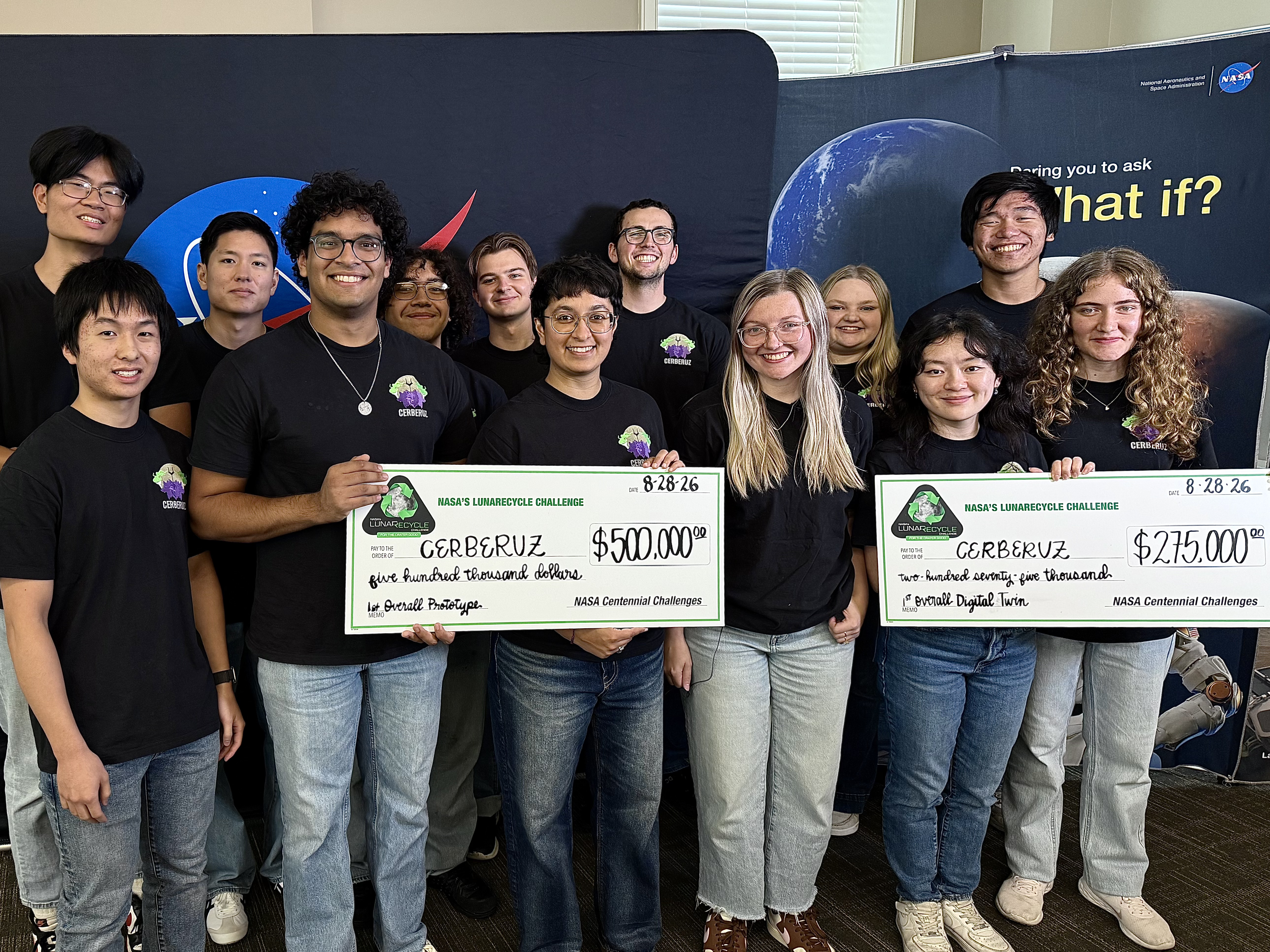
NASA has awarded its first prize in Phase 2 of the LunaRecycle Challenge to a team from the Massachusetts Institute of Technology. The award recognizes the development of a novel system designed to reduce waste during missions to the Moon or deep space by recycling common materials such as fabrics, plastics, foam, and metals. This milestone represents the culmination of two years of innovation driven by the agency’s competition program.
The winning group, known as CERBERUZ, consists of undergraduate, graduate, and doctoral students at MIT. They received a total of $775,000 in awards for their work. The team secured victories in both the prototype development track and the track focused on creating virtual models, or digital twins, of recycling systems. Their success highlights the agency’s strategy of leveraging external innovation to solve complex engineering problems.
The technology developed by the MIT team addresses a critical logistical challenge: managing mixed waste in closed environments. Instead of treating materials like Zotek foam as contamination that requires sorting and removal, the system grinds mixed trash into a fine powder. This powder serves as reinforcement material, which can then be used as feedstock for injection-molded finished parts or converted into 3D-printing filament.
The competition finale took place at The University of Alabama Lee J. Styslinger Jr. College of Engineering in Tuscaloosa. Fourteen finalist teams from across the United States gathered there from August 24 to August 28 to demonstrate their technology prototypes. Some teams also presented digital twin models alongside their physical hardware, allowing judges to evaluate both the tangible devices and their virtual counterparts.
LunaRecycle is a $3 million, two-phase competition managed by NASA’s Marshall Space Flight Center in Huntsville, Alabama. It is part of the Centennial Challenges program within the Research and Technology Mission Directorate. The initiative aims to engage the public and private sector in solving problems that benefit NASA’s broader initiatives, building on a legacy of more than 20 years of crowdsourced innovation.
Phase 1 of the challenge, which concluded in 2025, generated record-breaking interest from the global innovator community. More than 1,200 registrations were received, surpassing any previous competition in the history of NASA Centennial Challenges. A panel of 50 judges evaluated nearly 200 submissions, selecting 17 teams representing five countries and nine U.S. states as winners. Entries for Phase 2 were required to be unrelated to those submitted in Phase 1.
The competitors in Phase 2 came from diverse backgrounds, ranging from university students and faculty members to entrepreneurs and space technology enthusiasts. Teams were encouraged to envision solutions that not only addressed recycling needs in deep space but also had potential applications on Earth. This dual-purpose approach aims to maximize the utility of the developed technologies beyond their immediate aerospace context.
Along with the first prize winner, nine other teams received awards for their contributions. The competition underscores the value of collaboration between solver teams, academic institutions like The University of Alabama, and federal agencies. By bringing together resources and ideas toward a common goal, the program seeks to accelerate the development of sustainable practices for future space exploration.
Support for the LunaRecycle Challenge extends beyond Marshall Space Flight Center. Subject matter experts from NASA’s Kennedy Space Center in Florida, Ames Research Center in California’s Silicon Valley, and Langley Research Center in Hampton, Virginia, also contributed to the effort. Past Centennial Challenges have spurred advances in various fields, including robotics, additive manufacturing, power and energy, textiles, chemistry, and biology.
As NASA prepares for increased activity on the Moon and beyond, efficient resource management becomes increasingly critical. Technologies that can repurpose waste into useful materials reduce the need to launch heavy supplies from Earth. The success of the MIT team’s prototype suggests a viable path forward for managing limited resources in isolated environments, both in space and potentially in remote locations on Earth.
Sources behind this briefing
Go to the original reporting
- NASA↗NASA Awards First Prize in Phase 2 of Agency’s LunaRecycle Challenge

