The short version
- Sediment cores from two lakes near ancient Maya cities show mercury levels thousands of times higher than modern safety standards during the civilization's peak.
- Biological markers indicate that aquatic life, including fish and shellfish, declined or vanished during periods of high mercury contamination.
- Researchers suggest this pollution may have compromised food security and public health, serving as an additional pressure alongside drought and warfare.
Recent environmental analysis suggests that the ancient Maya civilization may have inadvertently poisoned its own water and food supplies through the widespread use of cinnabar, a bright red ore prized for decoration. New research published in Science Advances indicates that mercury contamination was far more extensive than previously understood, affecting aquatic ecosystems in the northern lowlands of modern-day Mexico. This finding introduces a potential biological stressor to the long-standing debate regarding the factors that contributed to the decline of major Maya cities.
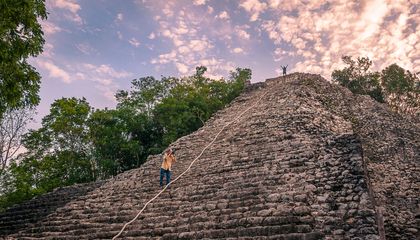
The study focused on sediment cores extracted from two bodies of water near the ancient sites of Coba and Xcach in the Yucatán Peninsula. Researchers used heavy, hollow cylinders to pull up thick columns of lakebed material, which preserved a layer-by-layer record of environmental conditions over centuries. The analysis revealed significant spikes in mercury concentrations during periods corresponding to the late Preclassic and Classic eras, marking the height of Maya cultural and political development.
At Lago Coba, elevated mercury levels persisted from approximately 40 C.E. to 300 C.E., aligning with the transition into the Classic Period. The data from Cenote Xcach showed three distinct surges in contamination: one between 125 C.E. and 200 C.E., another from 330 C.E. to 350 C.E., and a final, prolonged spike lasting from 535 C.E. to 820 C.E. These timelines suggest that exposure to toxic elements was not a singular event but a recurring condition throughout the civilization's history.
The concentration of mercury found in some samples reached 2.3 parts per million. This figure is more than one thousand times higher than the maximum contaminant level for safe drinking water established by the U.S. Environmental Protection Agency, which sets the limit at two parts per billion. Lead author Matthew Waters described the data as off the charts, noting that such levels are not consistent with natural background variations in the region.
Beyond chemical analysis, scientists examined biological markers within the sediment to assess the impact on local ecosystems. The records show that populations of bacteria, algae, shelled organisms, and midges decreased or disappeared entirely during the periods of highest mercury concentration. This ecological collapse suggests that the toxin moved up the food web, likely affecting fish and shellfish that were important protein sources for communities living near these lakes.
Cinnabar is composed of approximately 86 percent mercury, a highly toxic element known to damage the central nervous system, kidneys, lungs, and heart. While cinnabar does not occur naturally in the Yucatán Peninsula, its presence in these northern sites implies that it was imported through trade networks. This adds cinnabar to the list of valuable commodities, such as jade and obsidian, that circulated across the Maya world, highlighting the economic reach of their exchange systems.
The implications for human health are significant but remain partially theoretical. If inhabitants consumed contaminated water or aquatic life, they could have suffered from chronic mercury poisoning over decades or centuries. At a minimum, residents would have observed visible changes in water quality and a decline in fish populations, which would have strained local food security. The physical effects of long-term exposure could have weakened communities already facing other challenges.
This research does not claim that mercury pollution alone caused the abandonment of Maya cities. Scholars have proposed various explanations for the civilization's downturn, including drought, deforestation, warfare, and overpopulation. However, this study adds another layer of complexity to those narratives. By introducing environmental toxicity as a compounding factor, it suggests that the Maya faced a convergence of pressures that may have overwhelmed their social and ecological resilience.
Future investigations aim to expand this understanding by analyzing sediment from lakes near other known trade hubs. Researchers hope to determine whether mercury contamination was a localized phenomenon or a widespread issue affecting multiple regions. As archaeologists continue to uncover cinnabar-rich artifacts, such as the recently discovered tomb of Te K’ab Chaak in Belize, the intersection of cultural practice and environmental consequence becomes increasingly clear.
The findings underscore the unintended consequences of ancient resource use. The Maya’s aesthetic and ritual devotion to red pigment may have come at a steep ecological cost. By documenting these hidden pollutants in the geological record, scientists are refining the timeline of Maya history, revealing how human activity can leave lasting scars on the environment long after the societies themselves have faded.
Sources behind this briefing
Go to the original reporting
- Smithsonian Magazine↗The Maya Loved Using Mercury-Rich Red Paint to Decorate Pottery, Temple Walls and Even Burials. They May Have Accidentally Poisoned Their Own Water and Food Supply in the Process