The short version
- Perseverance found igneous rock instead of expected sedimentary layers in Jezero Crater's Margin Unit.
- Mineral analysis indicates the site experienced three separate interactions with water over time.
- The discovery suggests a complex hydrological history that extends beyond local crater boundaries.
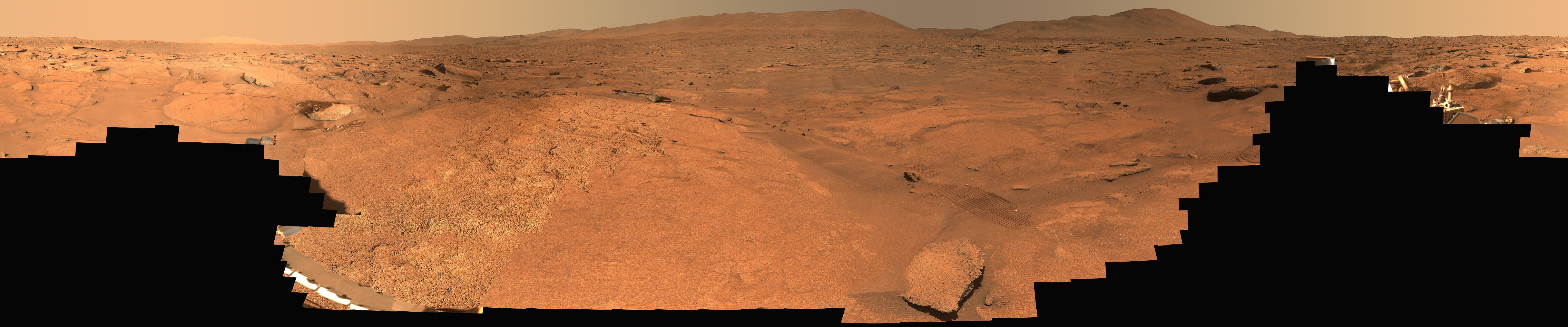
NASA’s Perseverance rover has uncovered evidence of a surprisingly intricate water history on early Mars, contradicting initial expectations for the geology of Jezero Crater. When the vehicle arrived at the inner edge of the crater in September 2023, scientists anticipated finding sedimentary rocks formed by layers of sand and silt accumulating over millennia. These types of formations are typically rich in clay and are considered prime candidates for preserving signs of ancient microbial life. Instead, the rover encountered igneous rock, which originates from magma cooling either deep underground or through surface volcanic activity.
This unexpected geological composition has proven to be a valuable record-keeper. Mineral crystals within igneous rocks preserve precise details about the moment they formed. In this specific region, known as the Margin Unit, the rocks reveal an astonishingly complex history of water activity. The data indicates that these formations interacted with water on at least three separate occasions. Each encounter altered the chemistry and physical appearance of the stone, providing a layered timeline of hydrological events that challenges previous assumptions about the area's past.
The findings were made possible by SuperCam, an instrument mounted on the rover’s mast. This tool determines mineralogy by analyzing the light reflected from geologic features. When the science team identifies an intriguing target, they command SuperCam to fire a laser up to 21 feet away. The resulting plasma spectrum reveals the chemical composition of the rock. Perseverance has used this method to analyze more than 185 bedrock targets within the Margin Unit, allowing researchers to map the geological history with high precision.
Before reaching this site, the primary hypothesis, derived from orbital observations, was that carbonate minerals detected from space formed through interaction with the ancient lake that once filled Jezero Crater. On Earth, carbonates frequently develop in shallow ocean and lake environments capable of supporting life. However, the rover’s ground-level analysis revealed a different narrative. The location appears to have served as a crossroads for various aqueous systems rather than a simple lakebed environment.
The geological record shows distinct variations based on elevation. At higher elevations within the Margin Unit, Perseverance found coarse-grained, crystalline rock characterized by olivine, a mineral composed of magnesium and iron. These rocks showed almost no signs of water interaction. They formed deep underground in a magma body that cooled slowly, allowing large grains to grow, before erosion exposed them to the surface. In contrast, rocks lower down, near the ancient lakebed, appear significantly transformed.
The first identified water event involved carbon-dioxide-rich groundwater reacting with olivine. This chemical process created ridges of carbonate running through fractures in the bedrock at low elevations. Today, these carbonate-filled fractures remain standing as pillars because the softer surrounding rock has worn away. This interaction is significant for the search for ancient life because, on Earth, the reaction between water and olivine can release hydrogen, a potential food source for microbes, while leaving behind carbonate and silica minerals that may lock in biological traces.
A second water event likely relates to the lake that once existed in the crater. Some rocks in the Margin Unit contain silica, which is left behind when olivine turns into carbonate. Researchers observed higher concentrations of this silica in rocks that sat below the ancient water line. The third and final identified event generated thick mineral veins in the eastern part of the unit. These veins, composed of minerals like calcium sulfate and fluorite, suggest a later period where hot water circulated through volcanic rocks, indicating heated underground-water activity.
While the Perseverance team can determine the sequence of these interactions, they cannot yet establish their exact ages. The discovery is important because Jezero Crater sits inside one of the largest exposures of carbonate on Mars. Insights gained from this specific location may reshape how scientists view water history across the entire planet. Ultimately, this work aims to help planetary scientists reconstruct the changing climate and habitability conditions of early Mars, moving beyond orbital data to ground-truthed geological evidence.
The findings highlight the limitations of remote sensing in predicting surface geology. Orbital instruments often provide a broad overview that can miss the nuanced complexity revealed by direct exploration. The presence of igneous rock where sedimentary layers were expected underscores the dynamic and unpredictable nature of Martian geology. As analysis continues, these rocks may offer further clues about the timing and conditions necessary for life to have emerged or persisted on the Red Planet.
This research adds a critical layer to our understanding of Mars' hydrological evolution. The transition from dry, igneous formations to water-altered minerals suggests a volatile environment with multiple phases of wet and dry conditions. By identifying specific mineral signatures associated with different water temperatures and chemistries, scientists can begin to piece together a more detailed picture of the planet's past. This complexity makes Jezero Crater an even more compelling site for future study in the search for biosignatures.
Sources behind this briefing
Go to the original reporting
- NASA↗NASA Discovery Reveals Complex Water Systems on Early Mars

