The short version
- Approximately 20,000 demonstrators marched through Madrid to commemorate Maricarmen Abascal, an 87-year-old pensioner who died shortly after being evicted from her long-term residence.
- The incident has galvanized public anger over Spain's rental market, with critics arguing that institutional failures and investor protections prioritize financial interests over tenant security.
- Political tensions have escalated as right-wing parties blocked emergency housing measures and vetoed moments of silence, while the government pushes for legislative action ahead of November elections.
A large demonstration unfolded in the center of Madrid on Thursday evening, drawing an estimated crowd of 20,000 people who gathered to pay respects to Maricarmen Abascal. The 87-year-old pensioner passed away in a hospital on Wednesday night, just two weeks after being forcibly removed from her apartment in the capital. Her case has emerged as a focal point for widespread dissatisfaction with Spain’s housing market, transforming a personal tragedy into a catalyst for national political upheaval.
Abascal had lived in the Madrid flat for seven decades before an investment firm acquired the property and attempted to raise her rent by 230 percent. Despite efforts by housing campaigners to help her resist three previous eviction attempts, the firm ultimately succeeded in removing her from the home. The sequence of events has drawn sharp criticism from activists and residents who view the outcome as evidence of a system that favors corporate investors over vulnerable tenants.
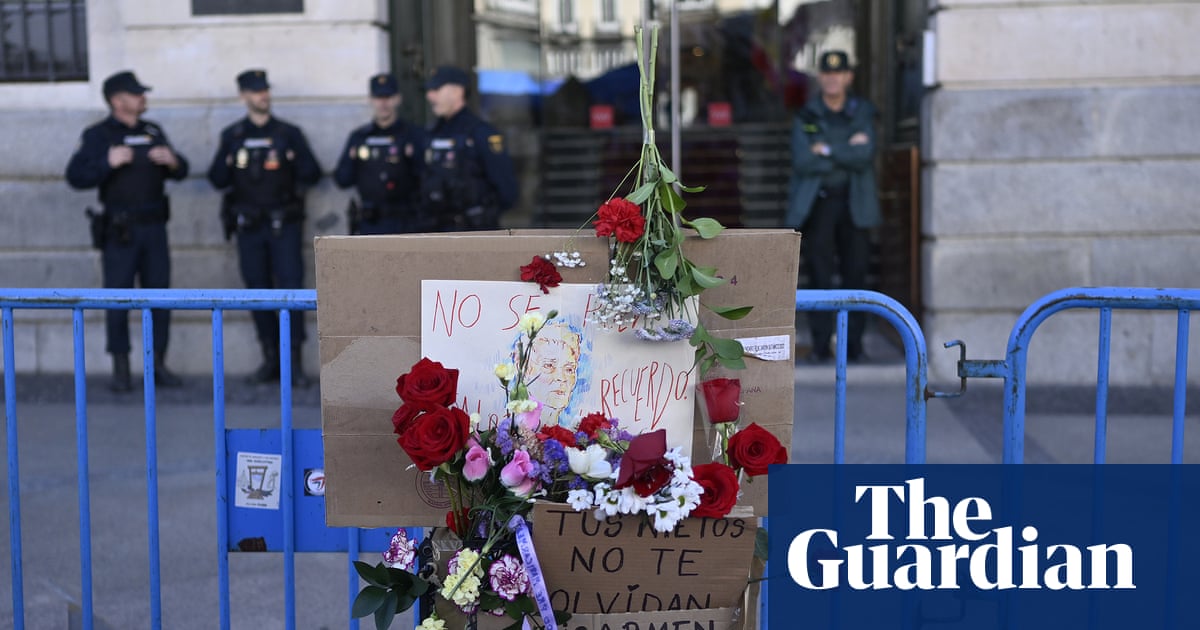
The public response has been intense and emotionally charged. A memorial site established across the street from Abascal’s former residence attracted a steady stream of visitors who left flowers, lit candles, and posted handwritten notes expressing gratitude and solidarity. Many attendees described her as an unwilling symbol of the struggle for affordable housing, noting that her death highlighted the human cost of institutional neglect.
Protesters emphasized the broader implications of Abascal’s case beyond her individual circumstances. Some argued that the incident reveals a systemic failure where social rights are not adequately protected, leading to preventable harm for elderly and low-income residents. Campaigners noted that while thousands of people face eviction daily, the personalization of this crisis has helped bring attention to the scale of displacement in Spain.
The political ramifications have been immediate and significant. The socialist-led government had proposed emergency measures aimed at stabilizing the rental market and protecting tenants from excessive rent hikes. However, these proposals were rejected last week by right-wing and far-right parties in Congress. In response to the legislative deadlock, Prime Minister Pedro Sánchez announced a snap general election scheduled for November 29.
Political leaders have responded to Abascal’s death with mixed signals. Sánchez offered condolences on social media, expressing sympathy for her family and those affected by the loss. Alberto Núñez Feijóo, leader of the conservative People’s Party, initially called for respect and an end to partisan rhetoric following the news. However, he later accused the government of exploiting public emotion by focusing on a single case while ignoring broader housing issues during Sánchez’s eight-year tenure.
Tensions within legislative bodies have further intensified. Right-wing and far-right politicians collaborated to veto attempts to observe a minute of silence for Abascal in both the Senate and Madrid’s regional parliament. In the municipal council, an effort to block such a tribute was unsuccessful, reflecting the deep divisions surrounding how the nation should respond to the crisis.
Housing policy is now expected to dominate the upcoming electoral debate. The government intends to advance a revised package of measures through the Council of Ministers, which retains limited legislative power while parliament is dissolved. Opponents argue that the administration has failed to address the housing shortage effectively over the past several years, framing the current emergency as a consequence of prolonged inaction.
The march organized by the Madrid tenants’ union began at the protest camp in Puerta del Sol square and proceeded to Abascal’s former apartment building. Participants viewed the event as both a farewell and a call to action, hoping that her death would mark a turning point in how Spain addresses displacement. The convergence of grief, anger, and political maneuvering underscores the high stakes of the coming election.
As the country moves toward the November vote, the legacy of Maricarmen Abascal’s case remains unresolved. While some see it as a moment of national reckoning on housing rights, others view it through the lens of political strategy. The outcome of the election may determine whether emergency protections are enacted or if the status quo persists, leaving millions of Spaniards uncertain about their future in the rental market.
Sources behind this briefing
Go to the original reporting
- The Guardian World↗Thousands march in Madrid after death of evicted pensioner Maricarmen