The short version
- Eleven student-built payloads launched from Palestine, Texas, marking the 74th and 75th flights in a long-standing partnership with Louisiana institutions.
- Participants from nine universities and one high school conducted research on atmospheric science, cosmic rays, and solar cell performance.
- The program serves as a training ground for future aerospace professionals by mirroring NASA’s engineering lifecycle and operational procedures.
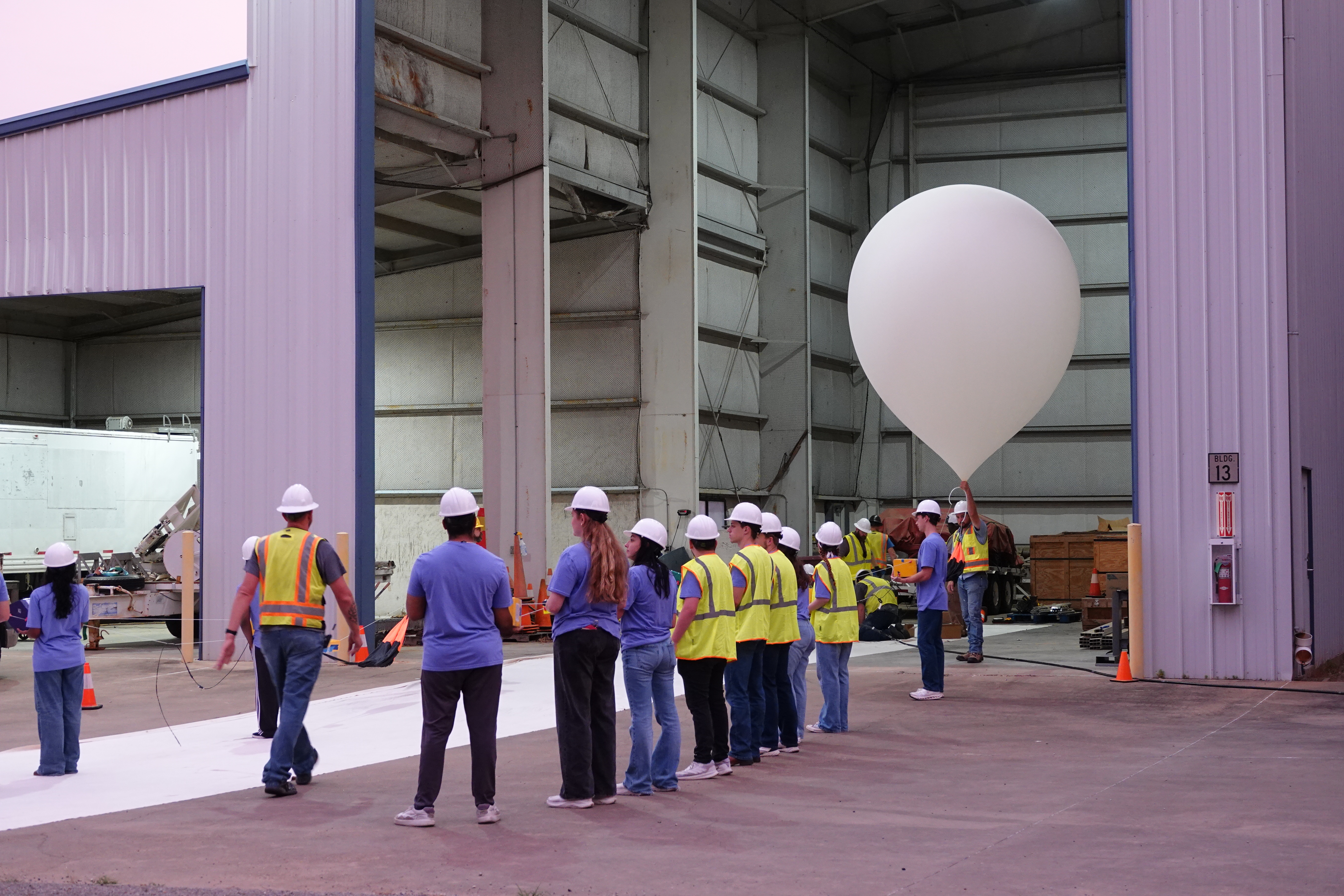
Student teams from across Louisiana successfully launched scientific payloads into near-space altitudes during a recent campaign at NASA’s Columbia Scientific Balloon Facility in Palestine, Texas. The event marked the 74th and 75th launches in a collaborative effort between the federal agency and the Louisiana Space Grant Consortium. These flights represent a continuation of a long-running initiative designed to provide undergraduate students with hands-on experience in aerospace engineering and scientific research.
The 2026 campaign featured eleven distinct payloads developed by nine university teams and one high school group. Participating institutions included Louisiana State University, Northwestern State University, Southeastern Louisiana University, McNeese State University, Loyola University New Orleans, Southern University, and St. Joseph’s Academy. The experiments covered a diverse range of scientific objectives, including atmospheric analysis, cosmic ray detection, thermal management systems, ultraviolet characterization, stratospheric wind patterns, and the performance evaluation of solar cells.
Before arriving in Texas, the student groups underwent a rigorous preparation process modeled after NASA’s standard engineering lifecycle. Teams participated in structured design reviews where they defended their technical decisions and refined their hardware to ensure flight readiness. Program directors oversaw this phase, clearing each payload for launch only after demonstrating that the instruments met safety and operational standards. This preparatory work allowed students to engage with real-world aerospace constraints rather than purely theoretical concepts.
Once in Texas, facility personnel supported the launches by providing weather briefings, filling latex balloons with helium, and guiding operations on the flight line. The balloons ascended to altitudes near the edge of space, carrying payloads weighing between seven and nine pounds. Both flight trains completed their missions successfully, with recovery teams retrieving the equipment approximately 60 miles north of the launch site near Ben Wheeler. After retrieval, students analyzed the collected data and presented their findings to engineers, technicians, and faculty mentors.
The Louisiana Aerospace Catalyst Experiences for Students program is funded by NASA’s National Space Grant College and Fellowship program. Since its inception, the initiative has supported more than 500 students across 13 higher-education institutions, launching over 60 balloon flights and deploying roughly 135 unique payloads. By placing students within an operational environment that mirrors broader scientific balloon programs, the initiative aims to cultivate a pipeline of future innovators for NASA, academia, and the aerospace industry.
Sources behind this briefing
Go to the original reporting
- NASA↗Louisiana Students Loft Payloads from NASA Balloon Facility in Texas

