The short version
- A Jamaican court issued an injunction preventing the government from restricting public access to Little Dunn’s River in St. Ann, marking a significant legal setback for state-enforced beach closures.
- Activists argue that the Beach Control Act of 1956 facilitates a colonial-era tourism model that excludes locals and prioritizes luxury hoteliers over community rights.
- Government officials defend the restrictions as necessary for security and investment protection, promising updated legislation to balance tourism revenue with public access points.
A Jamaican court has issued a temporary injunction halting government efforts to restrict public access to Little Dunn’s River in St. Ann, a decision that activists view as a pivotal moment in the ongoing struggle for shoreline rights. The ruling interrupts the state’s ability to enforce closures under the Beach Control Act of 1956, legislation that has long granted the government ownership of the foreshore and seabed. This legal intervention provides a narrow window of hope for campaigners who argue that current policies disproportionately benefit wealthy developers while marginalizing local residents.
The victory at Little Dunn’s River follows months of organized resistance led by the Jamaica Beach Birthright Environmental Movement, or Jabbem, which was founded in 2020 by Dr. Devon Taylor, an immunologist and biochemist. Taylor and other organizers contend that the 1956 act serves as a tool for privatizing coastlines rather than managing public resources. The injunction prevents the government from continuing to limit access while the broader case proceeds, signaling judicial skepticism toward the administration’s justification for sealing off beaches.
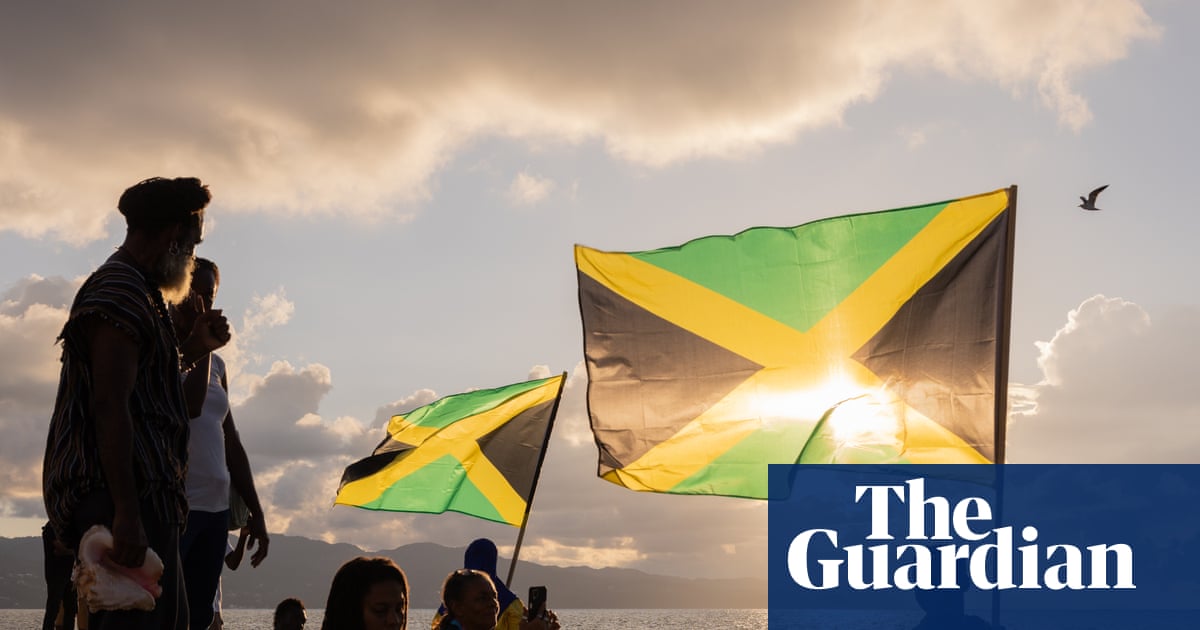
Public sentiment surrounding the issue has intensified, highlighted recently by Australian human rights lawyer and marathon swimmer Eva Buzo, who completed an eleven-hour swim to One Man Beach in Montego Bay. Her arrival was met with chants demanding free beach access, underscoring the emotional weight of the dispute. Supporters view such acts of solidarity as essential to challenging what they describe as a colonial legacy that encroaches on fundamental freedoms. The event drew attention to the broader narrative of exclusion that activists claim defines Jamaica’s current tourism infrastructure.
Government officials have pushed back against the characterization of their policies as oppressive. Environment Minister Matthew Samuda stated that the administration is safeguarding critical tourism investments, which serve as the primary source of income for nearly 200,000 Jamaicans. Samuda argued that the restrictions at Little Dunn’s River were implemented in response to a murder, aiming to provide structured management including security structures and lifeguards. He described the limited weekend access as a compromise that balances safety with community use, rejecting claims that the government is acting without basis.
Critics of the government’s stance argue that crime prevention is a pretext for long-standing exclusionary practices. Taylor pointed out that the 1956 act predates modern crime levels and was never intended as a security tool. He characterized the four-year restriction at Little Dunn’s River, which currently allows access only on weekends, as an illegal form of collective punishment. Activists emphasize that leisure should be available seven days a week, not contingent on unresolved criminal investigations or arbitrary administrative decisions.
The dispute extends beyond a single location, with similar battles occurring in other parishes such as Portland. Wilbourn Carr, a local activist involved in the fight for beach access in Portland, noted that the injunction at Little Dunn’s River offers encouragement for other pending cases. The involvement of a judge who recognizes Jamaicans’ right to access the coast suggests a potential shift in legal interpretation. This development could influence how future disputes over shoreline ownership and usage are adjudicated across the island.
Paul Roberts, a British architect and community coordinator for Jabbem in St. Ann, challenged the government’s narrative that locals cannot be trusted with open access. He cited his fifteen years of residence without experiencing crime or harassment as evidence against the need for restrictive measures. Roberts argued that the administration creates a false impression of danger to justify limiting public spaces. This perspective aligns with broader criticisms that the current tourism model relies on cheap labor and environmental degradation while excluding the very people who sustain the industry.
The government has indicated it will appeal the injunction, maintaining that its actions are necessary to protect economic interests. Samuda accused activists of portraying the tourism sector as an enemy, despite its role in feeding families across the island. He promised that updated legislation would require future developments to include access points and community leisure spaces. However, activists remain skeptical, viewing these promises as insufficient without immediate changes to the existing legal framework that enables privatization.
As the case moves forward, the outcome will likely set a precedent for how Jamaica balances its lucrative tourism industry with public rights to natural resources. The tension between economic dependency on foreign exchange earnings and the demand for equitable access remains unresolved. Whether the court’s temporary measure leads to permanent reform or is overturned on appeal will determine the future of beach governance in the Caribbean nation.
The broader implications of this legal battle extend to the definition of tourism itself. Activists distinguish between opposing hotels and rejecting a plantation-style model that disadvantages locals. They seek a system that does not rely on exclusion from the foreshore or untenable working conditions. The resolution of these court cases may redefine the relationship between the Jamaican state, private investors, and the general public in the years to come.
Sources behind this briefing
Go to the original reporting
- The Guardian US↗‘Plantation tourism’: court victory signals hope in Jamaica’s fight to keep beaches public