The short version
- Benjamin Netanyahu’s coalition lost its majority in recent elections, but opposition leaders have ruled out governing with Palestinian parties.
- This self-imposed barrier allows Netanyahu to remain as caretaker prime minister or potentially trigger another election cycle.
- Critics argue that excluding Arab citizens from government participation undermines Israel’s claim to be a democratic state.
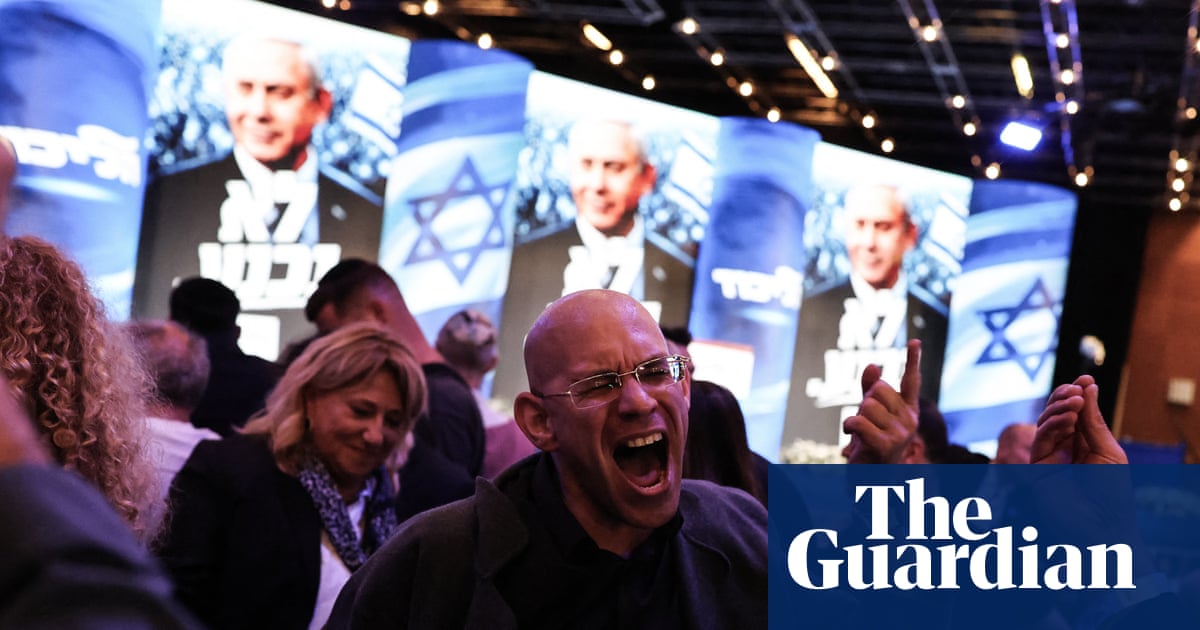
The recent Israeli elections have produced a political stalemate that threatens to extend Benjamin Netanyahu’s hold on power despite his coalition losing its parliamentary mandate. While the opposition secured a firm majority of seats, key Jewish parties have explicitly ruled out forming a government with Palestinian-led factions. This refusal creates a structural barrier that prevents the establishment of a new administration, leaving the incumbent prime minister in place as caretaker or potentially forcing another round of voting.
The decision by opposition leaders to exclude Arab partners stems from a campaign strategy that heavily emphasized ethnic divisions. Netanyahu’s election posters featured slogans framing Palestinian citizens as an internal enemy, a tactic critics describe as racist and designed to complicate post-election negotiations. By painting the choice as one between right-wing Jewish parties and Palestinian interests, the incumbent sought to make coalition-building with Arab parties politically toxic for his rivals.
Yair Golan, leader of the center-left Democrats party, has challenged this narrative, arguing that the opposition has a responsibility to form a change government in partnership with Arab citizens. He noted that Palestinians constitute approximately twenty percent of Israel’s population and should not be excluded from governance based on racial divisions. Golan emphasized that the opposition holds a majority and has an opportunity to break the cycle of Netanyahu’s leadership by embracing a broader alliance.
Other voices within Israeli society have echoed these sentiments, calling for an end to the exclusionary practices that define current political discourse. Musician Yali Sobol suggested that abandoning racist rhetoric would reveal the true strength of the opposition’s mandate. Meanwhile, Palestinian leaders have expressed readiness to support the ousting of Netanyahu’s government through Jewish-Arab partnership. Yousef Jabareen, leader of the Joint List, stated that change requires collaboration across ethnic lines.
The Ra’am party, an Islamist faction led by Palestinians, has signaled its commitment to working with Jewish Israelis by placing a former police chief in second position on their electoral slate. This move is intended to demonstrate openness to coalition negotiations. However, opposition leaders have remained largely silent or have set conditions that effectively preclude such partnerships. Former general Gadi Eisenkot, who leads the largest opposition party, has not directly ruled out governing with Palestinians but has outlined requirements that make their inclusion politically unfeasible.
Public opinion appears to diverge from the stance of many opposition leaders. A survey conducted as polls closed indicated that a clear majority of opposition voters supported forming a government with Ra’am to remove Netanyahu from power. Political psychology researcher Eran Halperin highlighted this disconnect between voter preferences and the strategic calculations of party elites. The silence from opposition figures suggests they are balancing their desire to unseat the prime minister against prior commitments to exclude Arab partners.
Netanyahu has responded to his electoral setback by claiming vindication for his vision, despite losing roughly ten seats from his previous coalition. He argued that the right-wing bloc maintains a decisive majority among Zionist voters and called for the formation of a strong national-right government. This framing ignores the broader shift in the Knesset toward the right and the changing demographics of young Israeli voters. His strategy relies on keeping opposition parties divided along ethnic lines rather than policy differences.
The implications of this political impasse extend beyond immediate governance issues. Many Israelis view the election as existential, concerned with halting the erosion of democratic norms within pre-1967 borders and securing an inquiry into the October 7 attacks. For Palestinian citizens facing discrimination, crime, and home demolitions, the exclusion from government participation reinforces a sense of marginalization. If representatives of Palestinians are barred from office due to their race, Israel’s identity as both a Jewish and democratic state faces significant scrutiny.
Historical precedents for minority governments relying on external support exist but receive little attention in contemporary debate. Three decades ago, Yitzhak Rabin secured Palestinian backing for his administration while pursuing peace negotiations. Today, such arrangements are largely absent from political discourse, replaced by rigid ideological boundaries. The current standoff highlights the tension between Israel’s democratic aspirations and its ethnic foundations, leaving the country in a state of prolonged uncertainty.
As media outlets analyze the situation, headlines reflect the ambiguity of the outcome. Some publications suggest that the path to a unity government has been paved, while others warn of no clear government emerging from the results. The focus remains on whether opposition leaders will overcome their self-imposed restrictions or allow Netanyahu to retain influence indefinitely. The coming weeks will determine if Israel can move toward inclusive governance or remain trapped in a cycle of political paralysis.
Sources behind this briefing
Go to the original reporting
- The Guardian World↗Israel’s choice: Netanyahu remaining in power or a Palestinian-backed coalition