The short version
- Exit polls and early counts show both major Jewish blocs falling short of the 61 seats needed for a majority in the Knesset.
- Arab Israeli parties are projected to win a record number of seats, giving them significant leverage in coalition negotiations.
- Gadi Eisenkot faces pressure to partner with Arab parties or risk handing power back to Netanyahu through new elections.
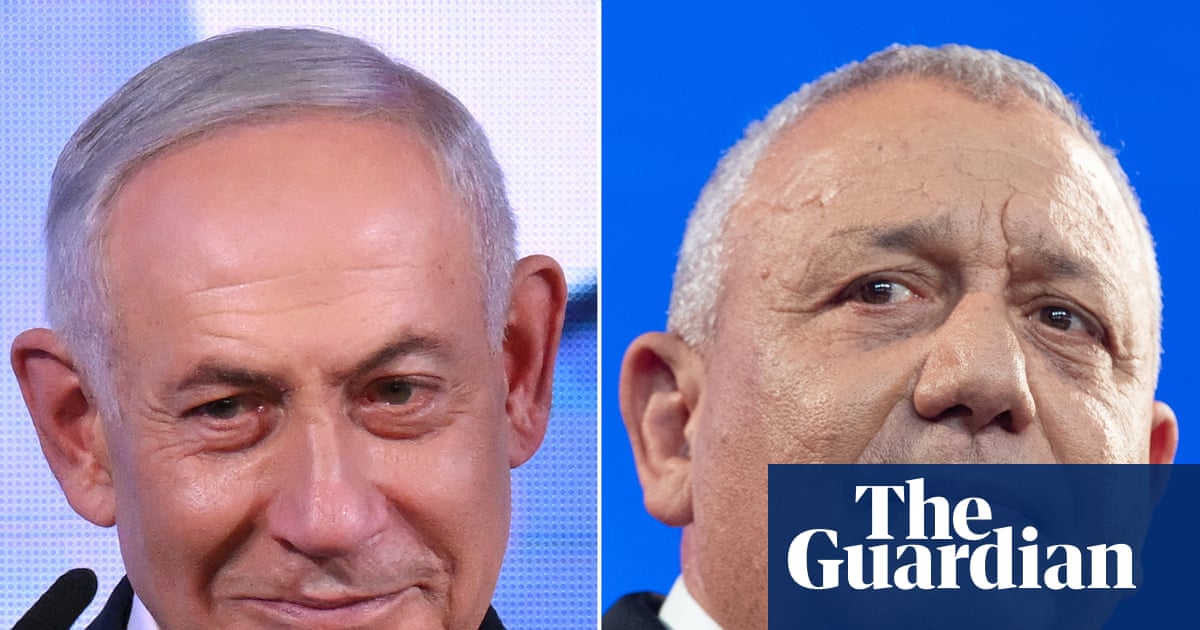
Israel’s political future hangs in the balance following an election that has resulted in a stalemate between Prime Minister Benjamin Netanyahu and his main challenger, retired General Gadi Eisenkot. Initial projections suggested a narrow lead for Eisenkot’s opposition bloc, but as vote counting progressed, it became clear that neither side had secured the 61 Knesset seats required to form a majority government. The outcome has shifted focus to coalition talks, with Arab Israeli parties emerging as potential kingmakers due to their record-breaking performance.
Eisenkot, who leads the Change bloc, initially declared victory for what he termed a 'Zionist majority.' However, this stance appears increasingly untenable as the final tallies indicate that both Jewish blocs will fall short of a majority. With approximately 14% of the electorate consisting of deployed soldiers and other absentee voters yet to be fully counted, the exact seat distribution remains uncertain. Nevertheless, the trend is clear: Eisenkot must choose between forming a pact with Arab Israeli parties or allowing Netanyahu to remain in power through a unity government or new elections.
Arab Israeli parties, including the Joint List and Ra’am (the United Arab List), are projected to win between 16 and 19 seats, a significant increase from previous elections. This surge in support reflects high turnout among Palestinian citizens of Israel and dissatisfaction with the current political direction. Yair Golan, leader of the center-left Democrats party within Eisenkot’s bloc, has urged his allies to negotiate with these parties. He argued that ignoring Arab votes amounts to surrendering to Netanyahu and abandoning democratic principles.
Netanyahu has reacted strongly to the success of Arab Israeli parties, claiming on social media platform X that they had 'stolen the election.' He alleged that hundreds of testimonies and pieces of evidence had been submitted to the central elections committee and the Shin Bet internal security agency. However, no concrete proof has been presented to support these claims. Both agencies have faced criticism for politicization under Netanyahu’s government, raising questions about the credibility of his allegations.
The attempt by the elections committee to ban Arab Israeli parties before the poll was overturned by Israel’s supreme court, underscoring the legal safeguards in place. Despite this, Netanyahu’s rhetoric has fueled tensions and highlighted the deep divisions within Israeli society. His reliance on ultra-Orthodox Jewish parties, which are non-Zionist and oppose conscription for their constituents, has been criticized as hypocritical given his dismissal of Arab voters.
International reactions have also played a role in the post-election dynamics. US President Donald Trump claimed credit for Netanyahu’s better-than-expected performance, stating that his endorsement had made a difference. Trump suggested that the result was heading toward a stalemate or a Netanyahu win, reflecting his support for the Israeli prime minister. This external backing may influence domestic perceptions and add complexity to the coalition negotiations.
Eisenkot’s position is precarious. As a retired general, he offers a hawkish alternative to Netanyahu, appealing to voters concerned about security. However, his refusal to engage with Arab parties could isolate him politically. The decision to partner with these groups would mark a historic shift in Israeli politics, challenging traditional boundaries and potentially reshaping the country’s political landscape. Conversely, failing to secure enough seats could lead to another election, further destabilizing the government.
The high turnout in this election, described as the highest in decades, indicates strong public engagement with the democratic process. Voters across the spectrum expressed their preferences, resulting in a fragmented parliament that mirrors the diversity of Israeli society. The challenge now lies in translating these votes into a stable government that can address pressing national issues.
What remains unresolved is whether Eisenkot will overcome ideological barriers to form a coalition with Arab parties. If he does, it could signal a new era of inclusivity and cooperation. If not, Netanyahu may retain power through indirect means, prolonging the political crisis. The coming weeks will be critical in determining the direction of Israeli governance and the extent to which democratic norms are upheld.
Sources behind this briefing
Go to the original reporting
- The Guardian US↗Coalition talks loom in Israel as Netanyahu and Eisenkot blocs set to fall short of majority
- CNN↗Who is Gadi Eisenkot, Netanyahu’s main challenger in Israel’s elections?
- Time Magazine↗Exclusive: The Former General Who Could End the Netanyahu Era