The short version
- The eruption lasted over twenty-four hours in early September, sending ash clouds up to fifty thousand feet into the atmosphere.
- Eight airports on Java and Sumatra temporarily closed, affecting nearly three thousand flights as aviation authorities managed safety concerns.
- Authorities maintain a high alert level for the volcano despite a return to less intense eruptive patterns.
A significant volcanic event at Anak Krakatau in Indonesia caused widespread disruption to air travel and local air quality in early September 2026. The eruption, which began on September 5, was characterized by powerful explosive activity that persisted for more than twenty-four hours. This intensity marked a departure from the volcano's typical behavior, sending substantial amounts of gas and ash high into the atmosphere. The event drew attention from satellite monitoring systems, which captured detailed imagery of the plume dispersing over a large geographic area.
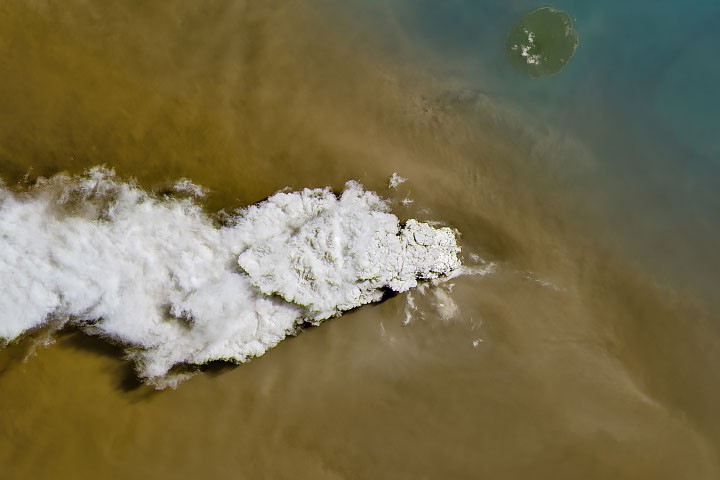
Satellite data from NASA and the U.S. Geological Survey provided visual confirmation of the eruption's scale. Imagery acquired by the Landsat 8 satellite showed a distinct white plume of volcanic gas rising above a brown ash cloud. Broader views from the Suomi NPP satellite illustrated how the volcanic material spread across the region. These observations helped authorities track the movement of the ash and assess its potential impact on aviation and public health in surrounding areas.
The altitude of the ash clouds varied significantly depending on direction. Indonesia’s meteorological agency reported that by September 6, ash had reached elevations of up to six thousand meters to the east of the volcano. To the west, the plume climbed much higher, reaching fifteen thousand meters. This vertical dispersion is critical for aviation safety, as aircraft flying at cruising altitudes can encounter hazardous conditions when ash is present in the upper atmosphere.
The presence of high-altitude ash prompted immediate action from aviation authorities. Eight airports located on the islands of Java and Sumatra were temporarily closed to ensure passenger and crew safety. News reports indicated that nearly three thousand flights scheduled for the area were disrupted as a result of these closures. The temporary shutdowns affected both domestic and international travel routes, creating logistical challenges for airlines and passengers alike.
Beyond aviation, the eruption posed health risks to residents in populated areas. Ashfall was particularly heavy in Jakarta and other parts of West Java, which lie to the east of the volcano. The Indonesian Humanitarian Coordination Platform noted that volcanic ash can irritate the respiratory tract, eyes, and skin. However, they distinguished this hazard from the smoke produced by peatland fires elsewhere in the country, noting differences in particle characteristics and dispersal patterns.
Protection measures for volcanic ash differ from those used for wildfire smoke due to these distinct physical properties. The fine particulate matter in volcanic ash can cause immediate irritation and longer-term respiratory issues if inhaled in large quantities. Authorities likely advised residents to limit outdoor exposure and use protective gear, although specific guidance details were not fully elaborated in the initial reports.
By September 6, the continuous explosive phase of the eruption subsided. The volcano returned to a more typical pattern known as Strombolian eruptions, which involve intermittent spurts of ash and volcanic material rather than sustained explosive force. Despite this reduction in intensity, the volcano continued to rumble, indicating ongoing internal activity that requires careful monitoring.
Airports resumed normal operations by September 8, allowing travel schedules to gradually return to normal. However, the volcano remains at the second-highest alert level on Indonesia’s national scale. This elevated status has been in place since early July, reflecting a period of sustained unrest. Authorities continue to monitor the situation closely, prepared to issue further warnings if activity escalates again.
Anak Krakatau is known for regular eruptive activity, situated between the major Indonesian islands of Java and Sumatra. While much of its behavior remains relatively mild, it occasionally produces hazardous displays of force like the one seen in September. The event serves as a reminder of the dynamic geological forces at work in the region and the importance of robust monitoring systems for disaster preparedness.
The incident highlights the interconnected nature of natural hazards and modern infrastructure. A single volcanic event can simultaneously impact aviation networks, public health, and daily life across multiple regions. As authorities manage the aftermath, they continue to rely on satellite data and ground-based observations to ensure safety and minimize disruption.
Sources behind this briefing
Go to the original reporting
- NASA↗Anak Krakatau Rumbles Again

