The short version
- Highland Council has introduced draft regulations requiring lighting assessments for new developments near designated dark sky sites.
- The proposal seeks to reduce carbon emissions and energy costs while preserving the region's status as a premier location for stargazing.
- Officials acknowledge tensions between minimizing light pollution and maintaining exterior lighting for public safety, suggesting mitigation strategies like tree planting.
Highland Council has unveiled draft guidance designed to significantly reduce light pollution across its jurisdiction, aiming to preserve some of the darkest night skies in Europe. The proposal represents a formal effort to balance environmental stewardship with economic and social considerations, specifically targeting the preservation of astronomical viewing conditions while addressing broader issues related to energy consumption and ecological health. Councillors are scheduled to review the document next week, with plans to open it for public consultation if approved, before integrating it into the Highland Local Development Plan expected to be published next year.
The core mechanism of the proposed guidance involves stricter requirements for construction projects located in or near designated dark sky sites. Builders undertaking major developments would be mandated to conduct specific lighting assessments to justify any exterior illumination. This requirement shifts the burden of proof onto developers, who must demonstrate that outdoor lights are necessary rather than optional. The goal is to ensure that only lighting essential for safety and security is installed, thereby minimizing unnecessary glare and skyglow that obscures celestial views.
Officials argue that reducing artificial light at night offers multiple benefits beyond astronomical clarity. Environmental advantages include lower carbon emissions resulting from decreased energy usage, which also translates into financial savings through reduced utility bills. Furthermore, the guidance highlights potential economic gains for the tourism sector by enhancing the visitor experience for those seeking to observe the night sky. The region’s reputation as a destination for stargazers is seen as an asset that can be leveraged to support local businesses and attract tourists interested in natural heritage.
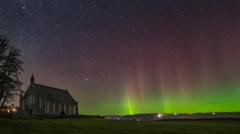
The Highland Council area has long been recognized for its minimal light pollution, largely due to its large, sparsely populated landscapes. This characteristic was formally acknowledged in 2024 when the Isle of Rum, located within the council’s boundaries, became Scotland’s first International Dark Sky Sanctuary, certified by DarkSky International. The new guidance aims to extend this protection more broadly across the region, supporting communities that wish to establish their own dark sky sites. These locations are defined by their lack of light pollution, offering clear views of the cosmos that are increasingly rare in other parts of Europe.
Despite the environmental and economic arguments, officials recognize that some residents prioritize exterior lighting for personal safety and security. The draft guidance does not seek to eliminate all outdoor lights but rather to encourage best practices in minimizing their impact. To address concerns about visibility and safety without compromising dark sky integrity, the report suggests practical mitigation measures such as planting trees and installing fencing. These physical barriers can help contain light spillage and reduce glare, allowing communities to maintain necessary illumination while limiting its reach into the night sky.
The integration of this guidance into the Highland Local Development Plan marks a significant step in regional planning policy. The HLDP will delineate zones for housing and other types of development, providing a framework within which these lighting standards can be enforced. By embedding dark sky protections into the broader development strategy, the council ensures that future growth is considered alongside environmental preservation. This approach reflects a growing awareness of the cumulative impact of light pollution on both human health and wildlife, as well as its effect on cultural and recreational activities.
Public consultation will play a crucial role in refining the final version of the guidance. Stakeholders, including residents, developers, and environmental groups, will have the opportunity to provide feedback on the proposed measures. This process is intended to address any practical challenges or concerns that may arise from the implementation of stricter lighting controls. The outcome of this consultation could influence how specific requirements are framed, particularly regarding the balance between safety needs and dark sky preservation.
If adopted, these measures would set a precedent for other regions seeking to protect their night skies. The Highland Council’s initiative underscores the importance of proactive planning in mitigating the effects of urbanization and technological advancement on natural environments. As light pollution continues to expand globally, localized efforts like this offer a model for how communities can safeguard their unique environmental assets while adapting to modern development pressures.
The success of the guidance will depend on effective enforcement and community engagement. Ensuring that developers comply with lighting assessments and that residents adopt recommended mitigation strategies will require ongoing monitoring and education. The council’s commitment to this issue reflects a broader trend toward sustainable planning practices that consider long-term environmental impacts alongside immediate developmental needs.
As the consultation period approaches, attention will focus on how well the proposed guidance addresses the diverse interests of those living in and visiting the Highlands. The interplay between preserving dark skies and meeting contemporary demands for safety and convenience remains a complex challenge. However, the draft document provides a structured approach to navigating these tensions, offering a pathway toward a future where both human activity and natural beauty can coexist.
Sources behind this briefing
Go to the original reporting
- BBC Science & Environment↗Draft dark skies guidance drawn up for the Highlands

