The short version
- Researchers uncovered 280 Ice Age engravings in the Cova de la Font Major, marking the third-largest such collection on the Mediterranean side of the Iberian Peninsula.
- The artworks, dated to approximately 26,000 years ago, feature distinct styles and potential animation sequences that differ from the dominant Franco-Cantabrian artistic tradition.
- The discovery suggests that Catalonia’s prehistoric record is far richer than previously assumed, prompting a reevaluation of Mediterranean rock art significance.
A significant archaeological find has emerged from the Cova de la Font Major in Catalonia, Spain, where researchers have identified a substantial collection of Paleolithic engravings that had remained undetected for centuries. The discovery includes approximately 280 carvings hidden within a cave system that has been accessible to tourists and explorers since at least the twelfth century. This finding challenges long-held assumptions about the distribution and sophistication of Ice Age art in northeastern Iberia, revealing a cultural record that was previously considered sparse compared to neighboring regions.
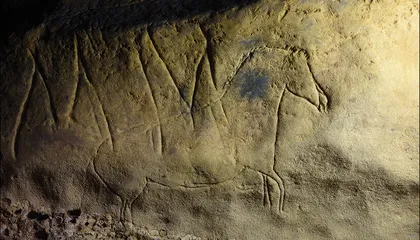
The engravings were identified during excavations conducted in 2019 by archaeologists from the Catalan Institute of Human Paleoecology and Social Evolution. The team documented a wide variety of motifs, including fifty-five distinct animal figures such as horses, bears, deer, and early wild cattle. In addition to these naturalistic representations, the walls feature dozens of abstract patterns, lines, and loops. The sheer volume and diversity of the artwork indicate that the site held considerable importance for its prehistoric inhabitants, despite the lack of prior documentation by modern visitors who had traversed the same galleries.
Determining why these markings went unnoticed for so long remains a subject of speculation among the research team. The engravings are located in sections of the cave open to the public since 1957, yet they blend seamlessly into the rock surface. Experts suggest that the irregular relief and coloration of the walls likely obscured the carvings under standard lighting conditions. The depressions become visible only when light is directed at specific angles, highlighting the subtle variations in depth. This optical phenomenon may have allowed the art to remain hidden in plain sight for generations.
Radiocarbon dating of charcoal found within one of the engraved grooves places the creation of these artworks at roughly 26,000 years ago. This timeline situates the engravings firmly within the Upper Paleolithic period. The presence of a small flint bladelet near the dated sample provides additional context for the tools and materials available to the artists. These findings contribute to a growing body of evidence that early humans in this region were engaged in complex symbolic activities much earlier than previously confirmed by local archaeological records.
The stylistic characteristics of the Cova de la Font Major engravings appear distinct from the well-documented rock art of the Franco-Cantabrian region to the north. While northern sites are abundant and widely studied, Catalonia’s record has historically been viewed as scarce. The new discovery suggests that northeastern Iberia possessed its own graphic tradition with unique identities. Some researchers posit that certain designs may represent earth or bodies of water, while others hint at more dynamic narratives.
Particularly intriguing is the possibility that some of the inscriptions functioned as a form of prehistoric animation. At least twenty scenes depict animals in repetitive sequences, with limbs and heads shown in varying positions. These variations suggest an intent to portray movement, such as running, creating a visual effect akin to a flipbook or early cinema. This technique indicates a sophisticated understanding of visual perception and narrative structure among the artists who created these works millennia ago.
The cave system itself reveals a long history of human occupation spanning tens of thousands of years. Evidence of prehistoric activity dates back approximately 41,000 years, with different sections of the sprawling network utilized at various intervals. One area near an entrance shows signs of heavy use during the early Bronze Age, between 4,200 and 2,700 years ago, where fragments of daggers, swords, and axes were recovered. Another section was occupied during the Neolithic era, up to 7,400 years ago, indicating that the site remained significant long after the Ice Age engravings were made.
Despite the detailed timeline of occupation, the specific purposes for which different groups used the cave remain unclear. It is uncertain whether the spaces served as shelters, ritual sites, or venues for other social practices. However, the presence of high-quality Paleolithic art fundamentally alters the understanding of the region’s prehistory. Researchers argue that this discovery necessitates greater attention to Mediterranean rock art in Ice Age studies, recognizing it as a first-rate resource rather than a peripheral outlier.
The publication of these findings in the journal Antiquity marks a pivotal moment for archaeology in Catalonia. The engravings provide new material for characterizing a Mediterranean graphic tradition that stands apart from northern European styles. As scholars continue to analyze the site, the focus will likely shift toward understanding how these artistic expressions fit into the broader social and environmental context of the time. The cave’s hidden treasures offer a rare glimpse into the creative lives of early humans who once walked its halls.
Future research will aim to clarify the relationship between the various occupation layers and the artistic traditions they represent. The integration of new dating techniques and comparative analysis with other Mediterranean sites may further illuminate the distinct identity of this regional art style. For now, the Cova de la Font Major stands as a testament to the enduring presence of human creativity, preserved in stone for millennia before finally coming to light.
Sources behind this briefing
Go to the original reporting
- Smithsonian Magazine↗For Centuries, Cave Visitors Walked Right by 280 Ice Age Engravings. The Newly Discovered Rock Art Is Rewriting Catalonia's Prehistory