The short version
- The planetarium, Wright’s only built example of the genre, closed in 2004 when its projection equipment failed.
- Restoration efforts focused on removing later additions to recover the original circular seating arrangement and aesthetic.
- New immersive technology now allows the facility to host public shows after more than twenty years of dormancy.
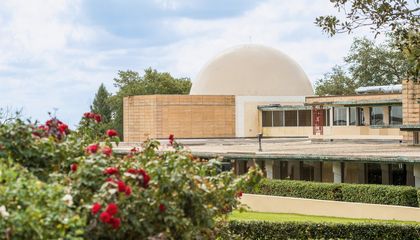
Frank Lloyd Wright’s only completed planetarium has reopened to the public, marking the conclusion of a nearly six-year restoration project at Florida Southern College in Lakeland. The facility, located within the Polk County Science Building, had been inactive since 2004 when its original projection system ceased functioning. Its return signals a significant milestone for the campus, which houses the largest single-site collection of Wright’s architectural works in the world.
Wright first engaged with the college in 1936, accepting a commission to redesign the grounds during a peak period in his career that included work on Fallingwater and Taliesin West. He envisioned the campus as a 'Child of the Sun,' characterized by sand-colored concrete and stained glass elements. Between 1938 and 1958, he contributed twelve structures to the site, with a thirteenth completed posthumously. The planetarium was among the final designs realized during his lifetime.
Originally conceived as an observatory, the project shifted to a planetarium due to the intense Florida sunlight, which made astronomical observation impractical. Construction took place between 1954 and 1958, with the first public show occurring in 1960. The design reflected Wright’s holistic educational philosophy, aiming to connect students with both earthly values and celestial inspiration. It remains a unique entry in his portfolio, as an earlier concept for a Maryland complex was never constructed.
The restoration process addressed significant structural and aesthetic degradation that had accumulated over decades. Jeff Baker, the architect leading the broader campus renovation, noted that interventions since Wright’s death had dramatically altered the interior space. The team worked from the exterior inward, installing a new roof, sealing water intrusions, and replacing more than 280 custom tiles that adorn the building’s edges.
Inside the sixty-seat theater, workers removed a computer closet that had been added in later years. This removal was critical to reinstating the original circular seating configuration, a rare survival among planetariums nationwide. The team also repainted walls and refurbished the dark red flooring, stripping away modifications that obscured Wright’s initial vision for the space.
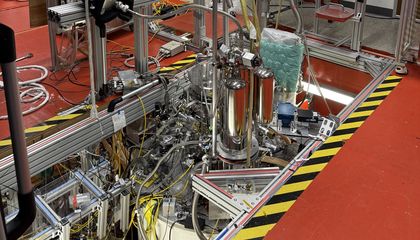
Technological upgrades were central to the reopening. The facility previously relied on eight-track tape systems for its presentations. The overhaul replaced all audio-visual equipment with modern immersive technology. The theater is now equipped to screen contemporary shows such as 'Cosmic Adventure' and 'Destination Mars: The New Frontier,' allowing audiences to experience updated celestial simulations.
Florida Southern College has been engaged in restoring its Wright buildings since 2007, addressing years of neglect. President Jeremy P. Martin highlighted Wright’s fascination with science and nature, noting that the architect evolved from horse-and-buggy eras to envisioning futuristic cities with flying cars. The successful restoration of the planetarium is viewed as exceeding even Wright’s ambitious expectations for the medium.
The reopening underscores the enduring relevance of Wright’s organic architecture principles. In a 1950 speech at the college, he described his work as representing harmony and rhythm, likening it to a green shoot growing through concrete pavement. The restored planetarium now serves as both an educational tool and a testament to the preservation efforts that have revitalized this significant architectural site.
While Wright’s designs appear on other campuses, including Wichita State University and Arizona State University, this planetarium stands alone in its specific function and history. Its return offers renewed access to a unique piece of American architectural heritage, blending historical preservation with modern educational technology for visitors of all ages.
Sources behind this briefing
Go to the original reporting
- Smithsonian Magazine↗Immerse Yourself in the Cosmos at Frank Lloyd Wright's Only Planetarium, Recently Restored to Its Former Glory in Florida