The short version
- Authorities detained approximately 440 people, mostly minors, following violent confrontations at hundreds of high schools across France.
- Students are protesting overcrowded classrooms, teacher shortages, and exhausting schedules, while unions strike over budget cuts and working conditions.
- Government officials condemned the violence as irresponsible, whereas opposition leaders and student representatives accused police of excessive force.
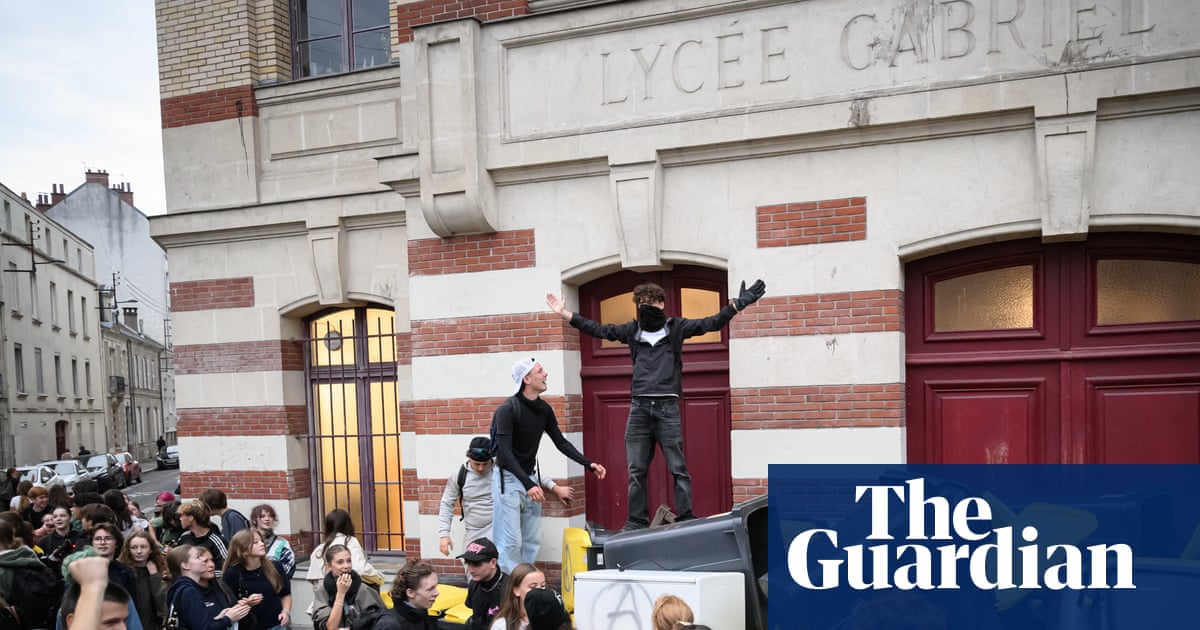
A wave of student protests that began in Paris last week escalated into widespread disorder on Tuesday, resulting in the detention of more than 400 individuals across France. Interior Minister Laurent Nuñez confirmed to BFMTV that 440 people were held, noting that while final numbers remain incomplete, roughly two-thirds of those detained were taken into police custody. The majority of those arrested were minors participating in demonstrations at secondary schools, known as lycées, which serve students aged 15 to 18.
The unrest affected approximately 400 educational institutions out of the nation’s total of about 3,700 schools. According to the education ministry, these disruptions stemmed from long-standing grievances regarding class sizes, staffing deficits, and demanding academic schedules. At the Lamartine lycée in northern Paris, students displayed signs highlighting their fatigue, with one placard reading that they spent more hours in lessons than sleeping, citing a schedule that ran from 8 a.m. to 6 p.m.
Violence marked several locations during the day’s events. In Lille, located in northern France, high school pupils set fire to waste bins and threw bottles, paving stones, and other objects at law enforcement officers. Police responded with tear gas after protesters damaged bus shelters and advertising structures. Interior Minister Nuñez stated that seven incidents involved the throwing of hydrochloric acid at officers. Confrontations also occurred in Bordeaux, Rennes, Nantes, and Marseille, as well as in the Paris suburb of Seine-Saint-Denis.
The physical toll of the clashes was significant. Officials reported that 48 police officers were injured nationwide. Additionally, at least 10 teachers and several students sustained injuries during the disturbances. In Seine-Saint-Denis, Mayor Bally Bagayoko joined hundreds of students at the Lycee Paul-Eluard, leading a rendition of the national anthem. He characterized the protests as legitimate and criticized the disparity in resources between low-income areas and wealthier districts. However, when crowds gathered, police equipped with riot shields struck students with batons, according to Agence France-Presse.
Government leaders have strongly condemned the violent aspects of the demonstrations. Prime Minister Sébastien Lecornu warned that escalating the protests would be irresponsible, posting on social media that fireworks, fires, and violence near schools endanger students, staff, and police without justification. Education Minister Édouard Geffray acknowledged the right to demonstrate but labeled reports of violence as indefensible. He argued that legitimizing or extending blockades puts public employees and students at risk.
Opposition figures and student representatives have pushed back against the government’s stance. Jean-Luc Mélenchon, leader of the hard-left France Unbowed party, accused the administration of ordering a crackdown with a racist undertone. He described the protesting high school students as harmless and called for elected officials to intervene on their behalf. Lecornu responded by calling Mélenchon’s intervention an irresponsible escalation and an insult, asserting that politicians should protect young people rather than exploit their anger for partisan gain.
Ryad Rani, president of the Union Syndicale Lycéenne, urged protesters to remain peaceful but condemned the government’s response as institutionalized repression. He highlighted a circular from the interior and education ministries instructing police to maintain order with proportionate force, calling it a scandal given the age of the participants. Rani noted that some teachers and staff stood between students and police to protect them, suggesting these images better represented the reality of the situation.
The student unrest coincided with broader labor actions across France. Unions representing teachers, hospital staff, and civil servants organized nationwide walkouts to protest budget plans that include €54 million in public spending cuts. An estimated 40% of primary school teachers stopped work on Tuesday. Caroline Chevé, secretary general of the main teachers’ union, joined protesters in central Paris, stating that students face the same challenges as educators, including overcrowded classrooms and staffing shortages.
While the student protests turned violent, Interior Minister Nuñez noted that the broader union demonstrations, which drew at least 200,000 participants, mostly proceeded without incident. The convergence of student blockades and public sector strikes has intensified pressure on the government to address systemic issues in education and public services. As tensions remain high, authorities continue to monitor the situation, with no clear resolution in sight for the underlying disputes over resources and working conditions.
The coming days will likely see continued scrutiny of how law enforcement handles youth-led protests. Student unions have called for fairer and more equitable conditions, while government officials insist on maintaining public order. The incident underscores deep divisions within French society regarding the state of public education and the appropriate response to civil disobedience. With hundreds detained and schools disrupted, the political fallout is expected to grow as stakeholders debate the balance between protest rights and public safety.
Sources behind this briefing
Go to the original reporting
- The Guardian World↗Hundreds detained as student protests across France turn violent
- BBC World↗More than 400 detained as France student protests escalate