The short version
- Ethoxyquin was adopted in the late 1960s to prevent fishmeal fires, drastically reducing maritime incidents but raising long-term safety questions.
- Regulatory bodies in Europe have banned or suspended the chemical due to carcinogenic risks, while it remains permitted within limits in the U.S. and Asia.
- Recent lawsuits allege that seafood companies misled consumers by labeling products as sustainable despite using feed containing ethoxyquin.
The global supply chain for farmed seafood relies heavily on fishmeal, a processed powder made from dried and pulverized fish. This ingredient is essential for feeding the majority of species raised in aquaculture facilities worldwide. However, the stability of this commodity has historically been a major logistical challenge. Untreated fishmeal is prone to spontaneous combustion as it decays and oxidizes, creating significant hazards during storage and transport.
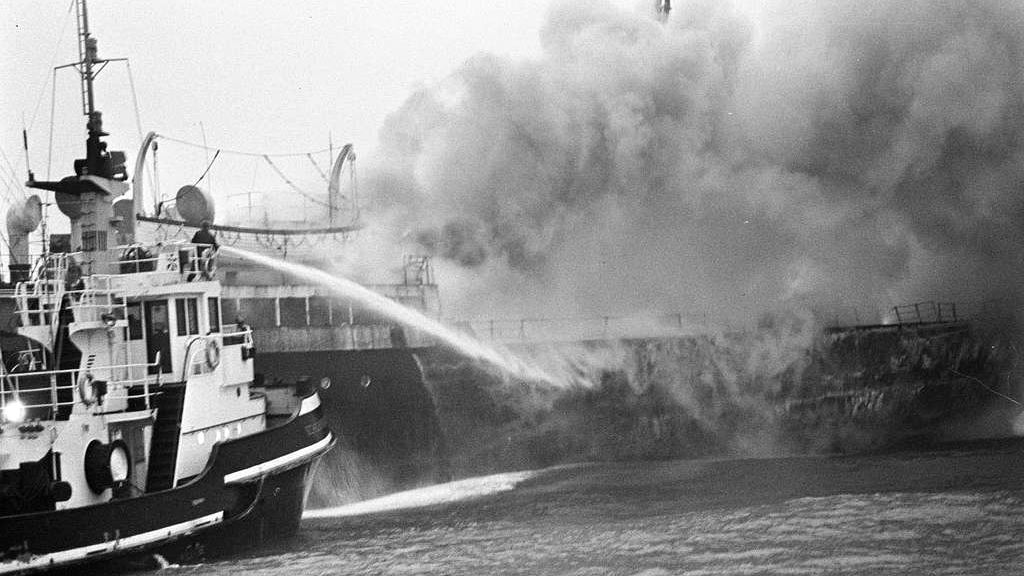
In the mid-1960s, a series of devastating maritime fires highlighted the dangers of untreated fishmeal. A South African vessel caught fire at sea in early 1966, leading to a five-day blaze in Bristol, England. Shortly after, a Liberian steamship sank near Rotterdam after igniting petrol barrels, and a Danish ship burned off Long Beach, California, resulting in injuries and fatalities among dock workers. These incidents were part of a broader pattern; historical records indicate at least ninety fires involving ships or plants between the 1950s and 1970s.
To address this volatility, American feed producer Cargill introduced ethoxyquin in 1967. Previously used as a preservative for fruits, alfalfa, and rubber tires, the antioxidant proved highly effective at stabilizing fishmeal. Industry officials noted that bulk handling became significantly easier with the treatment. By the 1970s, reported ship fires had dropped sharply from an average of sixteen per year to just five. The success of the chemical led to its widespread adoption and eventual regulatory endorsement.
Government agencies quickly formalized the use of ethoxyquin to ensure maritime safety. The U.S. Coast Guard mandated its treatment on fishmeal shipments by 1976. Three years later, a United Nations body overseeing maritime activity recommended the chemical to prevent spontaneous combustion globally. This regulatory shift reflected the priority placed on preventing immediate physical dangers to seafarers and port workers over potential long-term health impacts.
Concerns about the safety of ethoxyquin emerged shortly after its introduction. A 1969 paper by United Nations food and agriculture authorities noted that toxic effects were observed in laboratory animals fed high concentrations of the substance. Subsequent research continued to raise alarms. A 1987 study by British researchers found that the chemical caused severe damage and had potentially carcinogenic effects in rats. More recently, the European Food Safety Authority identified an impurity within ethoxyquin, known as p-phenetidine, as capable of causing genetic mutations.
These health concerns have led to divergent regulatory approaches across different regions. The European Commission suspended authorization for ethoxyquin in animal feed in 2017. Today, the chemical is banned in the United Kingdom and by members of the European Economic Area, including Norway, Iceland, and Liechtenstein. In contrast, ethoxyquin remains permitted within specific limits in animal feed in the United States, Australia, Japan, and South Korea. This regulatory patchwork creates complexity for global food producers and consumers.
The presence of ethoxyquin in fish feed has become a focal point for legal challenges regarding marketing claims. With more than half of the seafood consumed worldwide coming from farms, the additives used in their diet are under increased scrutiny. Several lawsuits have been filed against seafood companies, alleging false advertising. Plaintiffs argue that labeling products as sustainable is misleading when the feed contains a chemical banned in other jurisdictions due to environmental and health risks.
In 2022, residents from New York and California brought class-action suits against major retailers and producers, including Aldi Inc. and Gorton’s Inc. The complaints alleged that Atlantic salmon and frozen tilapia were falsely marketed as sustainably sourced despite containing ethoxyquin. The lawsuits cited the European Union’s ban and studies linking the chemical to mortality and deformations in aquatic life. Both cases were settled out of court, highlighting the growing tension between industry practices and consumer expectations regarding transparency and sustainability.
Despite these legal settlements, scientific consensus on the safety of consuming farmed seafood raised on ethoxyquin-treated feed remains elusive. While some countries deem the risk high enough to justify bans, others maintain that controlled use is safe. In Canada, the Food Inspection Agency requires labels declaring that feeds meet legal limits but does not specify testing methods. As aquaculture continues to expand, the debate over chemical additives in fish feed is likely to intensify, balancing historical safety gains against emerging health and environmental concerns.
Sources behind this briefing
Go to the original reporting
- Grist↗The fire retardant in the seafood chain