The short version
- Federal prosecutors have sent letters to at least eighteen California counties demanding they set aside and verify ballots associated with individuals suspected of being noncitizens.
- State officials argue the federal demands rely on unreliable data and risk disenfranchising eligible voters while delaying the certification of election results.
- This administrative pressure accompanies a broader legal strategy by the Trump administration, including recent charges against twenty-eight individuals and a lawsuit targeting roughly twenty thousand suspected noncitizen registrants.
Federal prosecutors have escalated their scrutiny of California’s electoral processes by issuing urgent directives to county election officials across the state. On Friday, letters were sent to registrars in at least eighteen counties, demanding that local authorities set aside and verify ballots linked to individuals the Department of Justice suspects are noncitizens. The federal government has provided a strict forty-eight-hour deadline for these jurisdictions to supply identifying information corresponding to the targeted ballots. This move represents a significant intensification of the legal battle between state election administrators and the Trump administration’s Justice Department, which has focused heavily on rooting out alleged noncitizen voting ahead of the midterm elections.
The directives require county officials to sequester any ballots where citizenship status cannot be immediately verified. Prosecutors are requesting detailed personal data for each suspected individual, including Social Security numbers, identification documents, and copies of voter registration records. According to a letter obtained by news organizations, this information is intended to help federal and state authorities quickly assess the legitimacy of each person on the government’s list of suspected noncitizen voters. In San Bernardino County alone, the federal list includes 1,133 individuals from that inland Southern California region. First Assistant U.S. Attorney Bill Essayli warned in the correspondence that any election official who knowingly processes a ballot belonging to a noncitizen exposes themselves to significant legal jeopardy.
State election leaders have strongly opposed these federal demands, characterizing them as an overreach that threatens the stability of the electoral process. Lawyers for California’s Secretary of State and the Los Angeles County Registrar argue that the Justice Department’s data is unreliable and that complying with the requests risks disenfranchising eligible U.S. citizens. They contend that the sudden imposition of verification hurdles could delay the certification of votes and undermine public confidence in the legitimacy of the November midterms. These legal filings highlight a deepening rift between federal prosecutors, who are prioritizing strict enforcement of citizenship requirements, and state officials tasked with ensuring broad access to the ballot box.
The administrative pressure coincides with aggressive legal actions taken earlier in the week. Federal authorities conducted a statewide sweep that resulted in charges against twenty-eight people drawn from a larger list of approximately twenty thousand suspected noncitizen registrants. Some of those individuals face accusations of illegally registering to vote, casting ballots without eligibility, and providing false information on naturalization paperwork. These offenses carry severe penalties, including potential prison sentences spanning several years. The timing of these charges, just as voting is underway in California, has drawn sharp criticism from state officials who view the tactics as politically motivated intimidation rather than genuine law enforcement.
Broader data suggests that noncitizen voting is exceptionally rare and has never been shown to alter the outcome of any election. Despite this historical context, the Justice Department has pursued a strategy that treats suspected noncitizen registration as a critical threat to electoral integrity. The federal government recently filed a lawsuit targeting Los Angeles County and the California Secretary of State’s office, seeking to block the counting of votes from roughly twenty thousand people identified as likely noncitizens. A hearing on this case is scheduled for Tuesday, adding another layer of legal complexity to an already tense environment surrounding the midterm elections.
The Trump administration has also sought to accelerate judicial review of its position by asking the Ninth Circuit Court of Appeals to rule on the lawsuit before a district judge can issue a decision. Federal lawyers set a deadline for Saturday for this appellate intervention, signaling their intent to bypass lower court proceedings that might delay their enforcement efforts. This procedural maneuver underscores the administration’s urgency in establishing legal precedents that support its aggressive stance on voter eligibility. The rapid timeline leaves little room for deliberation, forcing courts and election officials to respond under significant time pressure.
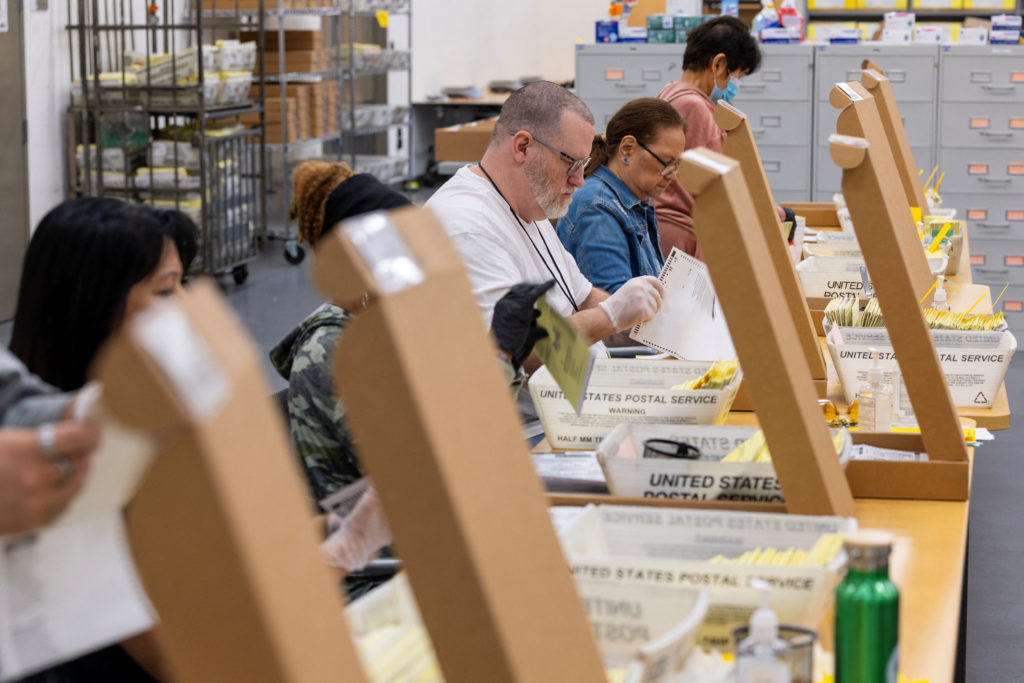
Voting is currently active across California, with more than twenty-three million registered voters participating in the process. Mail-in ballots were distributed earlier in the month, and state reports indicate that over three hundred thirty thousand have already been counted. The introduction of federal verification demands at this late stage creates logistical challenges for county registrars who must balance compliance with federal orders against their duty to process votes efficiently. Election workers are now tasked with navigating conflicting instructions while maintaining the accuracy and speed required for a fair election.
The conflict highlights broader tensions regarding the role of federal oversight in state-run elections. While the Justice Department has monitored elections for decades, the current approach marks a distinct shift toward direct intervention in ballot processing. Critics argue that this strategy prioritizes political objectives over established norms of federalism and electoral administration. As the midterm elections approach, the outcome of these legal battles could have lasting implications for how voter eligibility is enforced and verified in future contests.
With hearings scheduled and deadlines looming, the next few days will be critical in determining whether federal demands will be upheld or rejected by the courts. The resolution of this dispute will not only affect the current election cycle but also set a precedent for future interactions between federal prosecutors and state election officials. As both sides prepare for legal arguments, the focus remains on balancing the enforcement of voting laws with the protection of citizens’ right to participate in the democratic process.
Observers note that the rarity of noncitizen voting makes the scale of the Justice Department’s response disproportionate to the actual risk. Yet, the administration’s commitment to this issue suggests that symbolic enforcement may be as important as substantive results. The coming weeks will reveal whether courts side with federal prosecutors seeking strict verification or with state officials defending the integrity and accessibility of the ballot. Until then, election administrators in California remain caught in the middle of a high-stakes legal confrontation.
Sources behind this briefing
Go to the original reporting
- PBS NewsHour↗DOJ orders some California counties to set aside ballots from suspected noncitizens