The short version
- The Trump administration has filed a federal lawsuit attempting to block the certification of Alaska's Senate election results if the Republican incumbent is defeated.
- Legal experts describe the suit as having little chance of success, noting that it relies on vague statutory language and conflicts with constitutional provisions granting states control over elections.
- The litigation centers on the presence of Daniel J. Sullivan Jr., an independent candidate whom Republicans accuse of being a Democratic plant designed to siphon votes from the incumbent.
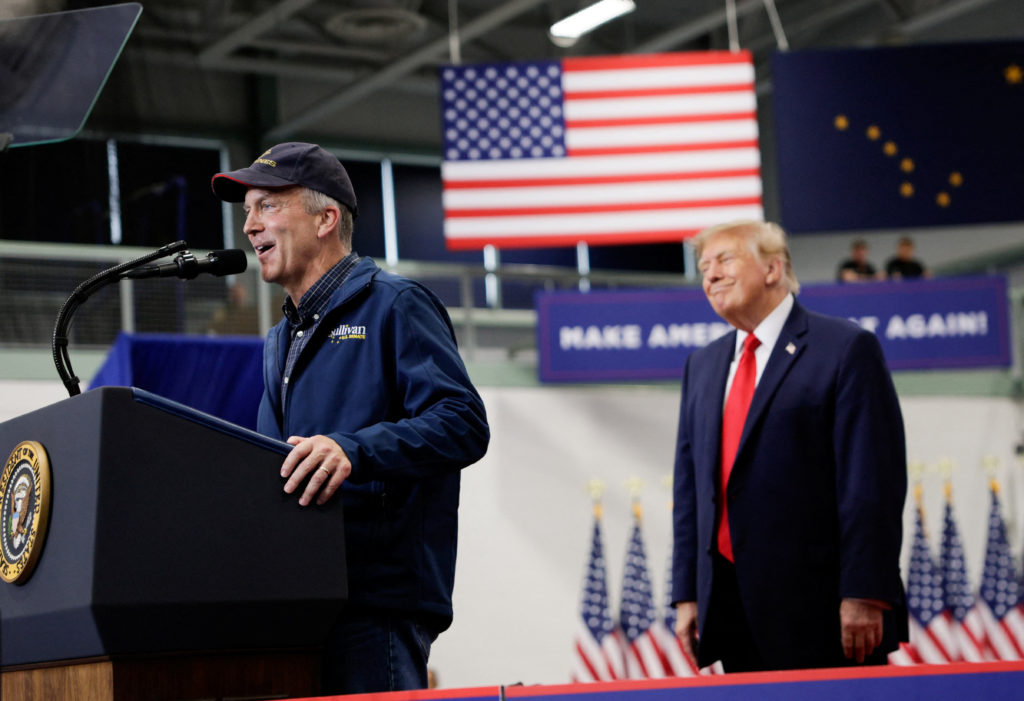
The Trump administration has initiated its first legal maneuver aimed at blocking the outcome of a midterm election, filing a federal lawsuit that seeks to prevent the certification of results in Alaska should Republican Senator Dan Sullivan lose his bid for re-election. The move marks a significant escalation in efforts by the White House to intervene in state-level electoral processes, driven by concerns that voters may be confused by the presence of two candidates with nearly identical names on the ballot.
The controversy stems from the inclusion of Daniel J. Sullivan Jr., a retired schoolteacher from Petersburg, Alaska, who appears on the ballot as an independent candidate without party affiliation. Republican officials and allies of the incumbent argue that this candidacy is a calculated Democratic strategy designed to split the vote and hand the seat to former Representative Mary Peltola. They contend that the similarity in names creates a high risk of accidental voting for the wrong Sullivan, potentially altering the outcome of a race likely decided by only a few thousand votes.
President Donald Trump explicitly directed the Justice Department to pursue this legal action, stating on Friday that he ordered the filing. The administration argues that certifying results tainted by the inclusion of Daniel J. Sullivan Jr. would constitute a failure by state officials to protect the integrity of the election. The lawsuit serves as a placeholder mechanism, designed to activate only if the incumbent loses, at which point it would ask federal courts to halt certification pending an investigation into whether voter confusion significantly impacted the vote count.
Legal analysts and experts have expressed skepticism regarding the viability of the suit. They note that the Justice Department’s argument relies on a preamble clause from the National Voter Registration Act, which urges states to protect election integrity. Critics argue this vague language does not provide sufficient grounds for federal courts to override state authority over elections, a power reserved to the states under the U.S. Constitution. Furthermore, the lawsuit fails to outline a feasible method for determining voter intent without violating ballot secrecy protections.
The filing comes shortly after Attorney General Todd Blanche stated in Virginia that it was not the Department of Justice’s intention to improperly interfere with elections or state certification processes. Blanche had previously declined to rule out intervention in extreme scenarios but emphasized the department's commitment to respecting electoral outcomes. The rapid shift from these assurances to the filing of the Alaska lawsuit has raised questions about the administration's adherence to its stated principles regarding non-interference.
The personnel changes within the Justice Department appear to have facilitated this aggressive legal posture. Many career attorneys who previously resisted efforts to overturn the 2020 presidential election results have been replaced by loyalists aligned with the president’s agenda. Stanley Woodward, a top official who signed the Alaska lawsuit, previously served as defense counsel for individuals prosecuted in connection with the January 6, 2021, attack on the U.S. Capitol, highlighting the ideological shift within the department's leadership.
This incident echoes broader Republican strategies to influence close races through third-party candidates. In Ohio, for example, Republicans have supported a socialist candidate on the ballot in hopes of drawing votes away from the Democratic challenger to Senator Jon Husted. However, the direct involvement of the Justice Department in attempting to block certification represents a novel and unprecedented step in American political history.
The stakes in Alaska are particularly high, as the outcome could determine which party maintains control of the Senate. With the margin expected to be razor-thin, any disruption to the certification process could have lasting implications for national governance. As the election approaches, the legal battle sets the stage for a potential constitutional clash between federal executive power and state electoral authority.
Daniel J. Sullivan Jr. has consistently maintained that he is running for office of his own accord, rejecting claims that he is a political plant. He resides in a small fishing community and has campaigned independently. The Alaska Supreme Court previously rejected Republican efforts to remove him from the ballot, reinforcing the likelihood that both Sullivans will appear on the November ballot, thereby keeping the legal threat alive should the incumbent fall short of victory.
As voters prepare for the midterm elections, the administration’s preemptive lawsuit underscores the heightened tensions surrounding electoral integrity and the potential for federal intervention in state matters. The coming weeks will reveal whether courts are willing to entertain such claims or dismiss them as politically motivated overreach, setting a precedent that could influence future election disputes across the country.
Sources behind this briefing
Go to the original reporting
- PBS NewsHour↗What's going on with Dan Sullivan and Dan Sullivan? The Alaska Senate litigation, explained