The short version
- Federal agents forcibly removed land defenders from a tree-sit platform before contractors destroyed a historic cottonwood to clear the path for border infrastructure.
- The incident occurred in the San Rafael Valley, a critical wildlife corridor, where construction of secondary walls is proceeding rapidly using funds from recent legislation.
- Activists report physical altercations during arrests and highlight concerns over water depletion and ecological damage caused by the ongoing wall project.
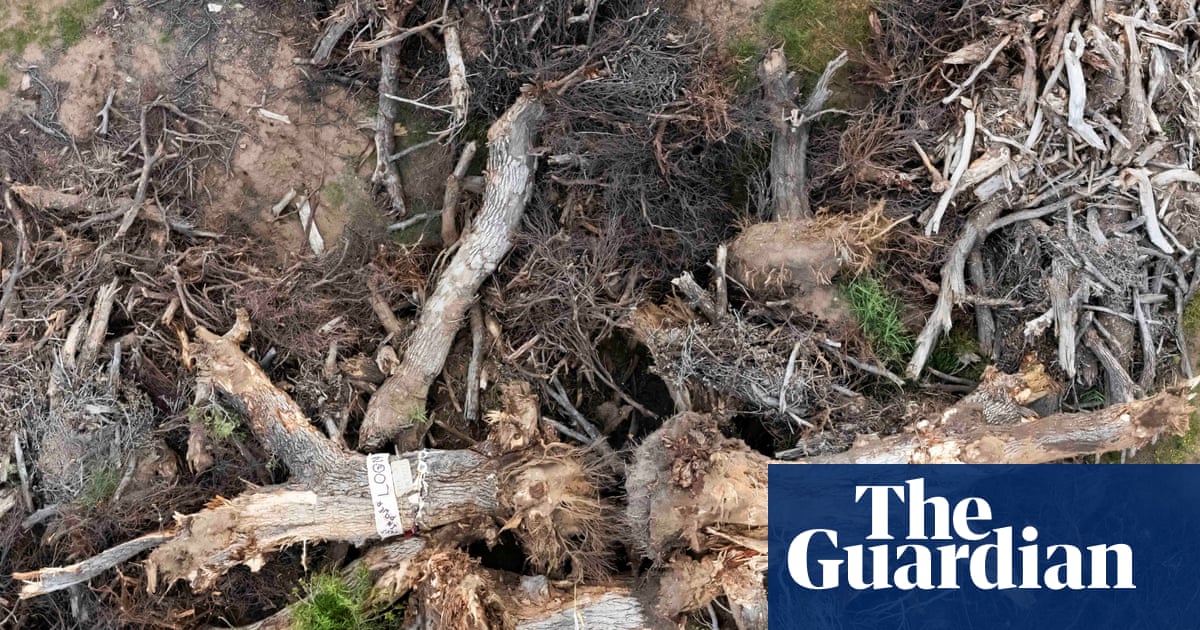
A centuries-old cottonwood tree known as the “grandmother” has been destroyed in Arizona to facilitate the construction of a border wall, ending a prolonged protest effort that spanned more than two months. The event unfolded on Monday morning when federal agents moved swiftly to clear the site, arresting demonstrators and physically removing an individual from a platform high in the tree’s canopy. Following the evacuation of the protesters, contractors employed heavy machinery to push the massive tree over, causing it to crash to the ground. The destruction was captured on video by media personnel embedded with border patrol operations, documenting the final moments of the ancient landmark.
The standoff began in late July when land defenders initiated a tree-sit in the ghost town of Lochiel, Arizona. Participants took turns occupying the canopy for over 70 days, aiming to protect the tree and other nearby ancient cottonwoods from being cleared for infrastructure development. The protest intensified after contractors had previously felled three other historic trees in the area on July 27. Activists viewed these riparian forest specimens as ecologically vital, noting that they depend on consistent underground water supplies and represent an endangered ecosystem throughout the southwestern United States.
Federal enforcement involved a significant show of force, including more than 80 agents from U.S. Customs and Border Protection (CBP) and members of Bortac, a special forces tactical unit designed to respond to high-threat situations. Witnesses described a chaotic scene in which agents used a steel basket on an extendable crane lift to forcibly remove the tree-sitter. Other demonstrators who attempted to rush toward the tree were shoved and tackled. The operation took place on private land where construction crews from Fisher Sand & Gravel had been working around the clock to install secondary wall structures.
The San Rafael Valley, located between the Patagonia and Huachuca mountains, serves as a crucial wildlife corridor connecting habitats in the United States and Mexico. This remote high-elevation prairie supports diverse species, including jaguars, ocelots, bears, beavers, and porcupines. Environmental advocates argue that the rapid expansion of border infrastructure threatens this ecological integrity. Russ McSpadden, an advocate with the Center for Biological Diversity, emphasized that the loss of these trees undermines efforts to preserve riparian forests, which are already endangered across the region.
Construction activities in the area have accelerated significantly under the current administration’s border security initiatives. Government contractors have completed 88 miles of secondary wall, a second 30-foot fence set at a distance from the primary barrier. An additional 444 miles of secondary wall are currently under construction, largely in Arizona, funded by billions of dollars allocated through the One Big Beautiful Bill Act. Protesters report that work proceeds continuously, with crews placing steel panels within trenches filled with rebar and cement along private properties adjacent to the border.
Water usage associated with the wall construction has raised additional environmental concerns. While CBP does not disclose current consumption figures, estimates from 2008 suggested that a smaller nearby wall could use up to 710,000 gallons per mile during construction. Critics argue that the current project, being larger in scale, likely consumes even more water, potentially depleting wells and threatening natural features such as Quitobaquito Springs. This resource strain adds another layer of controversy to the ongoing debate over border security measures.
In the days following the tree’s destruction, dozens of land defenders were arrested for entering a road closed by federal authorities in late September due to construction activities. Some protesters had been conducting daily prayers near the site before the crackdown. Alex Chabbott, a land defender present at the camp, claimed that several individuals were physically struck during arrests, returning with bruises and black eyes. Another tree-sitter, who had scaled a different ancient cottonwood situated directly on the border, was eventually removed after CBP and Mexican police dismantled their platform and cut off supplies.
The incident has sparked outrage among environmental groups and local communities. Erick Meza, the Sierra Club’s Borderlands coordinator, expressed deep sorrow over the loss of the tree, noting that it had served as a unifying symbol for many people involved in the protest. He described a growing sense of anger within the community, with residents and activists alike criticizing the methods used to clear the site. As construction continues unabated, tensions remain high between federal authorities and those seeking to protect the region’s natural heritage.
Looking ahead, the focus may shift to legal challenges and further protests as activists seek to hold accountable those responsible for the environmental damage. The involvement of Mexican police in removing supplies from another tree-sitter suggests a coordinated effort between U.S. and Mexican authorities to facilitate construction progress. With hundreds of miles of wall still planned, similar confrontations could arise elsewhere along the border, testing the limits of civil disobedience and federal enforcement strategies.
The destruction of the “grandmother” tree underscores the complex intersection of national security priorities and environmental conservation. While proponents argue that the wall is essential for border control, critics contend that the ecological costs are too high. As the debate continues, the fate of remaining ancient cottonwoods and other natural landmarks in the region remains uncertain, leaving many to wonder what else might be lost in the name of security.
Sources behind this briefing
Go to the original reporting
- The Guardian World↗Despair after 200-year-old ‘grandmother’ tree toppled for Trump’s border wall: ‘It crushes your heart’