The short version
- Abdul El-Sayed has adopted a confrontational style, challenging critics to explain the assumptions behind their questions regarding his faith and views on Israel.
- A viral town hall exchange with a former aide to Senator Josh Hawley highlighted this approach, drawing comparisons to historical debates over religious candidates like JFK.
- Despite significant financial opposition from pro-Israel groups and initial establishment reluctance, El-Sayed secured the Democratic nomination by a narrow margin.
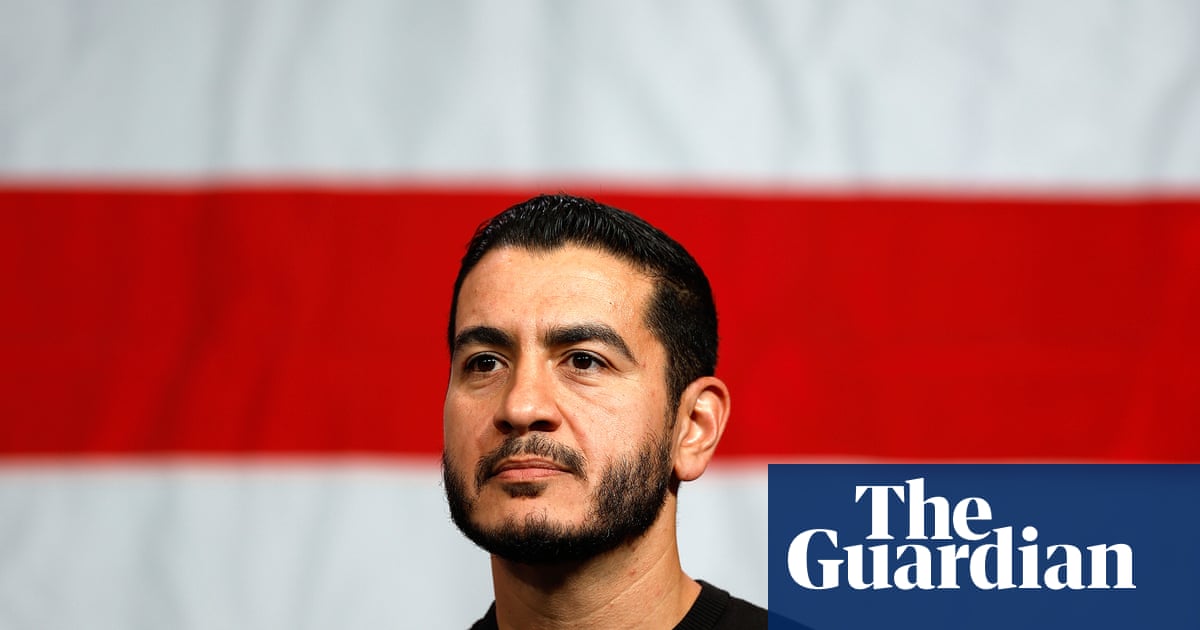
Democratic Senate candidate Abdul El-Sayed has distinguished his campaign in Michigan by refusing to simply defend himself against criticism, instead choosing to interrogate the premises of his detractors. As researchers note that the current political climate features some of the most severe Islamophobic attacks since the aftermath of the September 11 attacks, El-Sayed’s strategy involves putting the assumptions of those questioning his loyalty on trial. Rather than accepting the framing of inquiries regarding his faith, his stance on the Muslim Brotherhood, or his views on Israel, he has repeatedly demanded that critics explain why they believe such questions are necessary.
This method came into sharp focus during a town hall exchange this weekend that has garnered over 50 million views online. When a man in the audience demanded that El-Sayed disavow the Muslim Brotherhood, the candidate initially agreed but immediately pivoted to challenge the questioner’s underlying logic. For five minutes, El-Sayed compared the scrutiny he faces to the doubts once directed at John F. Kennedy’s Catholicism, asking whether the man would disavow reading religious doctrine into American law. The exchange ended with El-Sayed asserting that the questioner needed to better understand the Constitution, a moment that drew cheers from the room.
The individual who posed the question was identified as Thomas Teepell, a former aide to Republican Senator Josh Hawley. Federal Election Commission filings indicate that Teepell’s father’s firm received $250,000 from a non-profit organization for canvassing and influencer marketing efforts aimed at opposing El-Sayed. While there is no evidence that Teepel himself was paid for the interaction, the connection added a layer of complexity to the encounter, suggesting potential coordination even if it did not definitively prove it.
El-Sayed’s directness has earned him the nickname “Mean Mamdani,” drawing parallels to New York City Mayor Zohran Mamdani. While Mamdani is often characterized by his warmth, El-Sayed engages critics head-on. Both politicians have leveraged establishment resistance as part of their identities, but El-Sayed treats confrontation itself as a mechanism to expose what he perceives as a rigged political debate. This approach has created uncertainty within the Democratic establishment, which has struggled to determine how to respond to his tactics.
The friction with party insiders was evident during the primary season. In Michigan, Governor Gretchen Whitmer and Senator Gary Peters supported El-Sayed’s rival, Haley Stevens. More than $60 million in outside money, largely from pro-Israel groups, flowed toward Stevens’ campaign. Despite this financial disparity and institutional backing for his opponent, El-Sayed won the nomination by approximately 1.5 percentage points. His victory challenged the prevailing assumption that a Democrat who confronts powerful donors over Israel policy must incur a prohibitive electoral cost.
The dynamic of El-Sayed’s campaigning was also visible in media interactions. During an interview with CNN’s Kasie Hunt, the journalist asked three separate times whether Israel has a right to exist. El-Sayed declined to answer in the manner requested, illustrating his consistent refusal to play into what he views as loaded or biased questioning. This pattern of engagement suggests that his campaign is less about traditional persuasion and more about reframing the terms of political discourse.
As the general election approaches, the implications of this strategy remain a subject of debate. Supporters argue that it effectively counters Islamophobic narratives by exposing their biases, while critics may view the confrontational style as alienating to moderate voters. The viral nature of his exchanges indicates significant public interest in his method, but whether this translates into sustained electoral support beyond the primary base remains to be seen.
The broader context of the race includes heightened tensions among Jewish and Muslim voters, who are already on edge due to the war in Gaza. El-Sayed’s campaign has become a focal point for these anxieties, with his willingness to engage directly with controversial topics setting him apart from more cautious candidates. The outcome of this race may signal how viable a confrontational, anti-establishment approach is for Democrats facing intense donor pressure and cultural polarization.
What remains unresolved is the long-term impact of El-Sayed’s strategy on the Democratic Party’s cohesion. While he has successfully navigated the primary despite significant opposition, the general election will test whether his method can withstand coordinated attacks from Republican opponents and outside groups. The party’s leadership has yet to fully embrace or reject his approach, leaving his role in the broader political landscape uncertain as the campaign intensifies.
Sources behind this briefing
Go to the original reporting
- The Guardian US↗‘What are you implying?’: El-Sayed confronts critics head-on as attacks ramp up
- The Handbasket↗'Tommy' from viral El-Sayed video is former Sen. Hawley staffer with Christian nationalist ties
- PBS↗A bitter Michigan Senate race rattles Jewish and Muslim voters already on edge over the war in Gaza
- Bridge Michigan↗Fact check: JD Vance attacks Abdul El-Sayed in Michigan