The short version
- House Democratic leadership aims to replicate the 2018 strategy of winning districts that supported Donald Trump in previous presidential elections.
- Republicans hold a significant financial advantage and are leveraging potential cash dividends for voters to boost enthusiasm, though funding mechanisms remain uncertain.
- Both parties are intensifying campaign efforts in swing states as early voting begins amid economic pressures related to global conflicts.
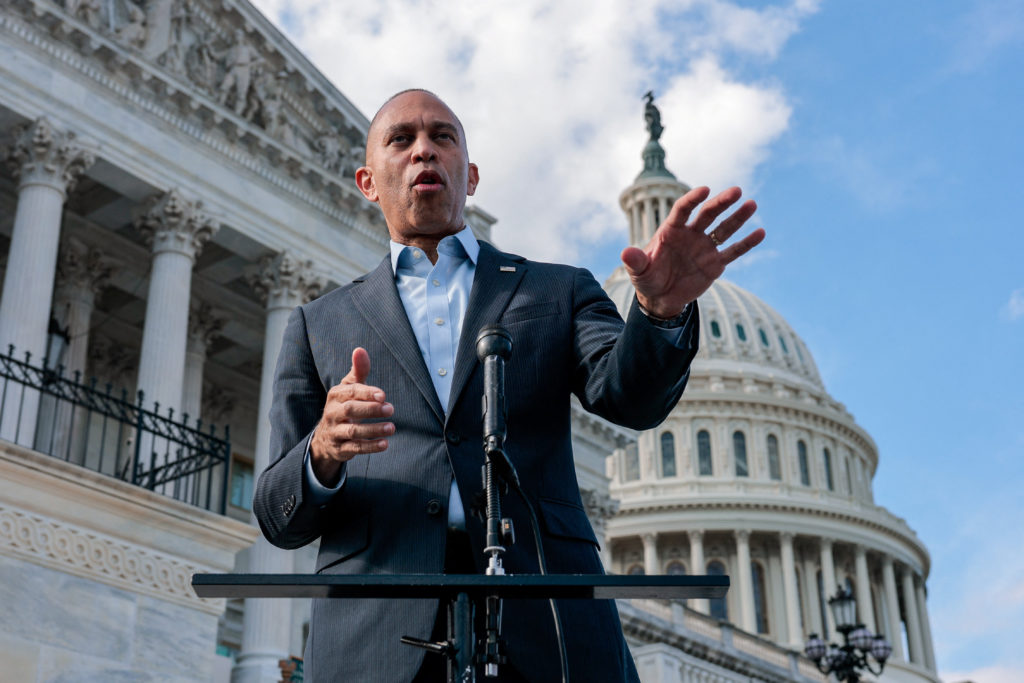
With roughly one month remaining until the midterm elections on November 3, House Minority Leader Hakeem Jeffries has signaled strong confidence that Democrats are positioned to regain control of the chamber. Speaking to reporters via conference call, Jeffries asserted that his party is prepared to overcome a notable disadvantage in campaign fundraising by targeting conservative areas. He drew a direct comparison to the 2018 midterms, when Democrats successfully flipped numerous seats in districts that had voted for Donald Trump during the 2016 presidential election.
The Democratic strategy relies on expanding their competitive map into Republican-held territory. Late last week, the House Democrats’ campaign arm announced it was adding eight additional districts to its list of targets. These new additions include congressional districts in Kansas, Oklahoma, Virginia, and Washington state. This offensive approach aims to capitalize on what Jeffries described as a failure in Republican redistricting efforts across several states, including Texas and Florida, which he claimed did not yield the expected electoral advantages for the GOP.
Despite this optimism, the path to majority control remains narrow. The House is currently split closely enough that only a handful of seats will determine which party holds the speakership. Jeffries acknowledged the volatility of the race, cautioning that outcomes remain unpredictable and urging his colleagues to avoid complacency. He emphasized that Democrats cannot afford to take any victory for granted as they navigate the final stretch of the campaign.
Republicans, led by House Speaker Mike Johnson, are leveraging a substantial cash advantage to defend their majority. Johnson has been actively campaigning across the country, recently stumping in California and planning visits to more than 40 districts across approximately 20 states in the coming weeks. His efforts are part of a broader strategy to align the party more closely with President Trump’s agenda and energize the Republican base ahead of the vote.
President Trump is also intensifying his campaign activities, focusing on red-state rallies to bolster voter enthusiasm. A central component of the Republican messaging involves promises of financial incentives for voters. Trump has pledged $5,000 cash dividends if Republicans retain control of Congress, although it remains unclear whether Congress would approve the estimated trillion-dollar expenditure required for such a program. Additionally, Trump recently announced $90 payments to seniors to assist with Medicare premiums, aiming to appeal to older demographics.
Jeffries criticized these Republican tactics, characterizing the party as struggling and failing to connect with voters. He argued that the American public is not responding to the messaging from MAGA Republicans. The Democratic leader pointed to economic headwinds facing the administration, specifically citing high gas prices linked to the ongoing war with Iran as a factor pressuring Republican incumbents.
Early voting has already begun in various jurisdictions, marking the start of the final phase of the election cycle. Both parties are ramping up their ground games and travel schedules. Jeffries, who spent the weekend in Western states, indicated he would continue to campaign extensively in the weeks leading up to Election Day. The race remains tight, with both sides viewing the outcome as critical for shaping the legislative agenda in the second half of Trump’s term.
The contrast between the two parties’ approaches highlights a strategic divergence. Democrats are focusing on flipping specific districts by appealing to moderate and independent voters in traditionally conservative areas, while Republicans are attempting to maximize turnout through financial promises and base mobilization. The effectiveness of these strategies will likely be determined by voter response to economic conditions and political messaging in the final month.
Sources behind this briefing
Go to the original reporting
- PBS NewsHour↗Jeffries says House Democrats aiming to repeat 2018 sweep by flipping Trump districts