The short version
- Japanese authorities detained a twenty-year-old U.S. Marine stationed at Futenma Air Station on suspicion of murdering and robbing a thirty-nine-year-old woman in Naha.
- Okinawa Governor Genta Koja condemned the incident as unforgivable, arguing that current military discipline measures are failing to prevent crimes by American personnel.
- The case has prompted diplomatic protests from Tokyo, with Foreign Minister Toshimitsu Motegi summoning the U.S. ambassador to demand full cooperation and stricter preventive actions.
Japanese police have arrested a United States Marine Corps service member in connection with the death of a woman on Okinawa, an event that has immediately reignited long-standing tensions regarding the American military footprint on the southern island. The suspect, identified as a twenty-year-old stationed at the Futenma Air Station, was taken into custody late Saturday after being spotted walking alone in an entertainment district in Okinawa City. Authorities allege he entered a hotel in Naha with a thirty-nine-year-old local woman and subsequently robbed her of her wallet and backpack before leaving the premises alone.
The victim’s body was discovered in her hotel room early Saturday morning. According to reports from Kyodo News citing police statements, the woman appeared to have been strangled. Security camera footage played a critical role in identifying the suspect, showing him entering the facility with the victim and departing without her. The arrest marks the latest criminal incident involving U.S. military personnel on Okinawa, where approximately half of the fifty thousand American troops deployed in Japan are stationed.
The reaction from local leadership has been swift and severe. Genta Koja, the newly elected governor of Okinawa, described the case as a major shock that adds to the fear already prevalent among residents living near U.S. bases. He characterized the crime as absolutely unforgivable and expressed deep outrage at the situation. Koja specifically criticized the effectiveness of current military protocols, stating that discipline and troop education measures implemented in response to past incidents are clearly not working.
At the national level, the Japanese government has moved to formalize its displeasure through diplomatic channels. Prime Minister Sanae Takaichi issued a statement expressing extreme regret over the heinous crime while simultaneously demanding maximum cooperation from U.S. authorities in the investigation. Her administration is calling for tougher discipline for service members and more robust preventive measures to avoid future incidents. This stance aligns with broader efforts by Takaichi’s cabinet to strengthen Japan’s military posture on Okinawa amid growing regional tensions.
Foreign Minister Toshimitsu Motegi escalated the diplomatic pressure by summoning George Glass, the U.S. Ambassador to Japan, to his office. The ministry conveyed a message of outrage and insisted on strict adherence to cooperative protocols during the investigation. In response, Ambassador Glass expressed condolences to the victim’s family and affirmed that the United States is working closely with both national and local Japanese governments. He emphasized the commitment to transparency and collaboration in resolving the case.
The U.S. Marine Corps issued a statement confirming that the suspect is assigned to the III Marine Expeditionary Force on Okinawa. The military branch stated it is fully cooperating with Japanese authorities and taking the allegations very seriously. Officials reiterated that every Marine is expected to adhere to the highest standards of behavior, acknowledging the gravity of the accusations while maintaining procedural cooperation with local law enforcement.
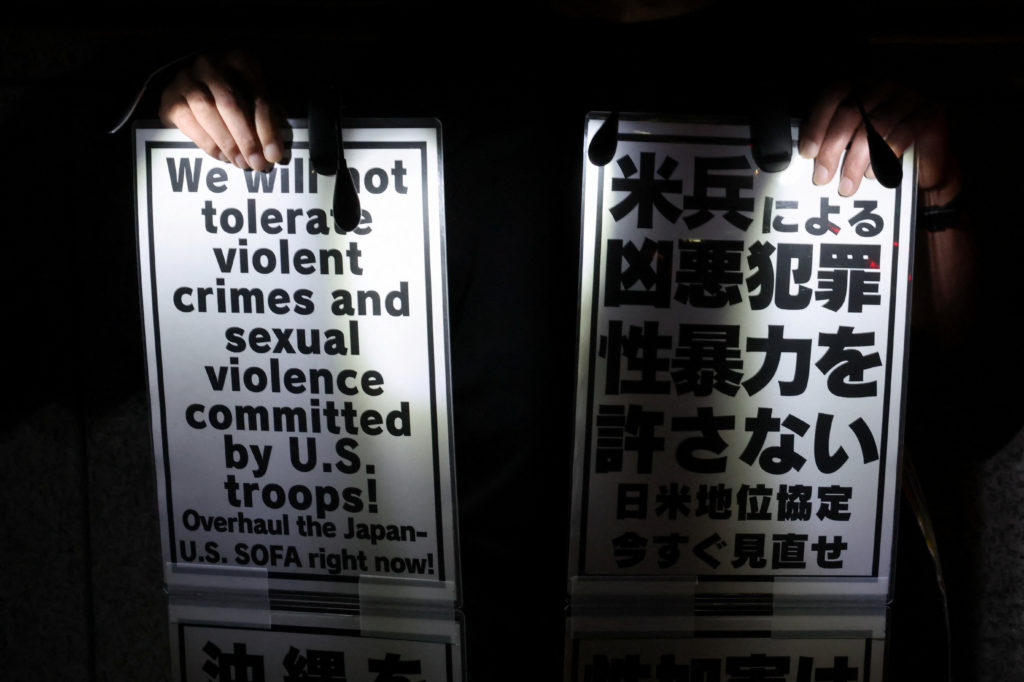
This incident occurs against a backdrop of persistent friction between Okinawan residents and the U.S. military presence. For decades, locals have complained about noise pollution, environmental degradation, and crime associated with American bases. The Futenma Air Station, located in a densely populated area, has been a particular focal point of contention. Despite widespread protests demanding its relocation, the central government approved plans to move the base to Henoko on the eastern coast, a project that has faced significant delays and continued opposition.
Historical context further complicates the current situation. The 1995 rape of a twelve-year-old girl by three U.S. service members sparked massive protests against the troop presence and remains a defining moment in Okinawan sentiment toward American forces. Recent data from prefectural police indicates that arrests related to U.S. service members and their families exceeded one hundred last year. Repeated occurrences of sexual crimes and delayed disclosures have fueled ongoing outrage, making this latest case particularly sensitive for an administration already navigating complex security dynamics.
Strategically, Okinawa’s role in the Japan-U.S. military alliance is becoming increasingly critical as tensions with China rise. The southwestern shift in Japan’s military focus centers heavily on the island and its nearby territories. However, the political cost of maintaining this strategic advantage remains high for Tokyo, which must balance security imperatives with the demands of Okinawan residents who bear the brunt of the base infrastructure. The current investigation will likely be closely watched as a test of whether diplomatic assurances can translate into tangible improvements in community safety and military conduct.
As the legal process unfolds, attention will remain fixed on how both governments handle the aftermath. The arrest provides a temporary resolution to the immediate mystery of the victim’s death, but it does not resolve the underlying structural issues that have plagued relations between Okinawa and the U.S. military for generations. Stakeholders on all sides are now waiting to see if this incident will catalyze meaningful reform or simply add another chapter to a long history of conflict and compromise.
Sources behind this briefing
Go to the original reporting
- PBS NewsHour↗A U.S. Marine has been arrested in the killing of a woman on Okinawa, triggering outrage in Japan

