The short version
- WeatherNext predicts cyclones with a one-day lead time advantage over existing models, equating three-day forecasts to previous two-day accuracy.
- The model successfully predicted Hurricane Melissa's Category 5 intensity and trajectory five days before landfall in Jamaica, aiding evacuation efforts.
- Researchers addressed data scarcity by training the AI on general weather patterns alongside limited cyclone-specific data to handle multi-scale atmospheric challenges.
Google DeepMind and Google Research have released WeatherNext, an artificial intelligence model that significantly advances the prediction of severe cyclones. Published in the journal Nature, the research demonstrates that the open-source model can forecast storm trajectories and intensities with greater accuracy than current standard methods. On average, WeatherNext provides meteorologists with approximately one additional day of lead time compared to existing forecasting tools. This improvement means that predictions generated three days in advance by the new AI are as reliable as those previously available only two days before a storm's arrival.
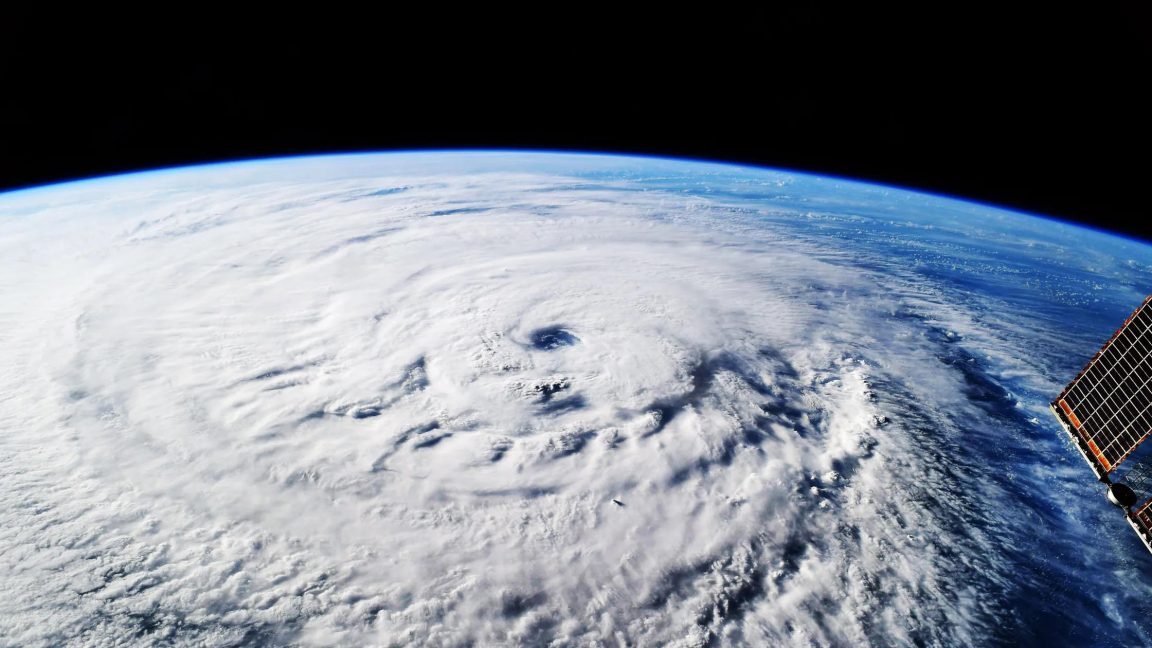
The practical impact of this advancement was illustrated during Hurricane Melissa in October 2025. As the storm system developed over the Caribbean Sea, traditional weather models offered conflicting projections regarding its path and potential strength. Some suggested it would remain weak and affect Haiti, while others indicated a more dangerous trajectory toward Jamaica. WeatherNext predicted with 80 percent confidence that the system would intensify into a Category 5 hurricane and strike Jamaica five days before landfall. The prediction proved accurate; Melissa caused catastrophic flooding and landslides across the island. However, the earlier warning allowed forecasters to alert communities sooner, facilitating better preparation and resource staging.
Mike Brennan, director of the US National Hurricane Center, emphasized the critical value of this extra time. Evacuations, supply distribution, and emergency response coordination are highly time-sensitive operations where incorrect decisions can have severe consequences. Brennan noted that even a few hours of additional accuracy can make a significant difference in saving lives and property. Historically, achieving a one-day improvement in forecast accuracy required roughly a decade of scientific development, according to the researchers involved in the study.
Developing AI for extreme weather events presents unique challenges due to the rarity of such occurrences. Machine learning models typically require vast amounts of training data to make reliable future predictions, but cyclones are infrequent by nature. Ferran Alet, a research scientist at Google DeepMind and a lead author on the paper, explained that while cyclone-specific data is limited, general weather data is abundant. To overcome this, the team trained WeatherNext to excel at both general weather forecasting and specific cyclone prediction, leveraging the broader dataset to inform its understanding of extreme events.
Predicting hurricanes is particularly complex because they operate across multiple spatial scales. Kate Musgrave, tropical cyclone group lead at the Cooperative Institute for Research in the Atmosphere and an author on the paper, noted that tracking a storm’s direction requires global-scale data, including information on cold fronts and prevailing winds. Conversely, predicting a storm’s intensity demands high-resolution, small-scale data focused on local atmospheric and oceanic conditions. Traditional global models often fail to capture these localized details effectively.
Previous AI models have shown proficiency in predicting storm tracks but struggled significantly with intensity forecasting. WeatherNext addresses this gap by integrating multi-scale data analysis. The ability to accurately predict both trajectory and intensity is crucial, as a change in strength can determine whether a storm results in minor disruptions or major devastation. By combining global context with local precision, the model offers a more comprehensive view of developing cyclones.
The release of WeatherNext marks a significant step forward in meteorological science. While the model has demonstrated success in specific cases like Hurricane Melissa, its broader implementation and long-term reliability across diverse weather systems remain areas of ongoing evaluation. The open-source nature of the model allows other researchers and institutions to test and refine its capabilities, potentially accelerating further improvements in severe weather forecasting.
As climate change continues to influence weather patterns, the demand for accurate and timely predictions grows. WeatherNext’s ability to provide earlier warnings could become increasingly vital for disaster preparedness. The collaboration between AI developers and meteorological experts highlights a growing trend of integrating machine learning into traditional scientific fields to enhance predictive power and public safety.
Sources behind this briefing
Go to the original reporting
- Ars Technica↗DeepMind’s hurricane breakthrough has surprised weather scientists
- Google DeepMind↗WeatherNext: AI model achieves breakthrough in forecasting cyclones
- blog.google↗Our WeatherNext 2 AI model demonstrated a massive leap forward in predicting cyclones.
- WIRED↗DeepMind Says Its AI Can Predict Hurricanes Earlier Than Everyone Else

