The short version
- Federal funding freezes and investigations have sharply reduced institutional autonomy at U.S. universities under the current administration.
- Researchers argue that decades of corporate donations, particularly from oil companies, created vulnerabilities by allowing donors to influence hiring and research priorities.
- Historical patterns of industry influence, dating back to the 1970s and earlier, helped establish a framework for ideological alignment that facilitated recent political interventions.
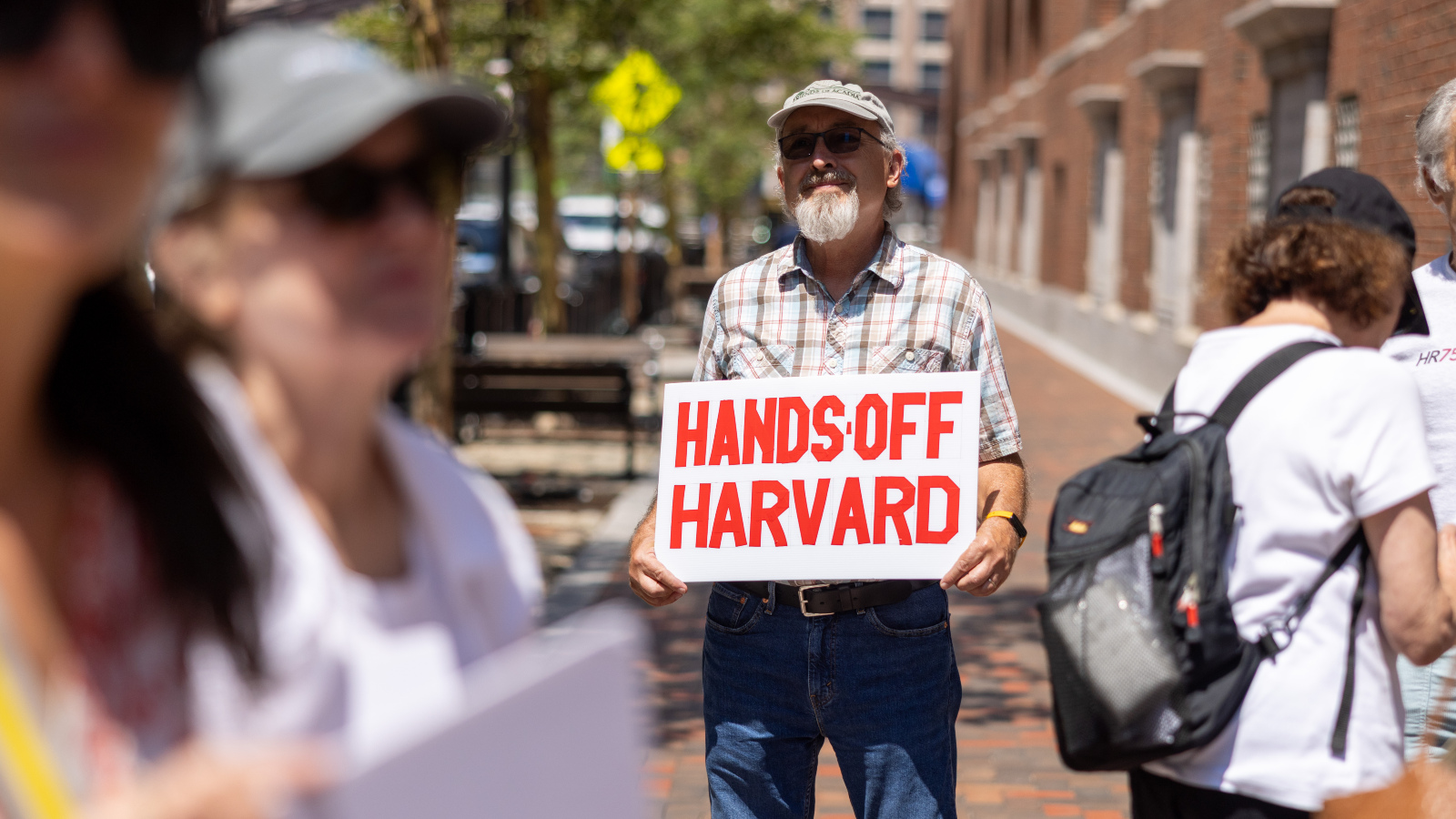
The landscape of American higher education has shifted dramatically since President Donald Trump returned to office last January. The administration has made it clear that federal financial support comes with strict conditions, leading to the freezing or withdrawal of billions in funding from top-tier institutions. These actions have been accompanied by investigations into university operations, specifically targeting admissions processes, hiring practices, and diversity, equity, and inclusion policies. The impact on institutional independence has been severe. Data from the Academic Freedom Index indicates a sharp decline in autonomy across U.S. universities last year, with the rate of descent exceeding that observed in countries such as Hungary, Turkey, and India.
A recent study published in Energy Research & Social Science suggests that this aggressive federal intervention did not emerge in isolation. The research argues that corporate interests, particularly those within the petroleum industry, have spent at least fifty years attempting to influence university operations through substantial donations. This long-term strategy aimed to shape research agendas and institutional priorities. According to the authors, these efforts weakened the defensive structures of academic institutions, making them more susceptible to outside political pressure and paving the way for the current administration’s tactics.
Noel Healy, a professor of geography and sustainability at Salem State University and the lead author of the study, described this dynamic as a smaller-scale version of the playbook now being used by the federal government. Private donors have historically offered funding in exchange for input on how university programs are managed. This phenomenon, termed corporate capture, grants donors significant leverage over faculty hiring decisions, research topics, and curriculum content. The strategy allows external interests to steer academic output without overt censorship, creating a subtle but powerful influence on the direction of scholarly work.
Experts trace the origins of this approach to a 1971 memo written by Lewis F. Powell Jr., who later became a Supreme Court justice. In the document addressed to the U.S. Chamber of Commerce, Powell argued that free enterprise should be defended by funding scholars to evaluate textbooks and urging university boards to correct what he viewed as an imbalance caused by liberal faculty members. This memo laid out a blueprint for using financial resources to shift academic discourse toward conservative priorities. The strategies outlined in that document bear a striking resemblance to the actions taken by the current administration.
Conservative foundations, including those established by the Olin, Scaife, Koch, and Bradley families, played a central role in advancing this corporate capture of higher education. These organizations, whose wealth stems largely from chemical manufacturing and fossil fuels, also provided decades of funding to The Heritage Foundation. This conservative think tank developed Project 2025, a detailed plan for the Trump administration that includes strategies to align universities more closely with conservative ideological goals. Robert Brulle, an environmental sociologist at Brown University, noted that reading the Powell memo reveals an agenda that mirrors the current administration’s approach.
Several prominent universities have already yielded to some of the administration’s demands. Institutions such as Columbia, Brown, and Northwestern have faced significant pressure, with the government specifically targeting climate-related initiatives. For example, Princeton University had $4 million in grants revoked, partly on the grounds that its research was contributing to climate anxiety. These actions highlight the administration’s willingness to use financial leverage to suppress specific areas of study that conflict with its policy objectives.
The fossil fuel industry has been a major player in this long-term effort to influence academia. An analysis revealed that companies including Exxon Mobil, BP, Chevron, Shell Oil, ConocoPhillips, and Koch Industries donated at least $700 million to 27 U.S. universities between 2010 and 2020. BP’s relationship with Princeton University is a notable example; the company funded the university’s Carbon Mitigation Initiative for twenty-five years before ending the contract in 2025. Internal communications uncovered during a congressional investigation showed a BP executive celebrating the synergistic nature of this partnership, indicating a deliberate strategy to align university research with corporate interests.
Such relationships can significantly sway research outcomes and broader policy discussions. A 2022 study found that reports published by MIT, Harvard, and Stanford while receiving oil company funding were biased in favor of natural gas compared to independent research. An MIT report from 2011, funded by fossil fuel interests, helped popularize the concept of natural gas as a bridge fuel, a term later adopted by former President Barack Obama. Similarly, a 2004 Princeton paper, heavily influenced by BP, elevated carbon capture technology in international climate policy debates, despite the technology remaining unproven at scale today.
Healy emphasized that corporate capture is rarely blatant propaganda. Instead, it represents a gradual shift toward market-friendly solutions and away from initiatives that might threaten industry profits. This pattern extends beyond the oil sector to include pharmaceutical companies, agricultural interests, and electric utilities. In the 1920s, for instance, electric utilities launched a widespread campaign to promote free-market ideals by hiring academics to rewrite textbooks and develop curricula. The current crisis in higher education is thus part of a broader, historical trend of industry influence on academic institutions.
The convergence of long-standing corporate influence and recent federal pressure has created a precarious environment for American universities. As institutional autonomy continues to decline, the ability of these schools to conduct independent research and maintain diverse faculty perspectives remains under threat. The strategies employed by conservative foundations and fossil fuel companies over the past half-century have effectively prepared the ground for the current administration’s aggressive interventions, raising serious questions about the future of academic freedom in the United States.
Sources behind this briefing
Go to the original reporting
- Grist↗How elite universities got tangled up in politics and petroleum